
Explore Natural Philosophy

Science • Phil • Cr. Think • Hist •

STORY

Last Non-Mammaliaform Cynodonts

By Michael Alan Prestwood

Sat 23 May 2026
Published 4 weeks ago.
Updated 4 weeks ago.
Related Stories
Genus Orangutans
First Cynodonts
First Mammaliaforms: Morganucodon
Amniotes Emerge: Amniotic Eggs
Plesiadapis: First fruit-insect eaters.
Orangutans Branch Off: Genus Sivapithecus
Share :
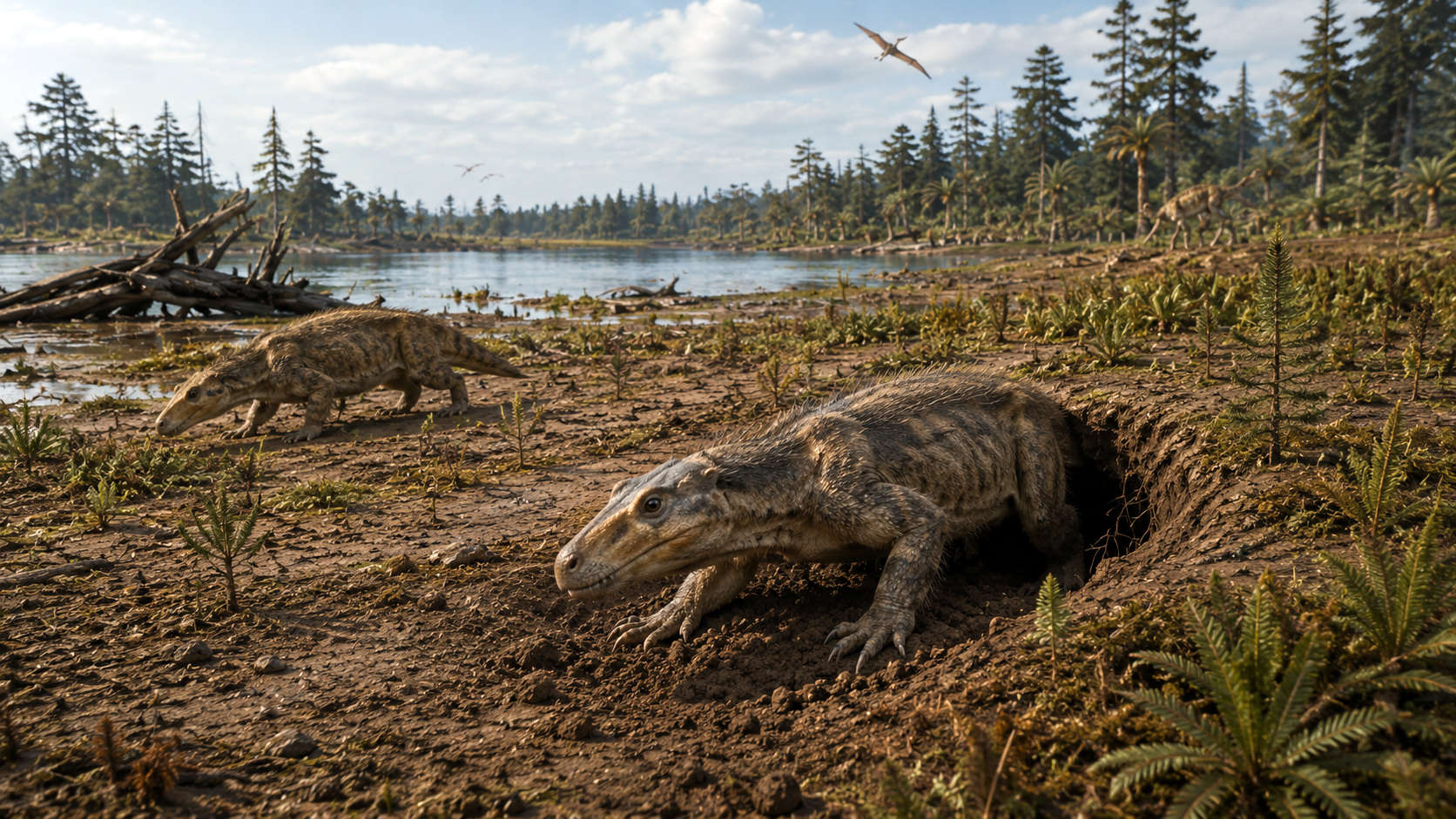
Around 125 million years ago, late tritylodontids carried an older branch of the mammal-side story into the age of dinosaurs. They were advanced cynodont therapsids, close to the mammal line, but not part of the mammaliaform branch. With strong jaws, specialized plant-eating teeth, sturdy limbs, and possible digging habits, they show how complex the road to mammals really was.

Last Non-Mammaliaform Cynodonts

~125 Million years ago

The last non-mammaliaform cynodonts included the tritylodontids, an advanced family of herbivorous cynodonts. They were close to mammals and shared several mammal-like traits, but they remained outside Mammaliaformes. Their extinction around 125 million years ago marked the end of the non-mammaliaform cynodont line, while mammals—the surviving branch—continued on.

By the Early Cretaceous, around 125 million years ago, the world of the last tritylodontids was no longer the old synapsid world. It was a dinosaur-dominated landscape of warm seasonal forests, floodplains, lakeshores, and volcanic basins. Tritylodontids would have shared these environments with early birds, lizards, amphibians, turtles, pterosaurs, and dinosaurs such as small theropods and herbivorous ornithischians. In places like Early Cretaceous East Asia, the ecosystem also included mammaliaforms and true mammals that were becoming surprisingly diverse, so tritylodontids were not simply “waiting for mammals.” They were living beside them. The Cretaceous ran from about 145 to 66 million years ago, and early mammals and mammal-relatives had already diversified into many ecological roles well before the dinosaur extinction.

Tritylodontids were advanced herbivorous cynodont therapsids, close to mammals but usually placed outside Mammaliaformes. They had small-to-medium bodies, strong jaws, large cheek teeth with multiple cusps, and a well-developed secondary palate, all pointing to a specialized plant-eating lifestyle. Some later forms, such as Fossiomanus sinensis, even show digging adaptations, suggesting they could occupy burrows or fossorial niches. They were among the last non-mammaliaform therapsids, surviving long after true mammals had appeared. That makes them a wonderful “living fossil” style branch in the mammal-side story: not mammals, not primitive throwbacks, but late-surviving cousins carrying an older version of the mammal-line experiment into the age of dinosaurs.

— map / TST —

Michael Alan Prestwood
Author & Natural Philosopher
Prestwood writes on science-first philosophy, with particular attention to the convergence of disciplines. Drawing on his TST Framework, his work emphasizes rational inquiry grounded in empirical observation while engaging questions at the edges of established knowledge. With TouchstoneTruth positioned as a living touchstone, this work aims to contribute reliable, evolving analysis in an emerging AI era where the credibility of information is increasingly contested.
Email
Print
This month @ TST
Column Menu
June 2026
»COLUMN ARCHIVE
Column Research….
1. Timeline Story
Secular Spirituality Settles
2. Linked Quote
“Extraordinary claims require extraordinary evidence.”
3. Science FAQ »
What is the difference between a spiritual and empirical belief?
4. Philosophy FAQ »
What is secular spirituality?
5. Critical Thinking FAQ »
How does spirituality relate to public belief?
6. History FAQ!
Is secular spirituality supported in history and science?
Bonus Deep-Dive Article
The Material-Spiritual Framework: A Philosophy of Spirituality

Comments

Join the Conversation! Currently logged out.

Leave a Reply

NEW BOOK! NOW AVAILABLE!!

30 Philosophers: A New Look at Timeless Ideas

by Michael Alan Prestwood
The story of the history of our best ideas!
Scroll to Top