
Explore Natural Philosophy

Science • Phil • Cr. Think • Hist •

STORY

First Therapsids

By Michael Alan Prestwood

Sat 23 May 2026
Published 4 weeks ago.
Updated 4 weeks ago.
Related Stories
The P-T Extinction
Emergence of the Chimpanzee Family
Early Complex Sentience Emerges: Dimetrodon
Last Non-Therapsid Synapsids
Chimpanzee-Bonobo Split
Last Non-Mammaliaform Cynodonts
Share :
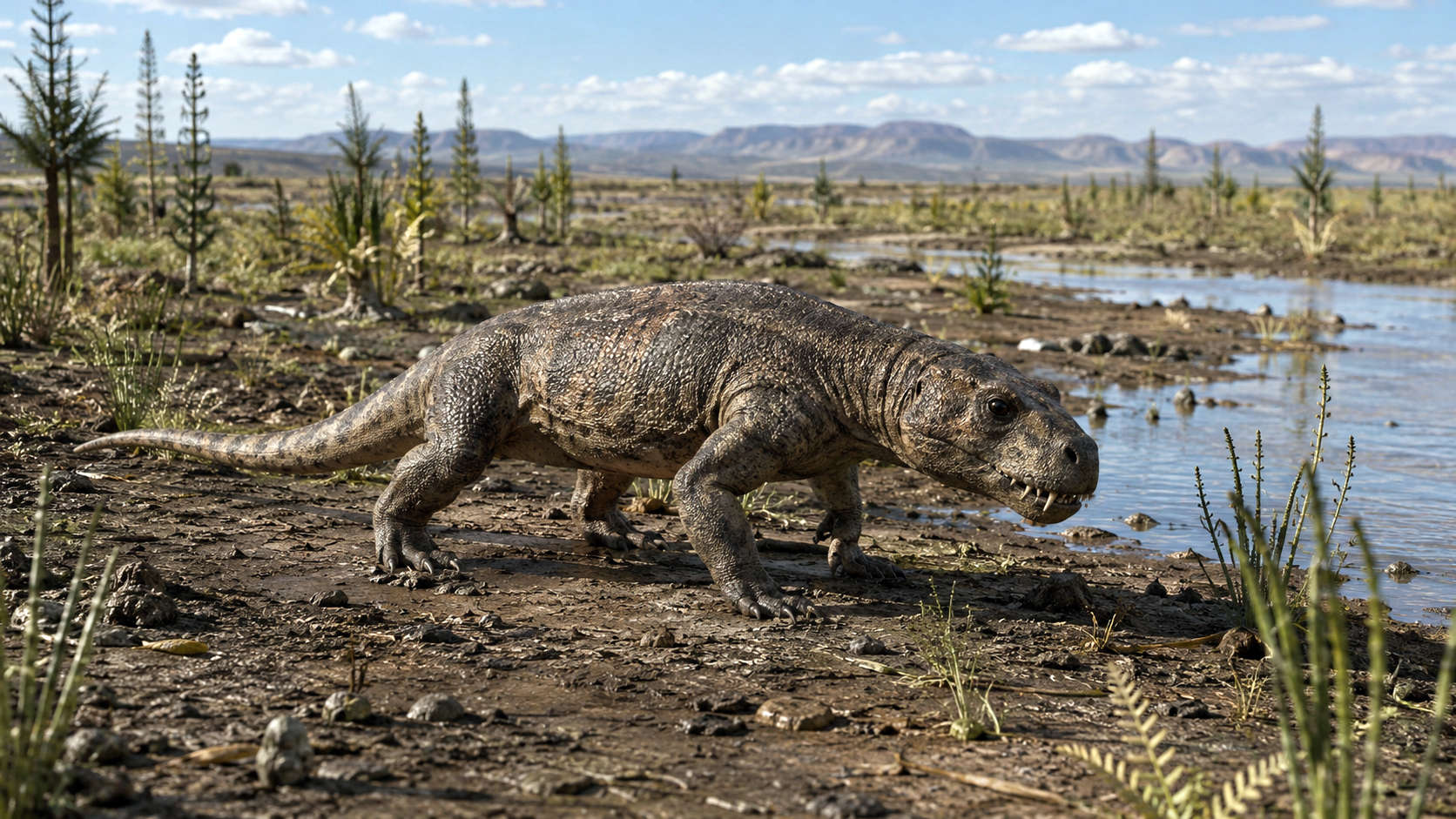
Around 272 million years ago, early therapsids such as Raranimus dashankouensis began shifting the mammal-side branch away from the older sprawling synapsid body plan. Its posture was still low and reptile-like, but the limbs were moving slightly farther under the body, while the skull and teeth show the first clear signs of a sharper, more active therapsid predator.

First Therapsids

~272 Million years ago
A more upright posture.

Therapsids are the advanced synapsids that began tightening the mammal-side body plan. Their most visible shift was toward a more upright posture, with limbs moving farther under the body instead of sprawling far out to the sides. Alongside that came a more powerful skull, more specialized teeth, and signs of a more active lifestyle. They were not mammals yet, but this is where the old synapsid line began to look more focused, more predatory in some branches, more specialized in others, and more clearly aimed toward the later mammal story.

To set the stage, picture the first therapsids living during the Middle Permian, around 272 million years ago. This is when Pangaea dominated the planet. Their world was warmer, more seasonal, and often drier than the earlier Carboniferous coal forests. A more upright posture allowing for running on dry land had real advantages. Picture open floodplains, river channels, muddy basins, patchy wetlands, seed ferns, horsetails, early conifers, and broad stretches of exposed earth. This was a changing world: less swamp-jungle, more seasonal land. In that setting, faster, more active synapsids had room to rise.

Raranimus dashankouensis is a good example of one of the earliest therapsids. It is known from a partial skull from Middle Permian China, and a 2021 reassessment confirmed it as a basal member of Therapsida. A 2024 paper also notes that until a newer early-middle Permian gorgonopsian find, Raranimus was considered the oldest known unequivocal therapsid. It still carried older synapsid features, but its skull and teeth show the early therapsid direction: sharper jaws, predatory adaptations, and the beginning of the line that would eventually include cynodonts, mammaliaforms, and mammals.

— map / TST —

Michael Alan Prestwood
Author & Natural Philosopher
Prestwood writes on science-first philosophy, with particular attention to the convergence of disciplines. Drawing on his TST Framework, his work emphasizes rational inquiry grounded in empirical observation while engaging questions at the edges of established knowledge. With TouchstoneTruth positioned as a living touchstone, this work aims to contribute reliable, evolving analysis in an emerging AI era where the credibility of information is increasingly contested.
Email
Print
This month @ TST
Column Menu
June 2026
»COLUMN ARCHIVE
Column Research….
1. Timeline Story
Secular Spirituality Settles
2. Linked Quote
“Extraordinary claims require extraordinary evidence.”
3. Science FAQ »
What is the difference between a spiritual and empirical belief?
4. Philosophy FAQ »
What is secular spirituality?
5. Critical Thinking FAQ »
How does spirituality relate to public belief?
6. History FAQ!
Is secular spirituality supported in history and science?
Bonus Deep-Dive Article
The Material-Spiritual Framework: A Philosophy of Spirituality

Comments

Join the Conversation! Currently logged out.

Leave a Reply

NEW BOOK! NOW AVAILABLE!!

30 Philosophers: A New Look at Timeless Ideas

by Michael Alan Prestwood
The story of the history of our best ideas!
Scroll to Top