
Phil • Cr. Think • Science • Hist •
TST PRACTICE

The Philosophy Website

QUOTE

“We must meditate on the things that make our minds at peace.”
☐ Read
☑ Read
You’ve read this 0 times.
You’ve listened to this 0 times.
Related Quotes
“I meet with no proposition that is not connected with an ought, or an ought not.”
“A person is a person through other persons; you can’t be human in isolation; you are human only in relationships.”
“The superior man is modest in his speech but exceeds in his actions.”
“In order for a war to be just, three things are necessary.”
“I was not; I was; I am not; I do not mind.”
“Our statements about the…world face the tribunal of sense experience…as a corporate body.”
Share :
Email
Print

Mike's Takeaway:

Like the East, meditation in the West is part of many traditions in one form or another. The following is from chapter 11 of “30 Philosophers.”

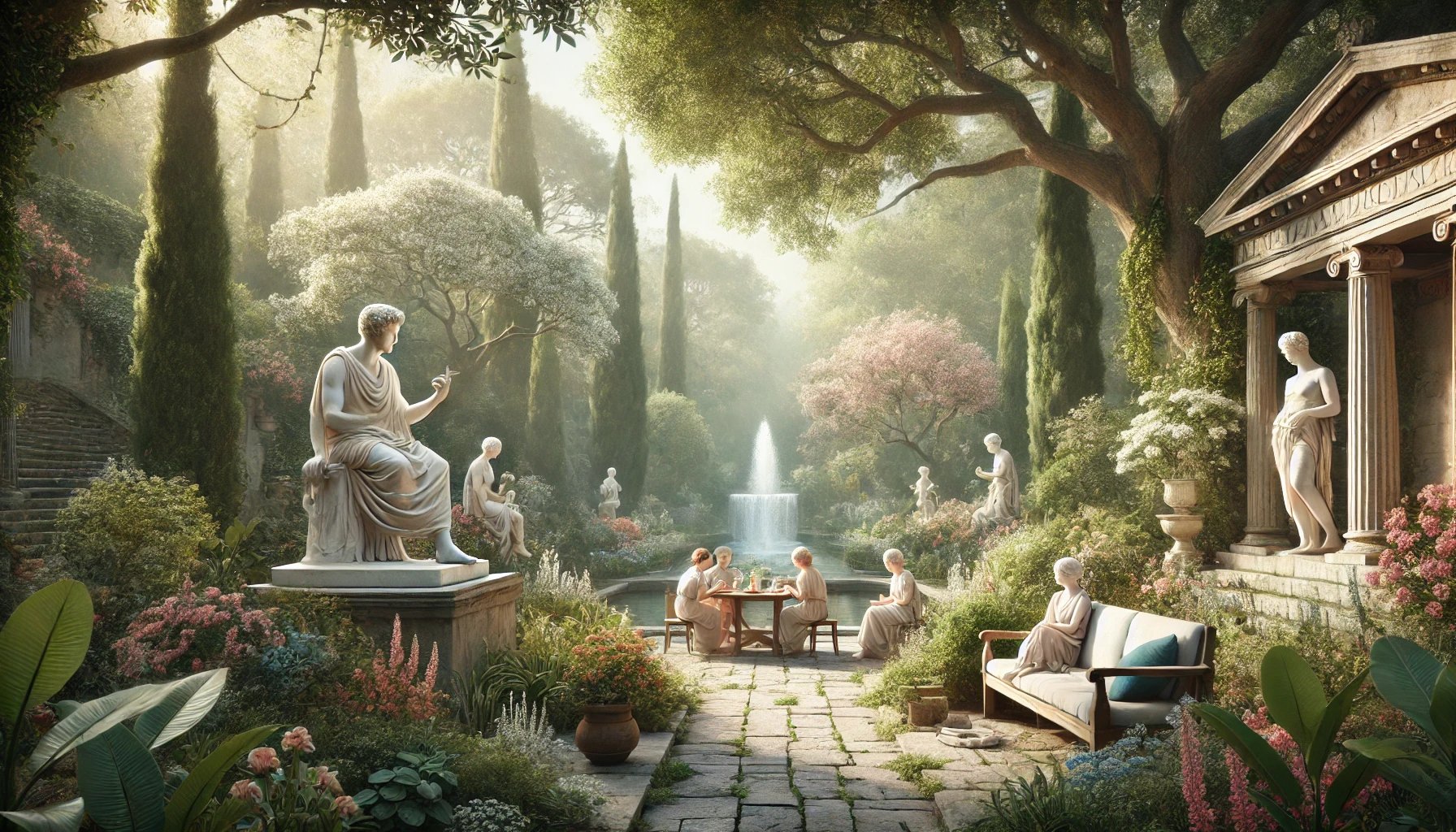
Epicureanism encourages the practice of philosophical contemplation and reflection to gain insight into the nature of reality, the human condition, and the sources of true happiness. Around 50 BCE, the Epicurean poet and philosopher Lucretius, in his work “On the Nature of Things,” conveyed a similar idea, here paraphrased:

“We must meditate on the things that make our minds at peace, reflecting on the fundamental nature of all things, and on the limits set for our desires and fears.”

Additionally, group discussions with like-minded individuals play a significant role in the process of contemplation, allowing for the exploration and refinement of ideas. Building strong and supportive relationships fosters a sense of belonging and security, personal growth, and self-discovery.
Analysis By Michael Alan Prestwood
07 Jul 2026
Published 2 years ago.
Updated 2 months ago.
TST Tracker
✓ Reading recorded.
Lucretius argued that by contemplating the atomic structure of the universe and rejecting supernatural explanations, we can dispel irrational fears (like the fear of gods or eternal punishment) and align ourselves with the natural order.
Michael Alan Prestwood
Author & Natural Philosopher
Prestwood writes on science-first philosophy, with particular attention to the convergence of disciplines. Drawing on his TST Framework, his work emphasizes rational inquiry grounded in empirical observation while engaging questions at the edges of established knowledge. With TouchstoneTruth positioned as a living touchstone, this work aims to contribute reliable, evolving analysis in an emerging AI era where the credibility of information is increasingly contested.
The Prestwood Column
Menu
September 2026
Column Research….
1. Timeline Story
Hume’s Is–Ought Problem
2. Linked Quote
“I meet with no proposition that is not connected with an ought, or an ought not.”
3. Science FAQ »
Can science prove flourishing should be our goal?
4. Philosophy FAQ »
What is the difference between a normative aim and a normative directive?
5. Critical Thinking FAQ »
Is flourishing for all just utilitarianism?
6. History FAQ!
What is the history of the idea of flourishing in philosophy?
Bonus Deep-Dive Article
TST Normative Ethics: Flourishing as a Philosophical Goal

Comments

Join the Conversation! Currently logged out.

Leave a Reply

NEW BOOK! NOW AVAILABLE!!

30 Philosophers: A New Look at Timeless Ideas

by Michael Alan Prestwood
The story of the history of our best ideas!
Scroll to Top