
Explore Science-first Philosophy

FAQ

Is Trump simply wrong when he says no one knows what a magnet is?

Wed 1 Apr 2026
Published 12 hours ago.
Updated 4 months ago.
Trump and Magnets
Related FAQs
Does the Fermi paradox lack good thinking?
What is the history behind quantum mechanics?
How many planets does our solar system have: 8, 9, or 12?
Will the night sky have stars nearly forever?
Can humans breathe the air of other planets?
Can you explain the Big Freeze, Big Rip, and Big Crunch Ideas?
Share :
Email
Print

Is Trump simply wrong when he says no one knows what a magnet is?

Yes, he’s simply wrong.

We know exactly what a magnet is, and we’ve understood the basics for more than a century. But let’s take a fair look and use this moment to explore something deeper.

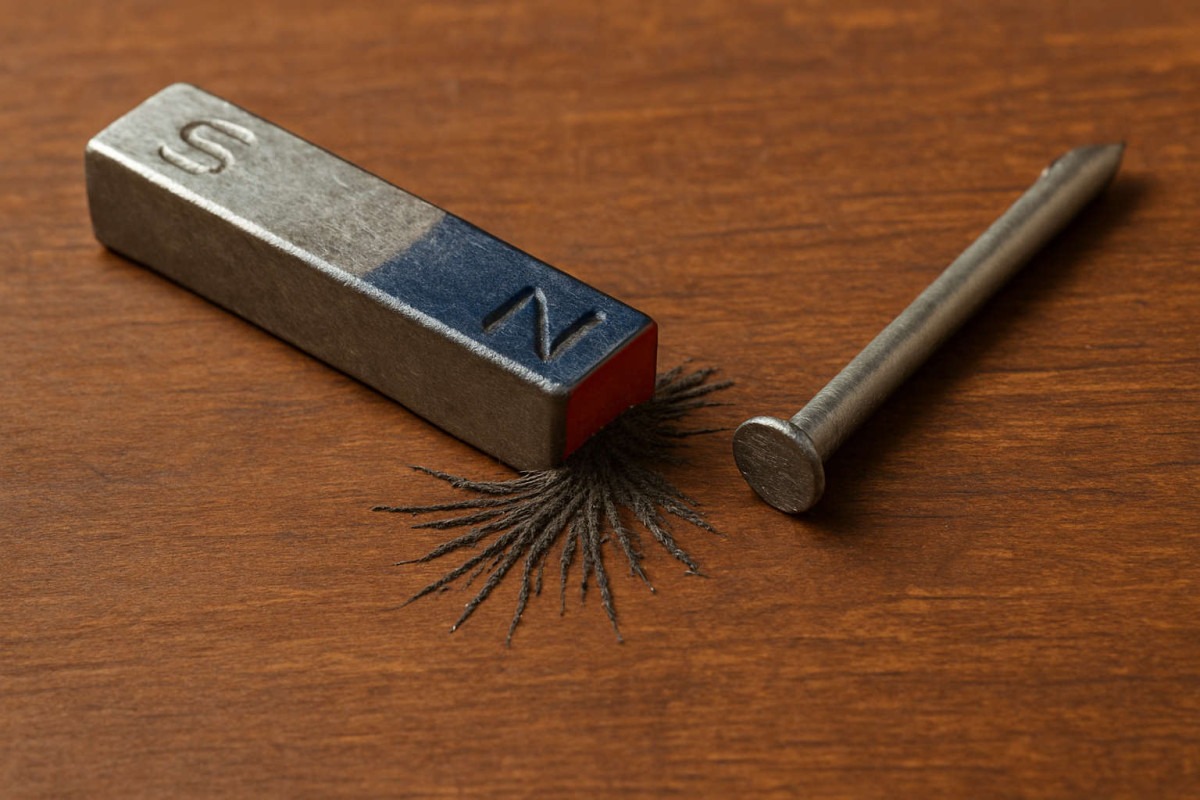
A magnet is not mysterious. In certain materials like iron, nickel, and cobalt, they have someing called magnetic domains. These tiny atomic “magnets” can line up to form a stronger and stronger magnet. When enough of these domains point in the same direction, the whole piece becomes magnetic. The more that line up, the stronger the magnet. Flip them around or scramble them, and the magnetism disappears. That’s it. No mystery. No secret. Science uses this every day, from MRI machines to credit cards to power plants.

So yes, Trump is wrong in the everyday sense. We know magnets. We use them. We teach them in middle school.

But in the deeper sense, the one Trump for sure wasn’t even aiming at, is that the universe still has secrets. And the beauty of science is that we’re allowed to ask these bigger questions, even after we’ve mastered the basics.

That’s how curiosity works: Understand the simple things well, then follow the mystery wherever it leads.
— map / TST —

The deeper magnetic mysteries include: Why does the electron have a magnetic moment at all? Why does the electromagnetic field exist with the laws it has? Why does the universe have forces?
Michael Alan Prestwood
Author & Natural Philosopher
Prestwood writes on science-first philosophy, with particular attention to the convergence of disciplines. Drawing on his TST Framework, his work emphasizes rational inquiry grounded in empirical observation while engaging questions at the edges of established knowledge. With TouchstoneTruth positioned as a living touchstone, this work aims to contribute reliable, evolving analysis in an emerging AI era where the credibility of information is increasingly contested.
This Week @ TST
April 1, 2026
»Column Archive
WWB Research….
1. Story of the Week
The Dawn of Empirical Spirituality
2. Quote of the Week
“It is wrong always, everywhere, and for anyone, to believe anything upon insufficient evidence.”
3. Science FAQ »
Is science tainted by bias?
4. Philosophy FAQ »
How do knowledge frameworks help transform information into wisdom?
5. Critical Thinking FAQ »
Are personal spiritual experiences believable?
6. History FAQ!
Did the Buddha believe in Mount Meru and the six realms of existence?
Bonus Deep-Dive Article
TST Theory of Justification: What to Believe

Comments

Join the Conversation! Currently logged out.
NEW BOOK! NOW AVAILABLE!!

30 Philosophers: A New Look at Timeless Ideas

by Michael Alan Prestwood
The story of the history of our best ideas!
Scroll to Top