Ginkgo biloba-like Trees: True Leaves
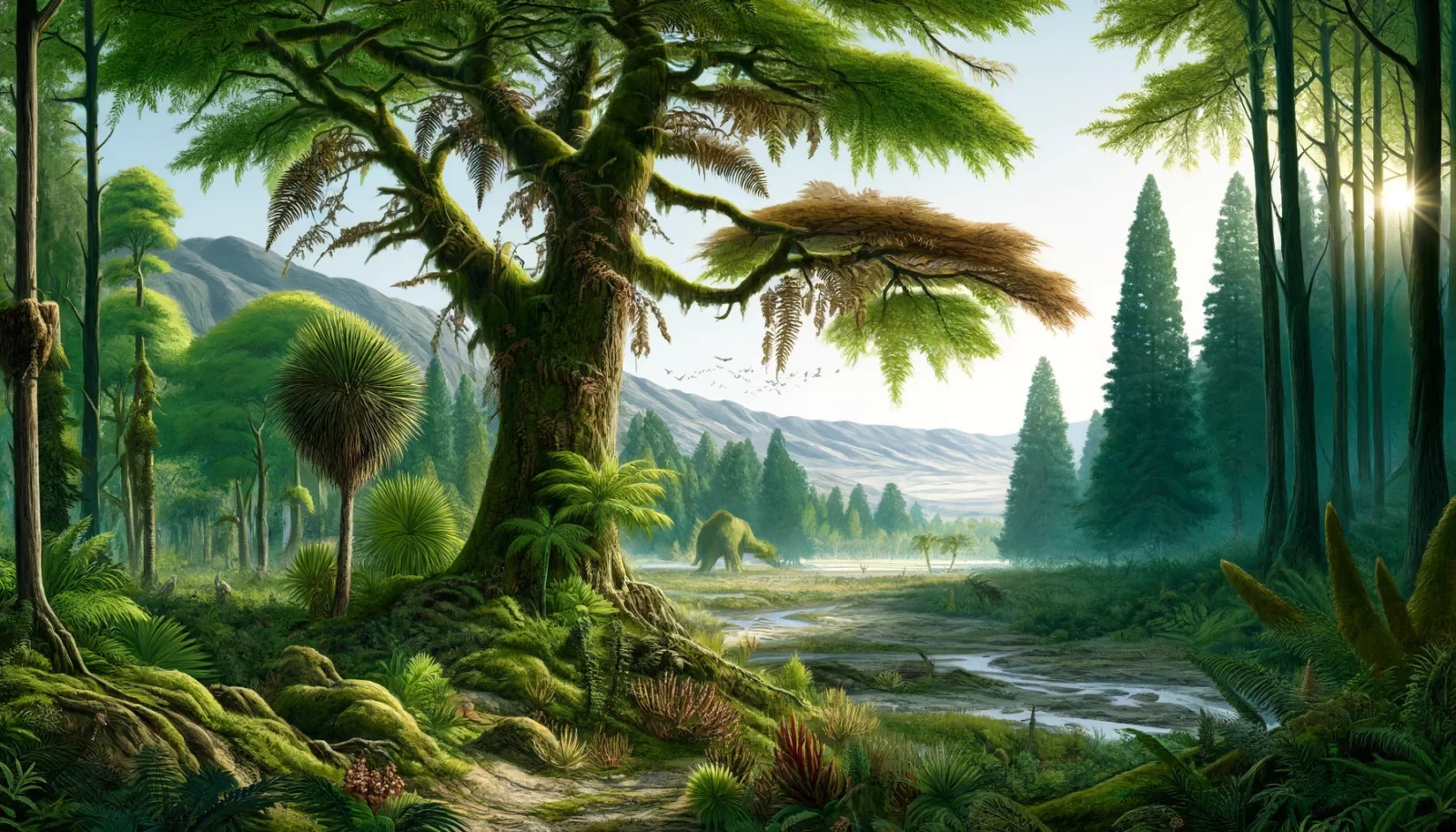
Ginkgo represents an ancient seed-plant lineage going back 270 million years ago.
Ginkgo biloba-like Trees: True Leaves Read More »
Master Timeline
Ginkgo represents an ancient seed-plant lineage going back 270 million years ago.
Ginkgo biloba-like Trees: True Leaves Read More »
About 385 million years ago is when trees started to emerge, distinguished by their secondary growth wood and deep roots.
First True Trees: Spore Reproduction Read More »
30 Phil, Chapter 3 Touchstone 8: Holism. Holism views things as a whole, emphasizing interconnectedness and interdependence, and values unity and synthesis. It is essential for fully understanding complex systems like living organisms and ecosystems. This notion of an underlying, unifying essence mirrors the intricacies of the natural world, where each element, though distinct, harmoniously contributes
30 Phil, Chapter 3 Touchstone 7: Ontology. Ontology: When we’re alive, life feels endless, stretching beyond the horizon of our imagination. The realization that it must end is not easily accepted. We’re not just sentient beings; we are self-aware. For many, the notion that we cease to exist after death is unbearable. We can’t help
30 Phil, Chapter 2 Touchstone 6: Philosophy. Philosophy is the systematic study of fundamental questions concerning existence, knowledge, values, and meaning. It’s a discipline guided by reason and the evaluation of evidence. A central question is “How should we live?” While there is a general agreement on overarching principles, as always, the devil is in the
30 Phil, Chapter 2 Touchstone 5: Knowledge Framework. In philosophy, the study of knowledge is called epistemology. It’s important because knowledge describes reality, and understanding how we craft knowledge brings philosophical clarity. Each of us maintains a personal knowledge framework that arranges the knowledge we accumulate. You can think of it as a personalized dictionary. But
Knowledge Framework Read More »
30 Phil, Chapter 1 Touchstone 4: Cultural Transmission. Cultural transmission, perhaps more than any other trait, sets humans apart from other animals. It’s the ability to pass behaviors, traditions, and knowledge to the next generation. Cultural transmission has likely been a feature of our direct-line hominin mind for millions of years. Returning to what we
Cultural Transmission Read More »
30 Phil, Chapter 1 Touchstone 3: Evolution. In 1859, the naturalist Charles Darwin revolutionized the scientific world with his seminal publication, “On the Origin of Species.” In it he formulated his scientific theory of evolution by natural selection. The process by which new species arise is well-understood. It proposed that changes in species occur gradually over time. With each generation,
You may not control everything, but you still must choose how to live. Living well means choosing with positive intent now and for the future.
By 3825, humanity will embark on terraforming Mars, a monumental task that will take decades, if not centuries, to complete. The primary objectives will be to create a livable atmosphere, oceans, and transform the top 18 inches of Martian soil into a fertile ecosystem, a stark reminder of the delicate biosphere on Earth. This process
Mars Terraforming: Greening the Red Planet Read More »
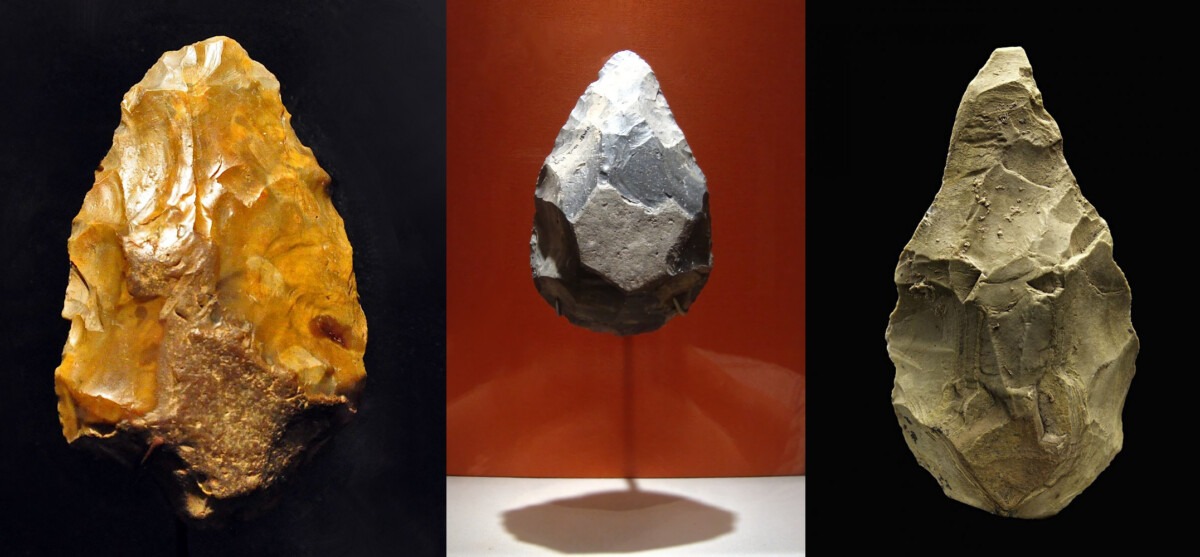
Simple wood tools starting with picking up a stick to poke at some out of reach fruit likely paralleled the use of stone tools. Wood tools for the most part did not survive the test of time. The earliest so far include advanced javelins from 400,000 years ago and a digging tool from 780,000 years
Discovered in the 1990s, this 400,000-year-old Homo heidelbergensis structure in France is believed to be a primitive hut or shelter made from wooden posts and branches. The structure is thought to have been built by Homo heidelbergensis. The shelter is estimated to be around 4-5 meters (13-16 feet) wide and 6-7 meters (20-23 feet) long.
Terra Amata Site, France Read More »
Homo rhodesiensis went extinct somewhere around 125,000 years ago.
Extinction: Homo rhodesiensis Read More »
Homo rhodesiensis, often regarded as Africa’s counterpart to Europe’s Homo heidelbergensis, represents a pivotal species. Discovered in Kabwe, Zambia, the species exhibits a mix of robust and modern traits with a large brain size and advanced tool use, reflecting significant cognitive capabilities. Interbreeding Analysis: The evolutionary journey of Homo rhodesiensis might highlight well the complex
Homo rhodesiensis: A Hybrid Lesson Read More »
Homo longi reveals that human evolution in eastern Asia was regionally complex, braided, and far less linear than once imagined.
Homo longi: Rewriting Human Migration Narratives Read More »
The origins of tent-like structures in human history remain shrouded in mystery, primarily due to the perishable materials involved and the lack of direct archaeological evidence. However, as Homo erectus appeared and spread into varied climates, their enhanced tool-making skills and control of fire likely necessitated and enabled the construction of more complex shelters. This
Emergence of Early Hominin Shelters Read More »
The earliest containers were likely simple natural resources that early hominins stumbled upon and adapted for use. Starting possibly with Homo habilis around 2.0 million years ago, these early humans may have utilized large leaves, shells, or naturally hollowed-out pieces of wood as rudimentary containers. This usage marks an innovative step in early human technology,
First Proto-Containers Read More »
The dawn of collective learning can be traced back the oldest known stone tools, discovered at Lomekwi 3 in Kenya. The creation of these tools required more than just individual innovation; it involved the rudimentary form of collective learning, where knowledge of toolmaking was shared within groups. This early transmission of skills not only enhanced
Collective Learning Emerges Read More »
Transcendental Intelligence (TI) likely emerged around this time in species like Homo antecessor and Homo heidelbergensis. Species such as these mark a compelling case for the early development of TI: the ability to store information outside the mind and across generations. This would likely take the form of stories, art, or something like a symbolic
Transcendental Intelligence Emerges Read More »
Full emotional intelligence (EI) likely emerged around this time in species such as Homo antecessor and Homo heidelbergensis. EI heralds the dawn of a new era where emotional intelligence began to take a recognizable shape. Analysis: With indications of complex social structures, more potential for language, and advanced tool-making abilities, these species navigated their world
Full Emotional Intelligence Emerges Read More »