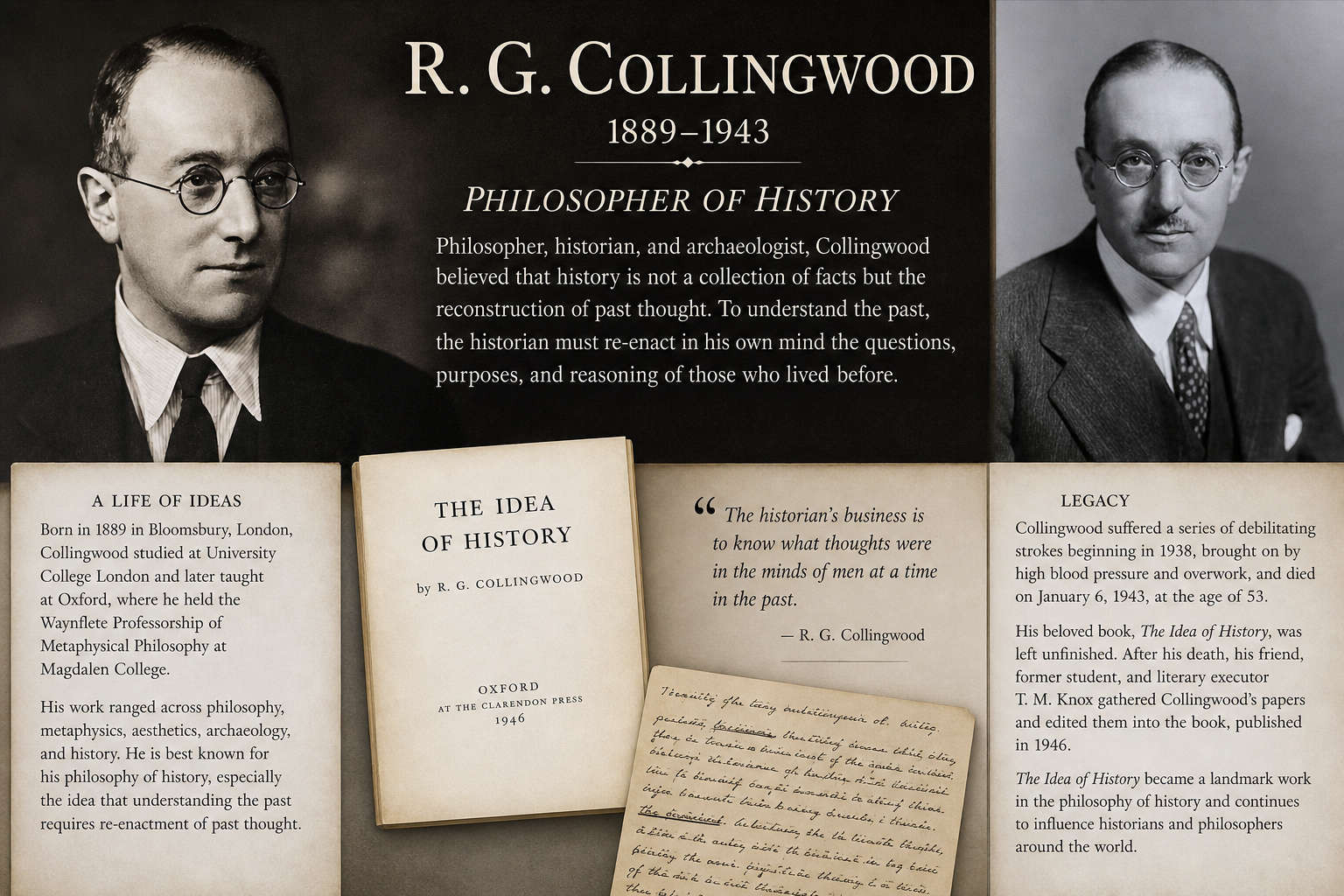
Book: The Idea of History
Collingwood helped show that history is not just collecting facts. It is the disciplined reconstruction of past human thought and action from surviving evidence.
Book: The Idea of History Read More »


Long works like books and collections of shorter works intended for publication.
Collingwood helped show that history is not just collecting facts. It is the disciplined reconstruction of past human thought and action from surviving evidence.
Book: The Idea of History Read More »

Heidegger’s existentialism centers on the concept of “being-there” (Dasein), which refers to the unique way humans exist and relate to the world. Heidegger explores the nature of being and emphasizes the importance of understanding one’s own existence within the context of time and space. His philosophy delves into the idea of being authentic by confronting
Heidegger’s Existentialism Read More »

Sartre’s existentialism emphasizes individual freedom, choice, and responsibility. It posits that existence precedes essence, meaning that individuals are not defined by any preexisting essence but instead create their own essence through actions and decisions. Sartre’s philosophy focuses on the concept of “bad faith,” where people deny their freedom by conforming to societal expectations, and encourages
Sartre’s Existentialism Read More »

The Rigveda, Sanskrit for “praise knowledge”, is a collection of sacred texts of Hinduism first written down between 1700 and 1100 BCE. The sounds and texts of Rigveda have been orally transmitted since at least circa 2000 BCE. It discusses cosmology, praises deities, and covers philosophical questions including… 1.164.34: “What is the ultimate limit of
Rigveda Samhita, Veda Book 1 of 4 Read More »
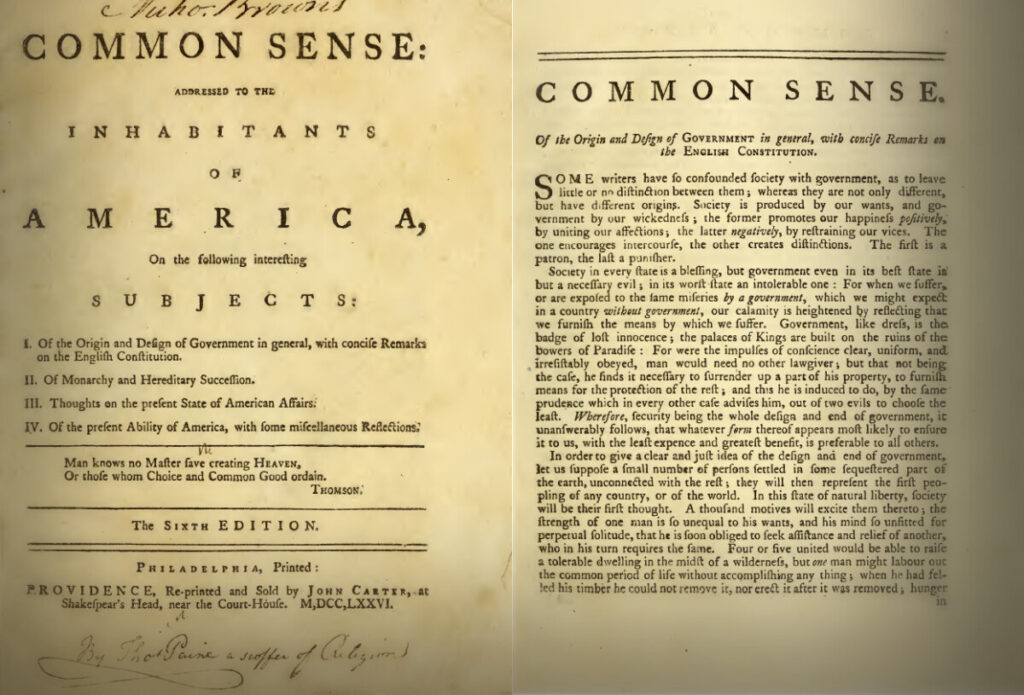
Common Sense is a pamphlet published by Thomas Paine in early 1776 advocating independence for the thirteen colonies from England. It was sold and distributed widely and read aloud at taverns and meeting places. Per capita, it had the largest sale and circulation of any book published in American history. the distinction between kings and
Common Sense by Thomas Paine Read More »
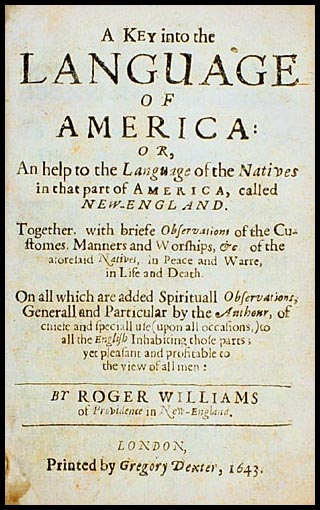
In 1643, Roger Williams wrote A Key Into the Language of America, A help to the language of the natives in that part of America called New England. He wrote the book mostly while on the two-month voyage to England. It was on sale by September 7, 1643. He wrote down what he learned about the
Book: A Key Into the Language of America Read More »
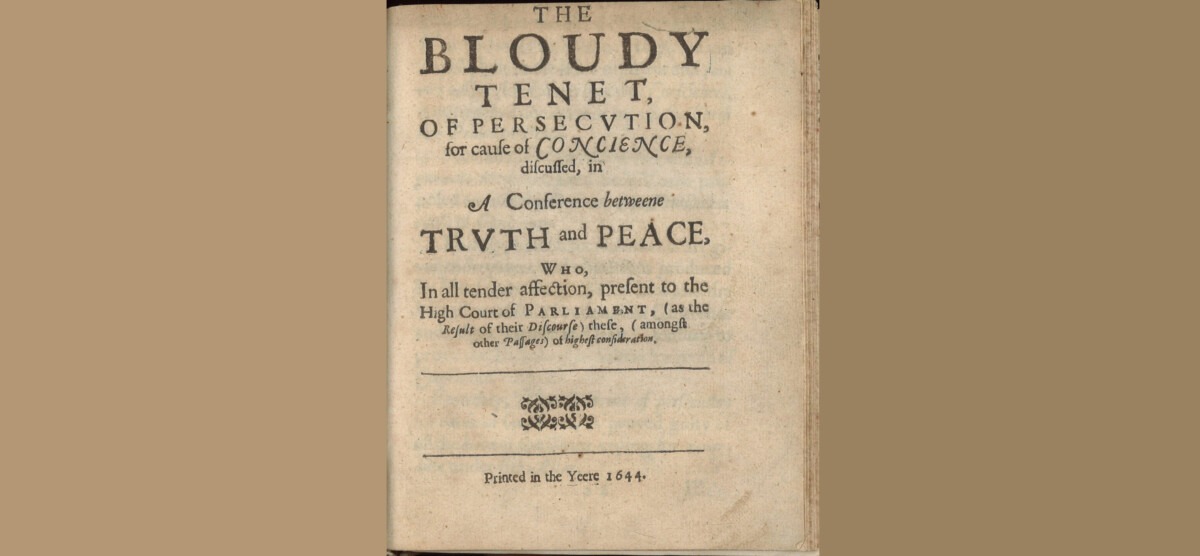
Roger Williams argued that government should protect freedom of conscience, not enforce religious belief. Separating church and state protects citizens from persecution while also protecting religion from political corruption.
Book: The Bloudy Tenent of Persecution Read More »
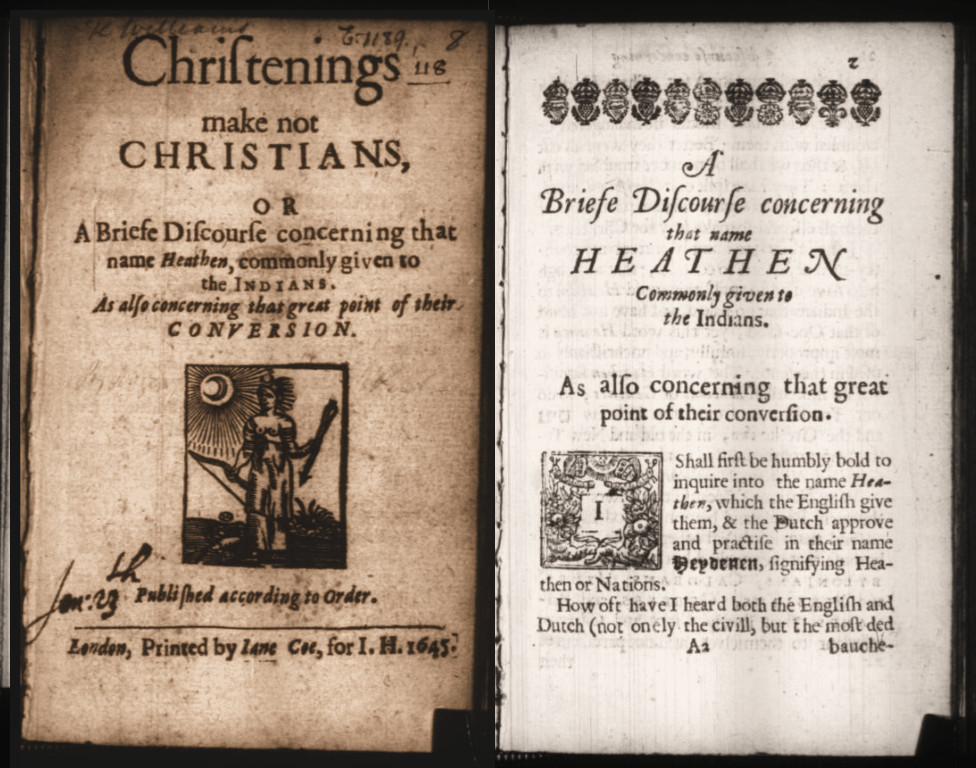
Let go of labels that shrink people. Roger Williams saw that calling Native Americans “heathens” was not just a word; it was a habit of mind that made harm easier.
Book: Christenings Make Not Christians Read More »