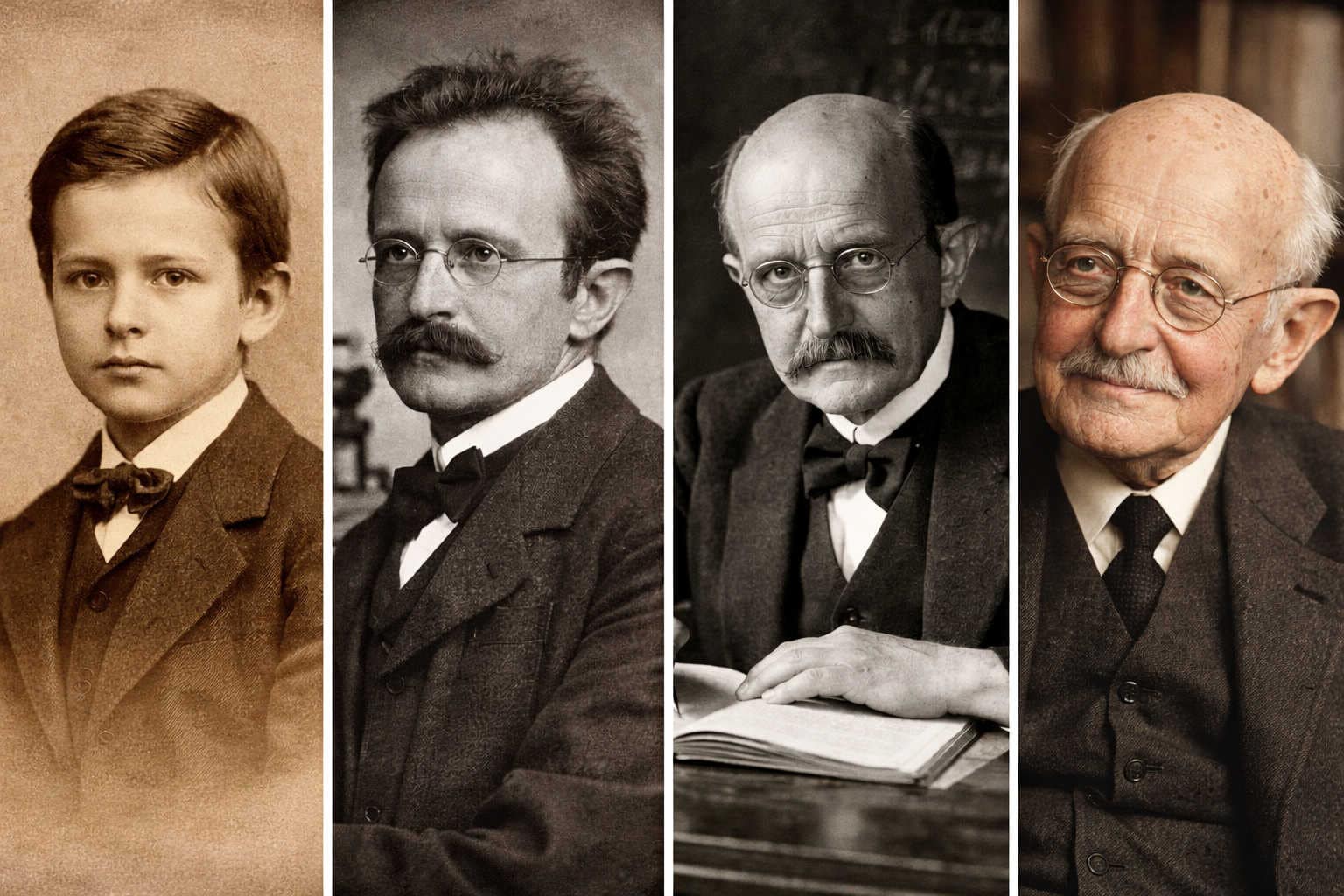
Max Planck
Planck discovered limits by following the math honestly—even when it contradicted intuition.


History of the Lands
Planck discovered limits by following the math honestly—even when it contradicted intuition.
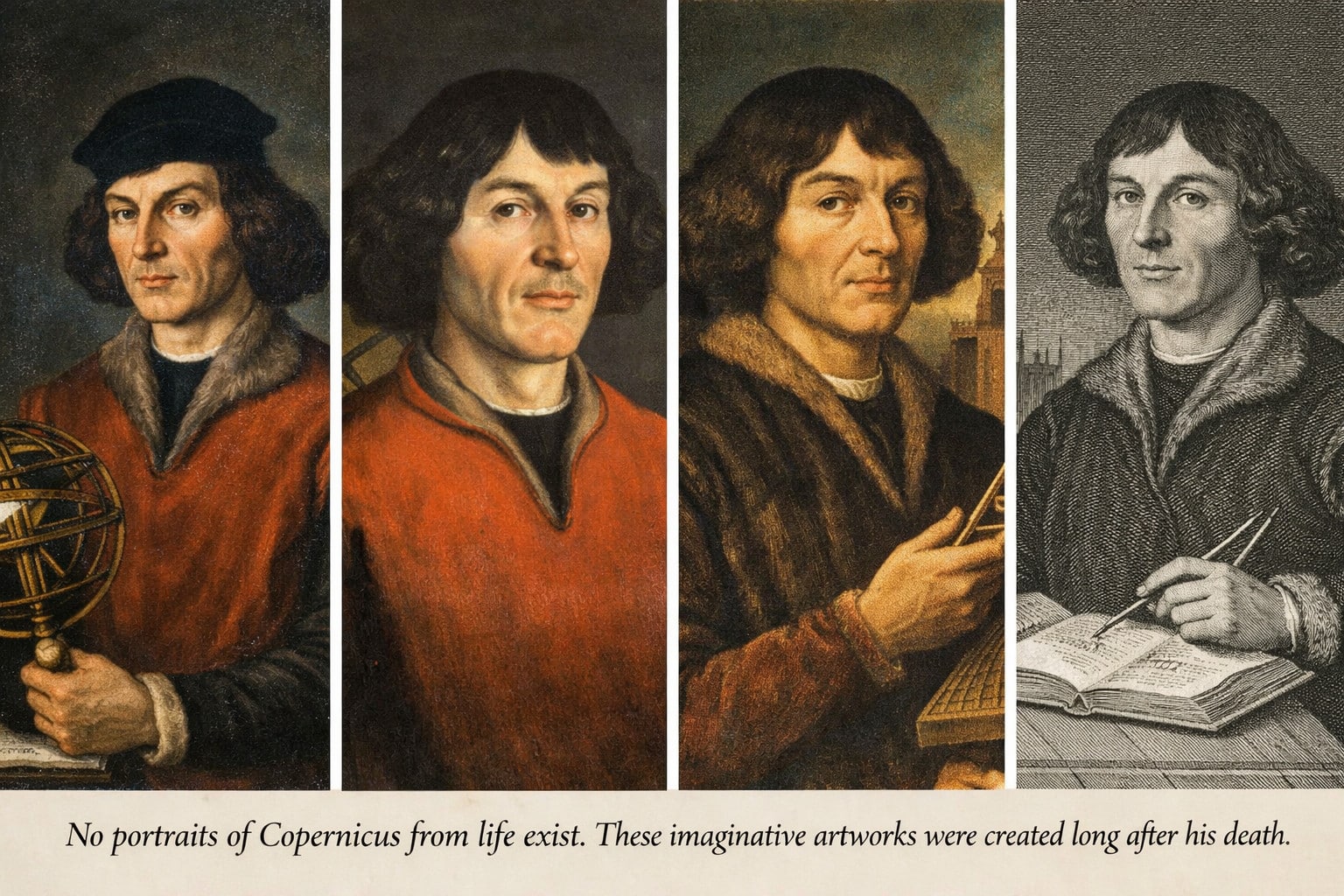
Nicolaus Copernicus lived quietly, worked carefully, and changed the universe without ever seeing the revolution he began.
Nicolas Copernicus Read More »

Around 1.5 million years ago, the ancestors of today’s bonobos and chimpanzees became isolated from one another, likely due to the formation of the Congo River. This geographical barrier separated populations of the genus Pan, which ultimately evolved into two distinct species: bonobos (Pan paniscus) south of the Congo River, and chimpanzees (Pan troglodytes) to
Chimpanzee-Bonobo Split Read More »

Location: Divje Babe Cave, Slovenia Attribution: Possibly Neanderthal Material: Bear femur Discovered in the 1990s, this flute-like artifact features holes resembling those used for producing music. If confirmed as a flute, it would suggest that Neanderthals possessed musical traditions. However, some scholars argue these holes might be from animal activity. The Divje Babe flute continues

Homo habilis, one of the earliest known human ancestors, emerged around 2.3 million years ago with a brain size significantly larger than modern chimpanzees. By around 1.8 million years ago, they became the first species known to use toothpicks for dental hygiene, alongside their advanced tool use for specific tasks like skinning animals and cutting
Earliest Known Toothpicks Read More »

About 7,260 Years Ago someone created the Dispilio Tablet. Discovered in 1993 in the Neolithic Settlement of Dispilio in Greece. It is an ancient wooden tablet, etched with intricate symbols, yet to be deciphered,
Dispilio Tablet: European Proto-Writing Read More »

The Sungir Burial Site, dating back to around 30,000 BCE, offers a remarkable glimpse into the lives of Upper Paleolithic humans in what is now Russia. The people of Sungir were part of a sophisticated hunter-gatherer society, living in the cold climate of the Russian Plain. They were highly skilled artisans and craftsmen, evidenced by
Sunghir Burial Site Read More »

Europe, Czech Republic: The Vinor Circular Building, discovered in Vinoř, Prague, is a remarkable archaeological site dating back to approximately 900 years before the common Biblical creation date. This Neolithic structure, known as a roundel, consists of three concentric trenches forming a large circular enclosure with multiple entrances. With an internal diameter of about 55
Vinor Circular Building: a roundel Read More »

The sea offers tremendous resources and stability. The rising and receding oceans continue to destroy the homes of many. How many unknown cultures in our vast history thrived on the coast for millennia? The site discovered off the coast of Cuba, also known as the “Cuban Underwater Pyramids,” includes pyramid-like structures and other geometric formations
Cuban Underwater City: More Research Needed Read More »

The Fuente Magna Bowl, discovered in 1950 near Lake Titicaca, Bolivia, is a large stone vessel with intricate carvings. Unearthed by a local farmer, the bowl was later donated to a small local museum and eventually transferred to the Museum of Precious Metals in La Paz. The bowl features engravings that some claim resemble ancient
Fuente Magna Bowl: Forgery or Real? Read More »

Dice as old as 5,100 years ago illustrate how simple ideas can emerge independently and spread widely: a clear case of convergent invention and cultural transmission.
Oldest Known Dice: Skara Brae Read More »

Atlit Yam is a captivating ghost town submerged beneath the Mediterranean Sea off the coast of Israel. This ancient Neolithic village, dating back over 9,000 years, offers a unique window into the lives of these coastal inhabitants. Abandoned in a hurry, the site was left with many belongings and food sources still intact, offering a unique
Atlit Yam Neolithic Village Read More »

The Proto-Inca people likely lived in the Andean region of Peru as far back as 4500 BCE. It’s reasonable to assume they were hunter-gatherers, adapted to the challenging mountain environment. They may have had a nomadic lifestyle, following the seasonal migration of animals and plants. The Proto-Inca people likely developed early forms of textiles, ceramics,

The Inca civilization only lasted a few centuries from about 1200 CE. In that short period it became the largest empire in pre-Columbian America. It emerged in the Andean region of present-day Peru. The early Incas established the city of Cusco as their capital. They expanded rapidly, by the 15th century they developed an extensive
Inca Society Emerges Read More »

The Proto-Maya people likely inhabited the Yucatan region of Mexico, Guatemala, Belize, and Honduras around 3500 BCE. It’s reasonable to assume they were also hunter-gatherers, taking advantage of the area’s diverse wildlife and plant resources. They may have had a more settled lifestyle, with early evidence of ceramics and permanent settlements. The Proto-Maya people likely

The Mayan civilization lasted nearly 3 millennia. It began to take shape in the Yucatan region of Mexico, Guatemala, Belize, and Honduras around 2000 BCE, with evidence of early agricultural communities. However, prior to embracing farming, this community was in the area for at least a few centuries. By 250 CE, they had established major

It’s reasonable to assume that the Proto-Olmec people lived in the region of modern-day Mexico as far back as 4000 BCE. Likely, they were hunter-gatherers, exploiting the abundant resources of the tropical forests and coastal areas. They may have had a nomadic or semi-nomadic lifestyle, following game and seasonal food sources. It’s possible that they
Proto-Olmec People Read More »

The Olmec civilization, often considered the “mother culture” of Mesoamerica, formally emerged around 1600 BCE based on when they embraced farming. They primarily emerged in the tropical lowlands of present-day southern Mexico. Known for their colossal stone heads and sophisticated art, the Olmecs developed early forms of writing and urban organization. Their major centers, such
Olmec Society Emerges Read More »

The Dolní Věstonice people thrived in a harsh Ice Age landscape. They built sturdy huts from mammoth bones, crafted intricate art, and developed symbolic expression. They honored their dead with elaborate burials and likely held spiritual beliefs. With early ceramics and resourceful hunting practices, they demonstrated remarkable adaptability and creativity, leaving behind a lasting legacy
Czeck: Dolní Věstonice Community Read More »

The Mezhyrich community thrived in Ukraine, living in huts built from mammoth bones. These resourceful people used mammoth skulls, tusks, and bones to construct shelters covered with animal skins. They engaged in daily activities such as cooking, tool-making, and socializing, showcasing a harmonious, bustling life. The nearby rivers provided resources and sustenance, while their sophisticated
Ukraine: Mezhyrich Community Read More »