
Logic
Aristotle helped make reasoning visible. He showed that arguments have structure, and that conclusions must be tested against their premises.


Aristotle helped make reasoning visible. He showed that arguments have structure, and that conclusions must be tested against their premises.

30 Phil, Chapter 9, Aristotle, Touchstone 24: Empiricism. Empiricism says knowledge comes primarily from sensory experience. It emphasizes the role of observation and evidence in forming beliefs and understanding the world.

30 Phil, Chapter 9, Aristotle, Touchstone 23: Rationalism. Rationalism emphasizes reason and a priori knowledge—knowledge you are born with—as the primary means of understanding reality. It says truths can be known independently of experience and that reason alone can provide an understanding of the world.

30 Phil, Chapter 9, Aristotle, Touchstone 22: Syllogisms. While deductive reasoning existed informally before Aristotle, he formalized it in his work “Prior Analytics” by introducing the Syllogism. It structures arguments into two key premises leading to a conclusion and remains widely used today. Aristotle knew that syllogisms can both analyze and validate derived truths, by logically

30 Phil, Chapter 8, Plato, Touchstone 21: Ignorance is Bliss. The concept of “Ignorance is bliss” says being uninformed or unaware of certain truths can lead to greater happiness. Take, for example, germophobes—people who are excessively concerned about germs. Constant awareness and meticulous research about germs and contamination could elevate their levels of stress, affecting
Ignorance is Bliss Read More »

Reflective inquiry is the act of exploring and examining one’s own thoughts, beliefs, and assumptions to clear the illusions of life.
Reflective Inquiry Read More »

Identity is not one thing. It is a living mosaic made of inherited traits, personal choices, social influences, and life experiences. We are not born with a fully formed essence. We build who we become.

A worldview is the lens through which you see reality, yourself, and other people. It is made of your personal language, religion, and philosophy.

30 Phil, Chapter 7, Heraclitus, Touchstone 17: Impermanence and Flux. Impermanence as Flux is the idea of an ever-changing nature of life and the interconnectedness of all things. It is summed up as: “Everything is in flux.” Like the idea a “river,” everything flows. The only constant is change, and to resist it is to resist
Impermanence and Flux Read More »

30 Phil, Chapter 6, Buddhism, Touchstone 16: Nondualism-Dualism. Nondualism and dualism help to explore the many variations and nuances within the overarching discussion of our nature, whether we have a soul, what happens to it, etc. Dualism says the mind and the body are distinct entities from each other and from the universe. How they interact
Nondualism and Dualism Read More »

Self is the idea that there is a deeper “true self” beneath the mind. Non-self is the idea that whatever the self is, it is not a fixed thing.
Self & Non-Self; Atman & Anatman Read More »

Normalcy is not reality itself, but our idea about recurring patterns in reality, shaped by experience, culture, and expectation.
Normalcy, Normal, and Abnormal Read More »

Schemas are mental categories across frameworks that simplify life. To think well, challenge them. Keep what fits, update or drop the rest.

The Unknowable Dao reminds us that some of reality may be too deep, too fluid, or too vast to capture fully in words.

30 Phil, Chapter 4, Laozi, Touchstone 10: Authenticity. Ziran is often translates to “of its own.” Living in accordance with Ziran means you embrace naturalness. You welcome the spontaneous aspects of existence. With Ziran, you flow with nature while embracing your true self and innate tendencies, your authentic self. Living in accordance with Ziran is you
Ziran, Authenticity, or Authentic Self Read More »

30 Phil, Chapter 4, Laozi, Touchstone 9: Wu-wei or “non-action” The term wu-wei is often translated as “non-action.” It is a general concept. It is the idea that the universe has a flow, and it is better to ride that flow than to fight it. Wu-wei is non-action, effortless action, or inaction, but does not mean
Wu-wei or “non-action” Read More »
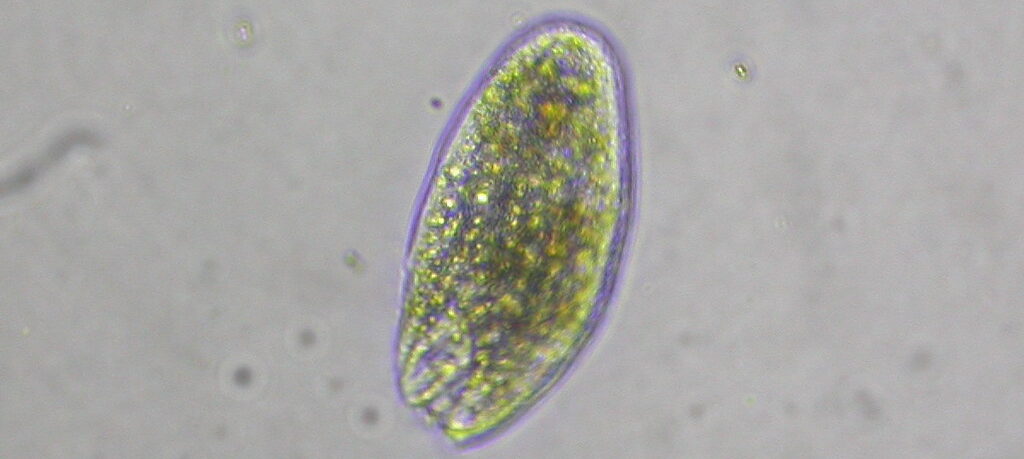
Although protozoa evolved from eukaryotes about 2 billion years ago, it was 1674 that humanity saw them for the first time. That’s when Antonie van Leeuwenhoek, using his meticulously crafted microscopes, discovered protozoa—the first microscopic observation of single-celled organisms. His detailed observations and descriptions of what he called “animalcules” in a drop of pond water
Protozoa Discovered: Microbiology Founded Read More »
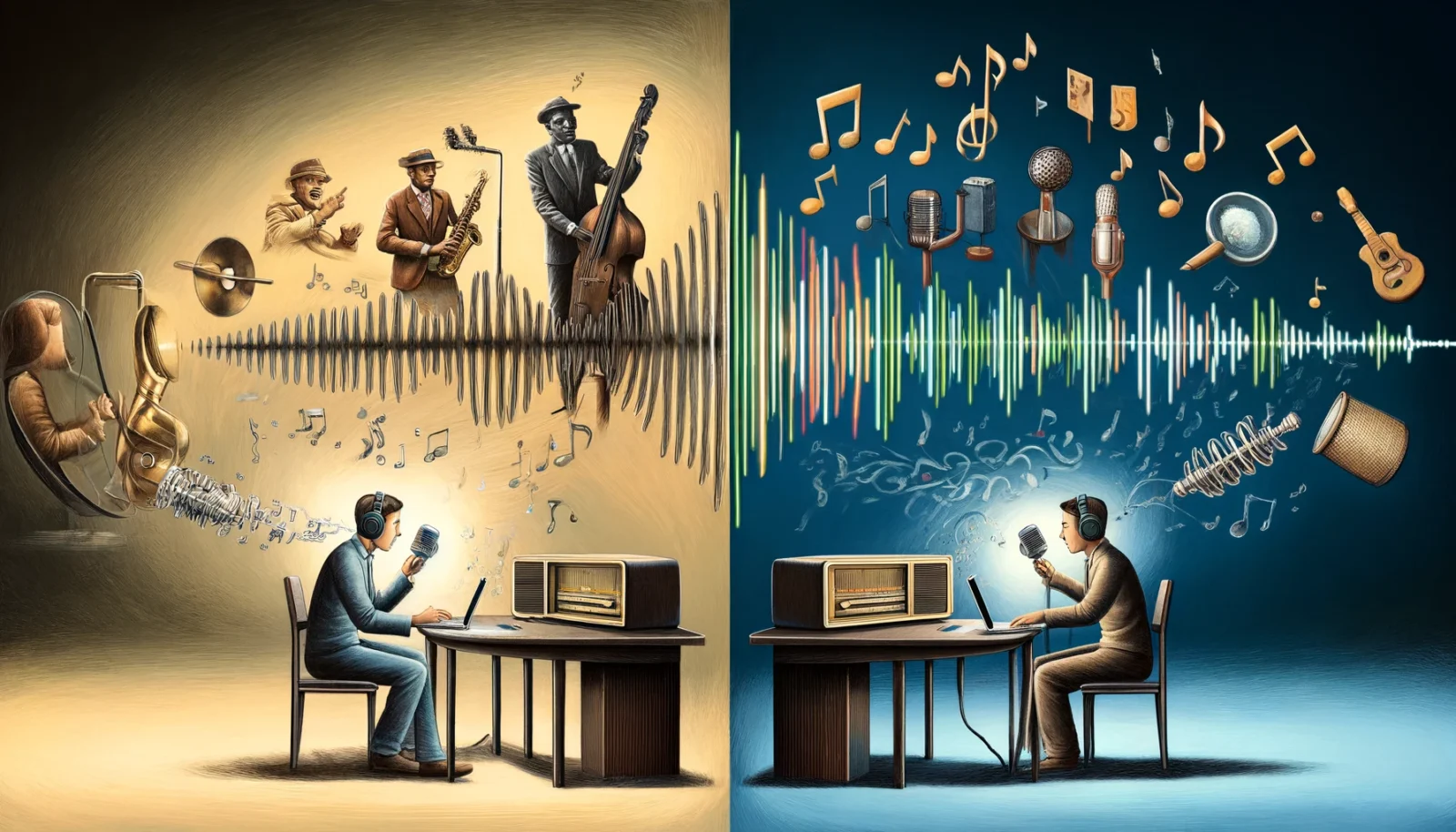
In 1906, Reginald Fessenden achieved the first analog transmission of sound over radio waves on Christmas Eve. An analog transmission is like a flowing river that continuously changes its speed and depth to carry things along its path. In analog communication, sounds or images are directly transformed into continuous signals that mimic the original. For
First Analog Radio Transmission Read More »
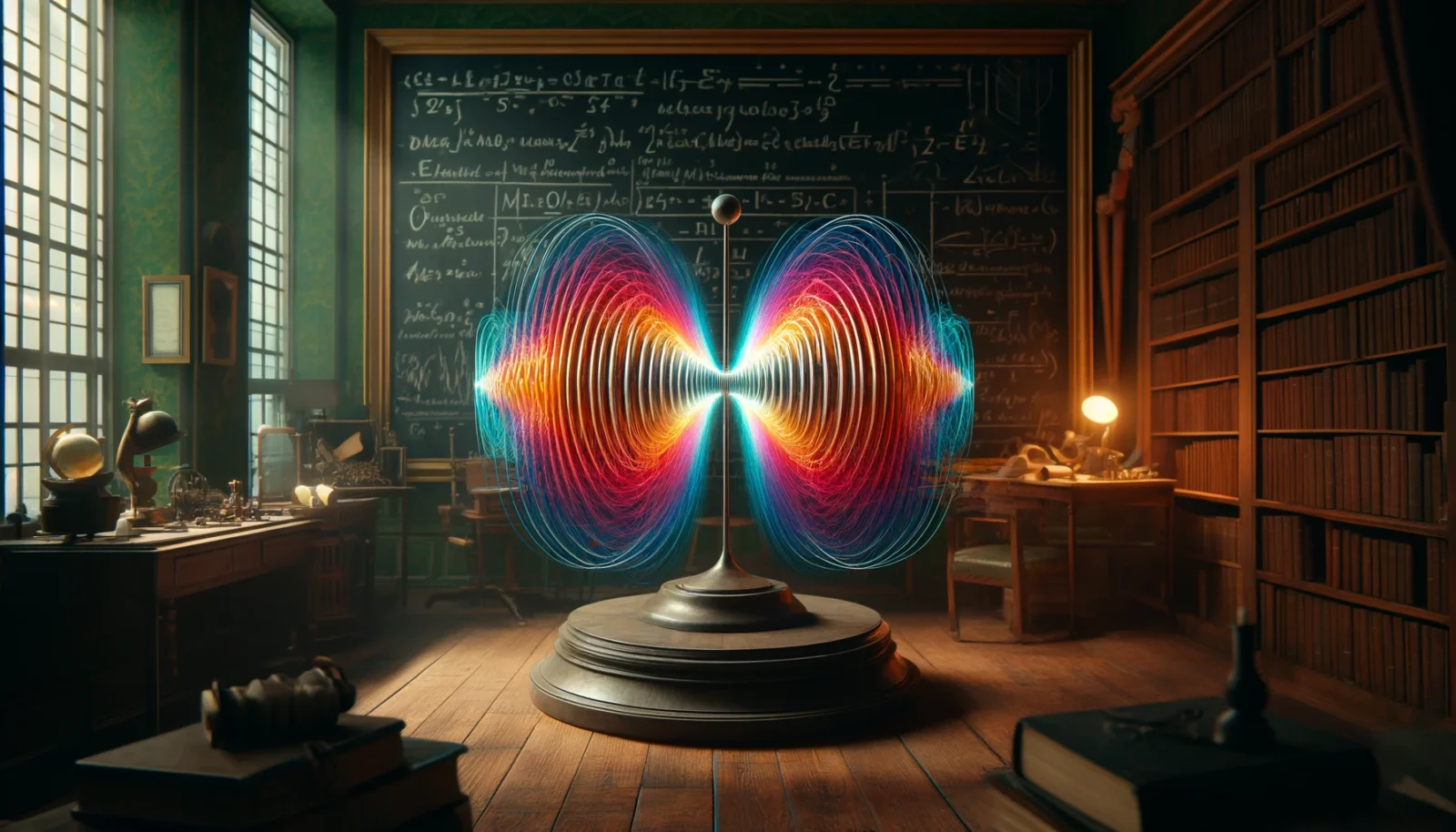
James Clerk Maxwell predicted electromagnetic waves, but he did not perform experiments to prove their existence. His prediction was based on his work on the classical theory of electromagnetic radiation, which unified electricity, magnetism, and light as different manifestations of the same phenomenon. Maxwell’s equations for electromagnetism predicted the existence of waves of oscillating electric
Electromagnetic Radiation Theory Read More »
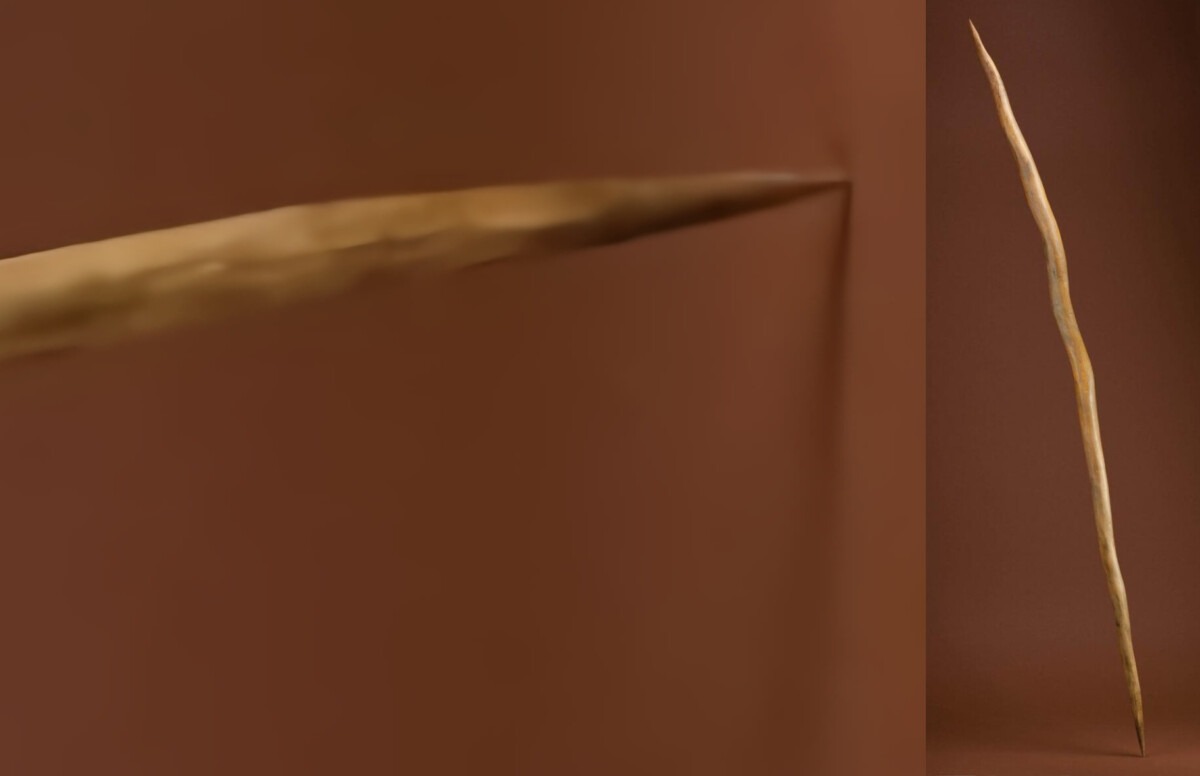
“By 350,000 years ago, early humans crafted javelin-quality spears.” This revelation about ancient spears is profoundly enlightening as it demonstrates the advanced cognitive abilities and social cooperation among early humans. Crafting spears of this quality involves not only selecting the right materials and understanding the physics of balancing and sharpening but also strategic planning for
Ancient Spears 350,000 Years Ago Read More »