

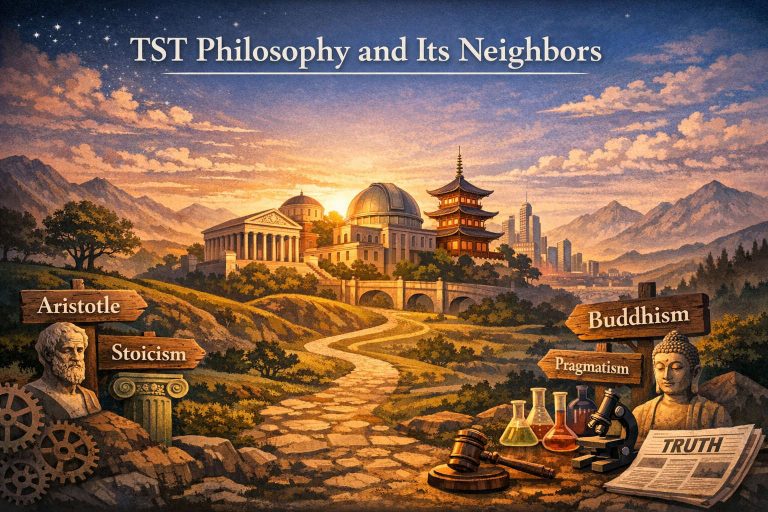
What historical ideas shaped TST Philosophy?
TST Philosophy is a structured synthesis of Epicurean moderation, Stoic resilience, Buddhist clarity, and scientific humility.

What is the history behind quantum mechanics?
Our Time < History
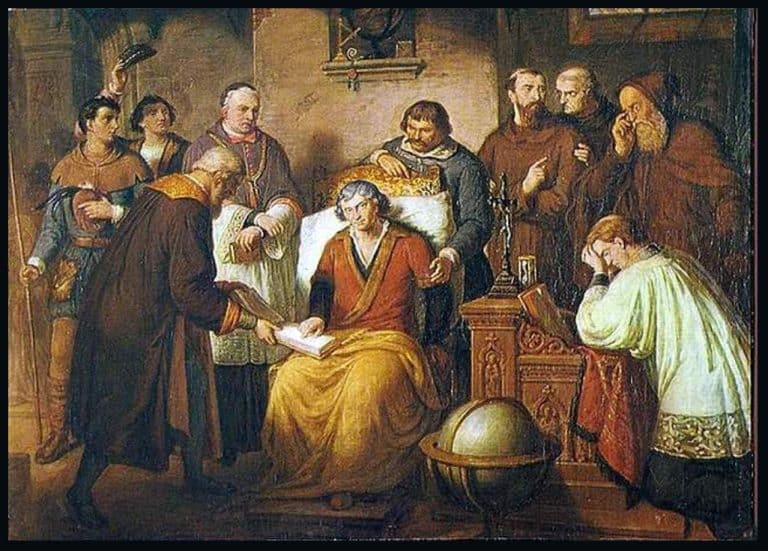
How did Copernicus show both the power and limits of models?
Better models can radically improve understanding without being ultimate truth.

What does history teach us about authoritarian rule?
History shows that authoritarian rule emerges less from cruel leaders than from systems that normalize obedience and discourage independent judgment.

Has Planck’s Constant been updated?
Planck’s constant evolved from a mathematical fix into a fundamental boundary of our current understanding of reality.

Was Copernicus famous during his life?
Nicolaus Copernicus became world-changingly famous after his death—but lived most of his life in relative obscurity.

Who is the father of numerology?
In the ancient world, numbers were not just tools but truths. For thinkers like Pythagoras, mathematics, nature, and meaning formed a single worldview.
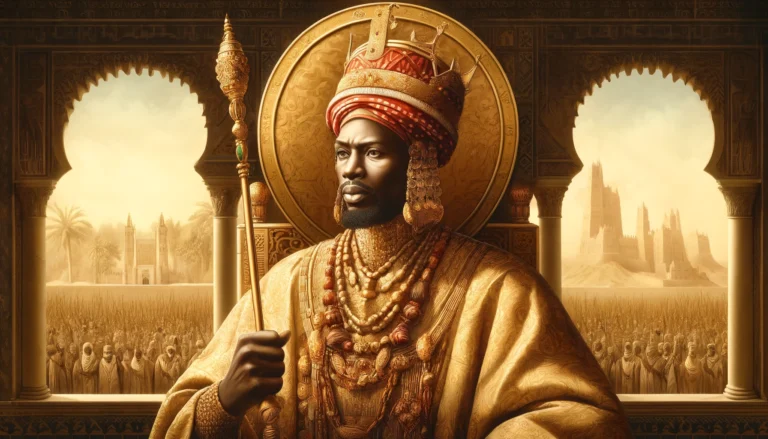
Was the richest person in history an African just before colonial slavery?
Mansa Musa of the Mali Empire is widely regarded as the richest individual in history, illustrating Africa’s deep economic and political sophistication.

Who is famous for questioning cause and effect?
Karma and cause and effect explore causation versus correlation.

When and where was beer invented?
The earliest evidence of spirits is from China, around 7,000 BCE. The earliest traces of beer is 5000 BCE in Iran.

Did Pythagoras coin the word philosophy?
No, Pythagoras was a sophist. He did not know the word philosophy. The word philosophy was coined later by Plato, Aristotle, and others.

Who were the first Socratic philosophers?
The direct students of Socrates is the narrow definition: Plato, Xenophon, etc.

What is the history of existentialism?
Existentialism was born in post medieval Europe, but it's focus on the self and your own thoughts echos Daoism and Buddhism in the East and ...

What is the history of stoicism?
Stoicism began as a response to loss and uncertainty. It evolved into a practical philosophy for resilience, virtue, and inner freedom.

What is the origin story of Voltaire?
Voltaire’s journey reminds us that intellectual freedom often comes at a cost but also shows how the power of ideas can challenge authority, inspire change, ...

Who were the Presocratic Philosophers?
Language itself is in flux. The Presocratic thinkers lived before philosopher was an identity, in a Greek world where sophist still meant “wise,” not yet ...

What is the Updated History of Earth?
The updated history of Earth reveals a far more dynamic, violent, and interconnected story—one where geology and life co-evolved from the very beginning.

What do we know about the Indus Valley Civilization?
Rediscovered in the 1920s, they were a peaceful development. Their cities included Mohenjo-Daro and Harappa. Hence, they are sometimes called Harappans.
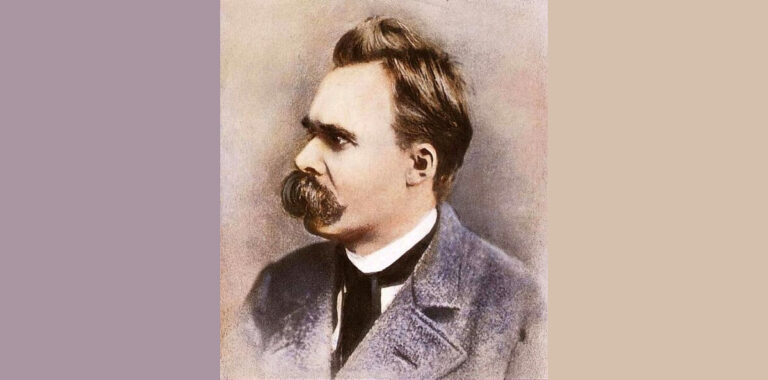
Who was Friedreich Nietzsche?
Friedrich Nietzsche marks the moment in history, about 1890, when inherited moral certainty collapsed.

When were toothpicks invented?
Fossil evidence shows that Homo habilis, living over 2 million years ago, used small sticks or similar objects to clean their teeth, leaving characteristic grooves.