

As life crept onto land, fungi evolved threadlike filaments called hyphae. These microscopic strands could penetrate rock, soil, and decaying material, extracting nutrients molecule by molecule. The shift from swimming spores to spreading filaments marked fungi’s true terrestrial breakthrough.
STORY
Hyphae break rock
☐ Read
☑ Read
You’ve read this 0 times.
You’ve listened to this 0 times.
By Michael Alan Prestwood
Sun 22 Feb 2026
Published 8 months ago.
Updated 6 months ago.
Share :
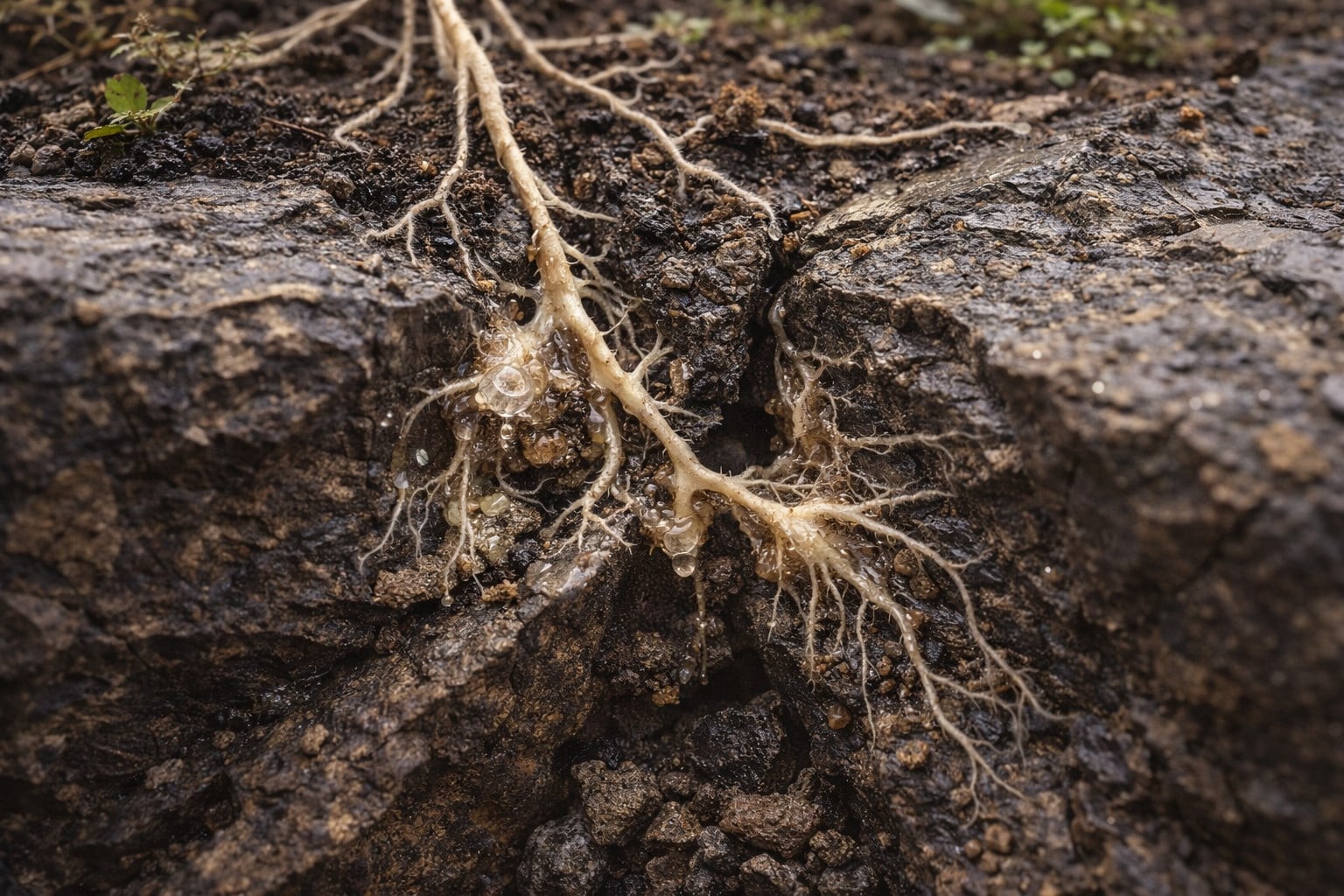
Hyphae break rock
~480 MYA (+/- 20 million)
Filamentous growth (hyphae); terrestrial colonization
- < 1 minute read

Michael Alan Prestwood
Natural Philosopher & Author
Natural Philosopher & Author
Prestwood explores science-first philosophy, with particular attention to the convergence of disciplines. Drawing on his TST Philosophy, his work emphasizes rational inquiry grounded in empirical observation while engaging questions at the edges of established knowledge. With TouchstoneTruth positioned as a living touchstone, this work aims to contribute reliable, evolving analysis in an emerging AI era where the credibility of information is increasingly contested.
Email
Print
The Prestwood Column
Menu
October 2026
»COLUMN ARCHIVE
--COLUMN--
Column Research….
NEW BOOK! NOW AVAILABLE!!
30 Philosophers: A New Look at Timeless Ideas
by Michael Alan Prestwood
