

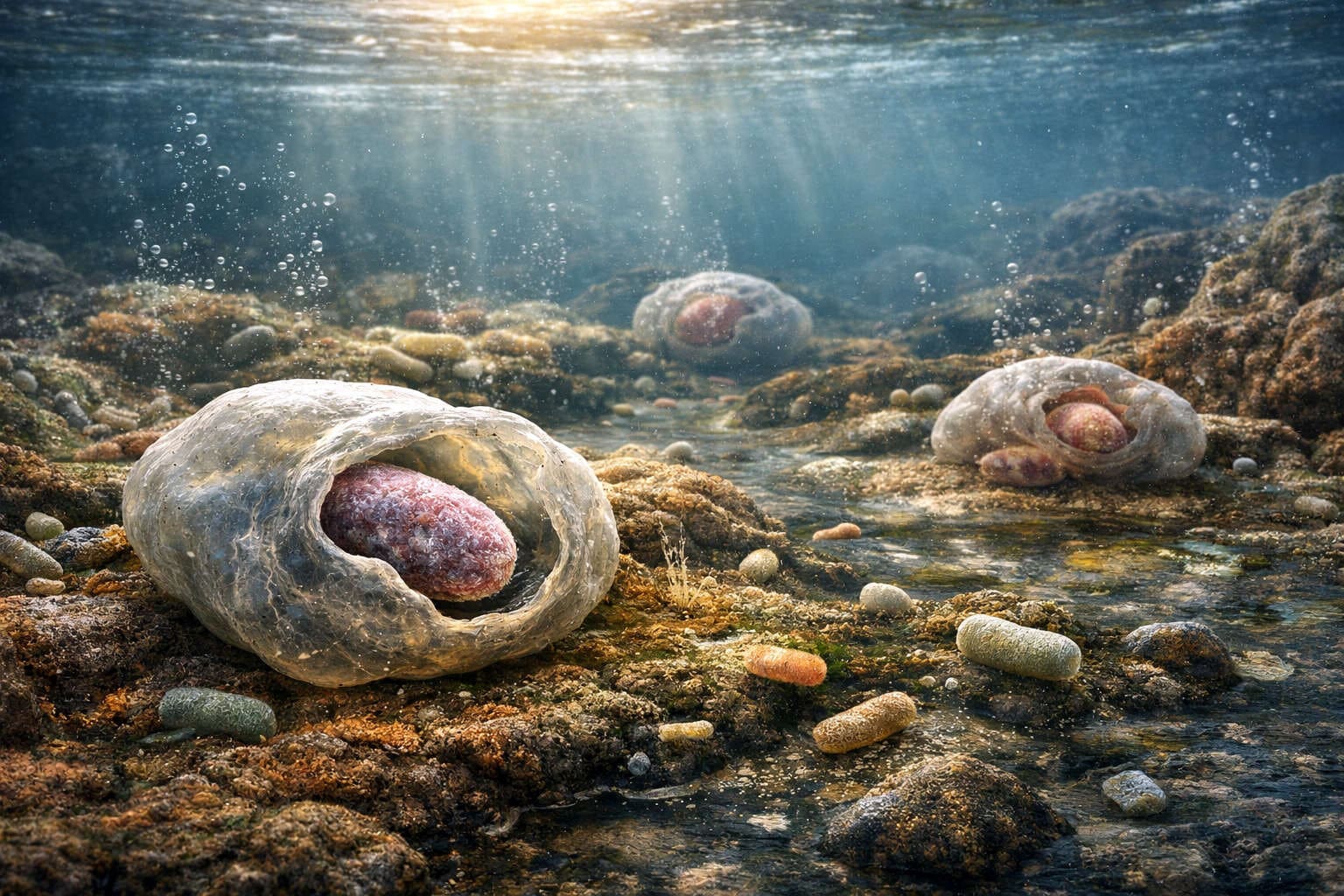
In early oxygen-rich environments, some archaeal cells occasionally engulfed bacteria. Most of these encounters failed. But in rare cases, an oxygen-using bacterium survived inside its host and produced energy in exchange for protection. Natural selection stabilized this partnership, and the bacterium evolved into the mitochondrion — a turning point that enabled complex eukaryotic life.
Imagine the crowded microbial ecosystems of early Earth. Countless bacteria and archaea lived, competed, and died in constantly shifting chemical conditions. Oxygen was rising, creating both danger and opportunity.
Some archaeal cells likely evolved flexible membranes and primitive internal scaffolding that allowed them to engulf other cells. Most engulfment events ended in digestion or death. But occasionally, an aerobic bacterium persisted inside its host. If it reduced oxygen toxicity while generating usable energy, both cells benefited. Over time, this temporary coexistence became permanent symbiosis. The internalized bacterium became the mitochondrion, and a new form of life — the eukaryotic cell — was born.
The mitochondria in your cells still divide like bacteria. They carry circular DNA. They use bacterial-style ribosomes. And they sit inside a double membrane — the scar of an ancient engulfment. Although some cells, like mature red blood cells, do not have mitochondria, nearly all your cells do. And some cells, like heart muscle cells that require enormous amounts of energy, contain thousands of them. Cardiac muscle cells (cardiomyocytes) can contain 5,000 to 8,000 mitochondria per cell. Your brain contains about 86 billion neurons — and many of them carry nearly 2,000 mitochondria each.
Every time one of your cells divides, it reenacts a 2.4 billion-year-old merger.

