Explore Science-first Philosophy

FAQ

Is history a Truth Hammer?

Thu 7 May 2026
Published 11 hours ago.
Updated 11 hours ago.
Related FAQs
Can authors create fiction beyond our universe?
Was math discovered or invented?
Is the idea of superposition multiple states irrational?
Was Einstein’s Theory of Relativity ever irrational?
Is Philo’s interpretation related to the split in the Idea of Ideas?
Does infinity exist?
Share :
Email
Print

Is history a Truth Hammer?

No, history is not a separate Truth Hammer. In TST, the three Truth Hammers are science, law, and journalism. History is a disciplined subcategory of journalism, or jounalism of the past. Both journalists and historians document evidence-based stories. 

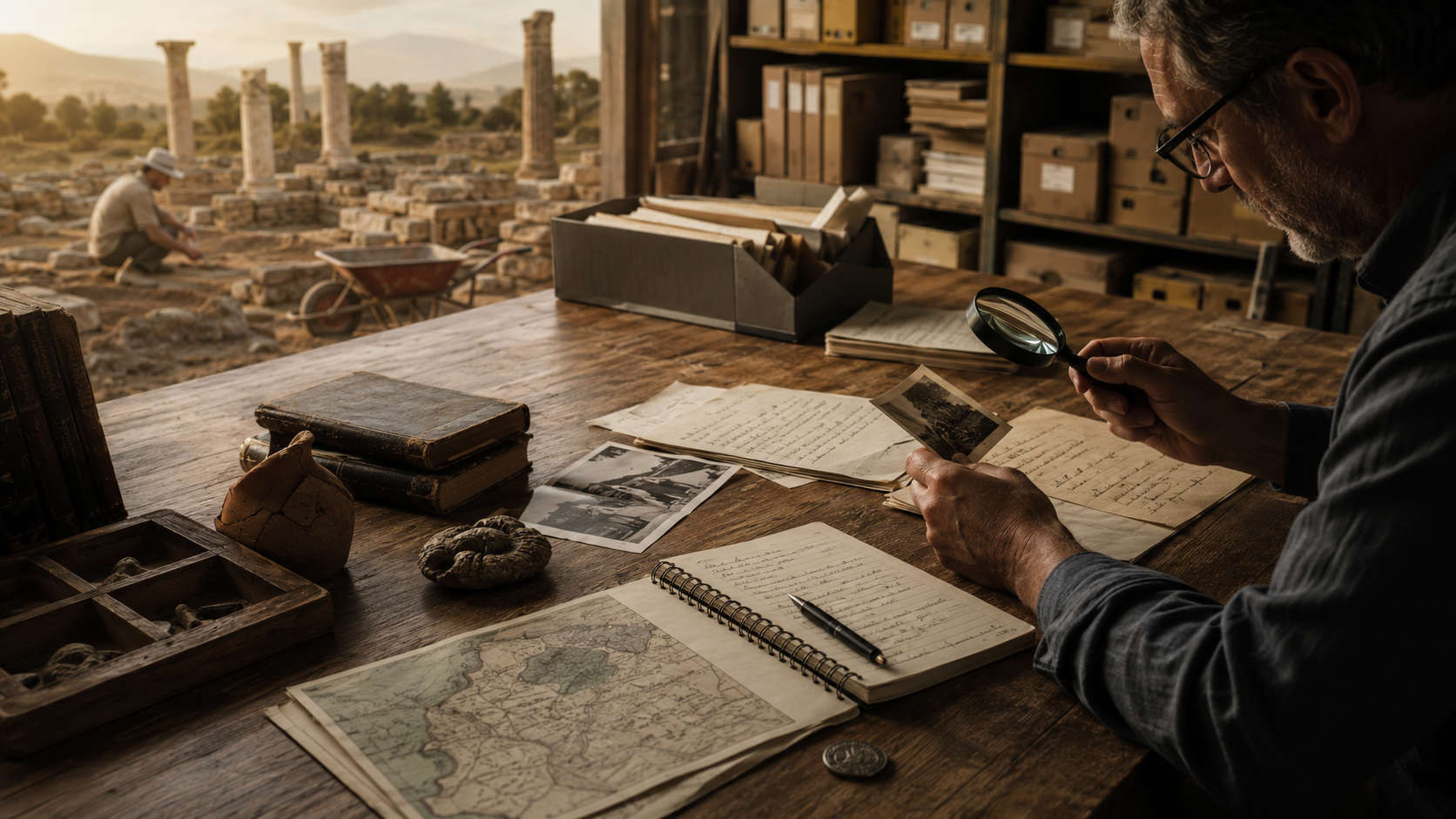
Historical traces, such as documents, artifacts, and DNA, are used as evidence in a way that is partly scientific and partly journalistic. The trace itself is like reporting: “This exists. This was found. This document says this.” The historian then does what a good journalist does: gathers evidence, weighs reliability, and constructs the most accurate story possible. Historians give special weight to primary sources, especially contemporaneous evidence: records, inscriptions, and reports created close to the events being studied. Secondary sources without primary source support are disconnected from the events themselves. History built only on secondary sources stands on borrowed ground; many historians would not use such accounts.

Philosophy of History sits one level above that process. It asks how historical truth works in the first place. How do we move from scattered traces to a responsible narrative? How much confidence should we place in a claim? Journalism often leans on standards like confirming a claim with two independent sources. History has similar instincts, but it gives special weight to contemporaneous evidence: records, witnesses, inscriptions, and artifacts close to the time being studied. The more independent, early, and well-contextualized the evidence is, the stronger the historical claim becomes.

History is a dance between artifacts and stories. Artifacts are the surviving footprints of the past. Stories are the human effort to explain what those footprints mean. A coin can tell us who ruled. A battlefield can tell us violence happened. A letter can reveal what one person claimed, feared, or hoped. But none of these traces speak fully on their own. Someone has to interpret them. That is where history becomes narrative—not fiction, not guesswork, but disciplined storytelling anchored to evidence. The past happened. The historian’s job is to tell the truest version that can be supported.

Related fields help fill in the picture. Archaeology is the science of finding and studying historical traces, especially physical remains left behind by people. Genealogy has its own standards for connecting one person to another across time, using records such as birth certificates, census entries, and DNA. In both fields, finding a trace is only the beginning. Connecting traces into a reliable story requires method, caution, and evidence. That is why history belongs near journalism: it reports what survives, investigates what it means, and builds public truth about the human past.

— map / TST —

History is not a separate Truth Hammer. It is journalism reaching backward, using surviving traces, records, ruins, and memories, to reconstruct the most accurate story the evidence can support.
Michael Alan Prestwood
Author & Natural Philosopher
Prestwood writes on science-first philosophy, with particular attention to the convergence of disciplines. Drawing on his TST Framework, his work emphasizes rational inquiry grounded in empirical observation while engaging questions at the edges of established knowledge. With TouchstoneTruth positioned as a living touchstone, this work aims to contribute reliable, evolving analysis in an emerging AI era where the credibility of information is increasingly contested.
This month @ TST
Column Menu
May 2026
»COLUMN ARCHIVE
--COLUMN--
Column Research….
1. Timeline Story
Book: The Idea of History
2. Linked Quote
“The historian without his facts is rootless…the facts without their historian are…meaningless.”
3. Science FAQ »
Is science tainted by bias?
4. Philosophy FAQ »
Debating History: Should We Say “Dark Ages” or “Middle Ages?”
5. Critical Thinking FAQ »
What is the preservation bias?
6. History FAQ!
Did Einstein’s driver really give one of his early talks?
Bonus Deep-Dive Article
TST Philosophy of History: Empirical Narrative Realism

Comments

Join the Conversation! Currently logged out.
NEW BOOK! NOW AVAILABLE!!

30 Philosophers: A New Look at Timeless Ideas

by Michael Alan Prestwood
The story of the history of our best ideas!
Scroll to Top