
Phil • Cr. Think • Science • Hist • …
TST PRACTICE

The Philosophy Website

FAQ

Is history a Truth Hammer?

☐ Read
☑ Read
You’ve read this 0 times.
You’ve listened to this 0 times.
Thu 7 May 2026
Published 5 months ago.
Updated 3 months ago.
Related FAQs
Why do we struggle to recognize the limits of our own thinking?
Is the Big Bang singularity scientific or philosophical?
Why are invalid fear-based arguments so effective?
Did most humans live in caves 30,000 years ago?
What is the origin story of Voltaire?
Is Terrance Howard correct when he says zero does not exist?
Share :
Email
Print

Is history a Truth Hammer?

No, but history belongs within the journalism truth hammer because both gather evidence, weigh sources, and build public narratives. Many even refer to journalism as history’s first draft.

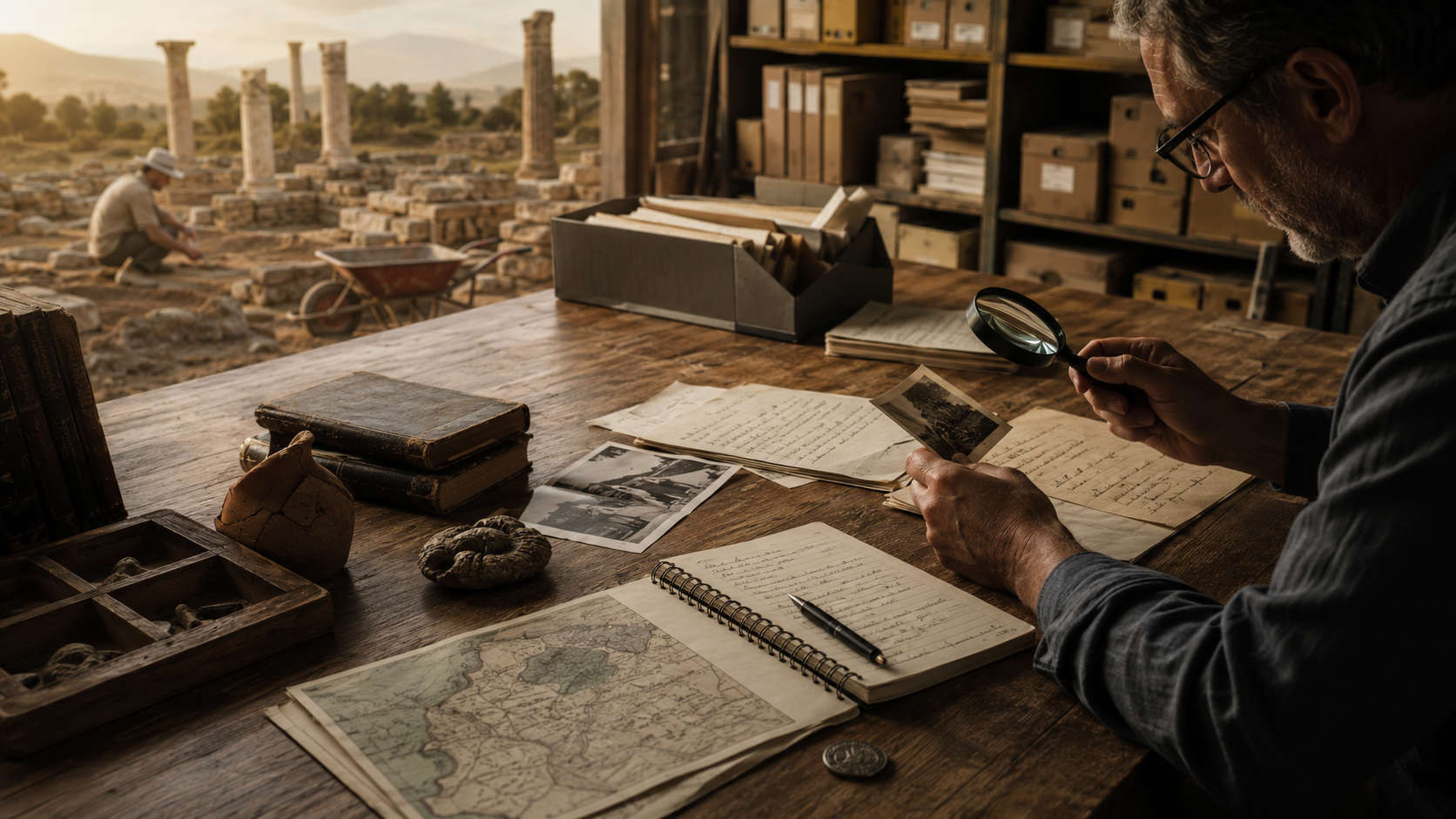
The historian does the same thing as a good journalist: gathers evidence, weighs reliability, and constructs the most accurate story possible. Both give special weight to primary sources, especially contemporaneous evidence: traces originating close to the events. Secondary sources are disconnected from the events. Stories built only on secondary sources stand on borrowed ground; many historians would not use them.

Traces are the surviving footprints of the past. Stories are the human effort to explain what those footprints mean. A coin can tell us who ruled. A battlefield can tell us violence happened. A letter can reveal what someone claimed, feared, or hoped. But none of these traces speak fully on their own. Someone has to interpret them. That is where history becomes narrative: disciplined storytelling anchored to evidence. The past happened. The historian’s job is to tell the truest supported story.

Philosophy of History sits one level above this process. It uses alignment with reality to move scattered traces to a responsible narrative. The better the alignment, the more confidence in a claim. Journalism often leans on standards like using two independent sources. History has similar instincts, but it gives special weight to contemporaneous evidence.

Related fields help fill in the picture. Archaeology is the science of finding and studying historical traces. Genealogy has its own standards for connecting one person to another across time, using records such as birth certificates and census entries. In both fields, finding a trace is only the beginning. All these fields use what survives to build public truth about our shared human past.
— map / TST —

TST Tracker
✓ Reading recorded.
History is not a separate Truth Hammer. It is journalism reaching backward, using surviving traces, records, ruins, and memories, to reconstruct the most accurate story the evidence can support.
Michael Alan Prestwood
Author & Natural Philosopher
Prestwood writes on science-first philosophy, with particular attention to the convergence of disciplines. Drawing on his TST Framework, his work emphasizes rational inquiry grounded in empirical observation while engaging questions at the edges of established knowledge. With TouchstoneTruth positioned as a living touchstone, this work aims to contribute reliable, evolving analysis in an emerging AI era where the credibility of information is increasingly contested.
The Prestwood Column
Menu
September 2026
Column Research….
1. Timeline Story
Hume’s Is–Ought Problem
2. Linked Quote
“I meet with no proposition that is not connected with an ought, or an ought not.”
3. Science FAQ »
Can science prove flourishing should be our goal?
4. Philosophy FAQ »
What is the difference between a normative aim and a normative directive?
5. Critical Thinking FAQ »
Is flourishing for all just utilitarianism?
6. History FAQ!
What is the history of the idea of flourishing in philosophy?
Bonus Deep-Dive Article
TST Normative Ethics: Flourishing as a Philosophical Goal

Comments

Join the Conversation! Currently logged out.
NEW BOOK! NOW AVAILABLE!!

30 Philosophers: A New Look at Timeless Ideas

by Michael Alan Prestwood
The story of the history of our best ideas!
Scroll to Top