
Phil • Cr. Think • Science • Hist •

Explore Natural Philosophy

FAQ

Why does fiction feel real?

Wed 1 Jul 2026
Published 1 month ago.
Updated 4 weeks ago.
Related FAQs
Are personal spiritual experiences believable?
What is secular spirituality?
Why do scientific models work if they aren’t literally true?
Does the Fermi paradox lack good thinking?
How important was the printing press to cultural transmission?
Is it logical to vote for a candidate based on just one issue?
Share :
Email
Print

Why does fiction feel real?

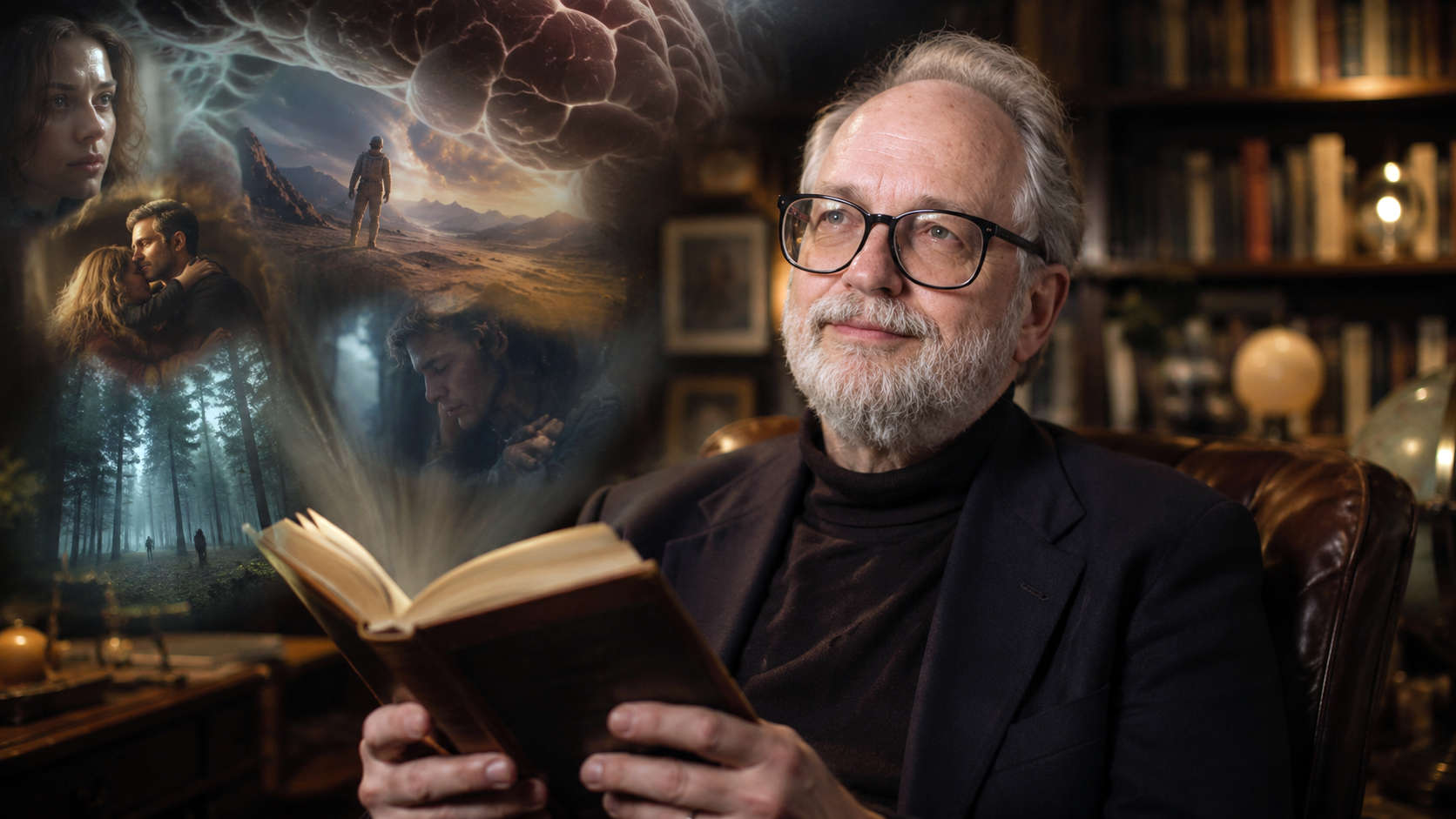
It’s interesting that humans engage with fiction. The mind can enter structured make-believe to explore aspects of true things for many reasons from entertainment to preparation for real events.

Children do this with toys, adults do it with novels, films, theater, games, myths, and even social roles. Fiction becomes a guided imagination system. It lets the brain simulate danger, relationship, fear, grief, courage, betrayal, temptation, and identity without needing the event to happen.

Kendall Walton helps explain why fiction can feel emotionally real without being factually real. A novel, film, or play does not merely present fake events. It guides the imagination. The reader enters a structured game of make-believe, where fear, grief, hope, and empathy can become real experiences in the mind. The monster is not real. The feeling is.

Fiction feels so real because it gives the mind props for make-believe. The body and emotions can respond to imagined situations even when the person knows the story is invented.

Fiction traces are real as artifacts and experiences. The dragon did not exist, but the fear, attention, empathy, and memory can be real.
— map / TST —

Annotated References:

  • Aristotle, Poetics, circa 335 BCE, Chapter 4: representation is a natural human activity through which people experience recognition, learning, and pleasure.
  • Walton, Mimesis as Make-Believe: On the Foundations of the Representational Arts, 1990: stories and artworks act as props in guided games of make-believe, prescribing what audiences imagine.
  • Prestwood, 30 Philosophers, 2024, Chapter 18, “The Illusion of Creation: Fiction”: fictional imagination recombines reality-derived ideas rather than creating from nothing.
Walton argued that fiction works like a guided game of make-believe: the story becomes a prop that tells the mind what to imagine.
Michael Alan Prestwood
Author & Natural Philosopher
Prestwood writes on science-first philosophy, with particular attention to the convergence of disciplines. Drawing on his TST Framework, his work emphasizes rational inquiry grounded in empirical observation while engaging questions at the edges of established knowledge. With TouchstoneTruth positioned as a living touchstone, this work aims to contribute reliable, evolving analysis in an emerging AI era where the credibility of information is increasingly contested.
The Prestwood Column
Menu
August 2026
»COLUMN ARCHIVE
--COLUMN--
Column Research….
1. Timeline Story
Ethical Roadmap
2. Linked Quote
“The greatest weapon against stress is our ability to choose one thought over another.”
3. Science FAQ »
Did morality evolve?
4. Philosophy FAQ »
Is the Me Too movement consistent with TST Ethics?
5. Critical Thinking FAQ »
When should you stop following the crowd?
6. History FAQ!
What did the Nuremberg Trials clarify about moral agents?
Bonus Deep-Dive Article
TST Ethical Roadmap: A Process Model for Ethical Guidance and Moral Choice

Comments

Join the Conversation! Currently logged out.
NEW BOOK! NOW AVAILABLE!!

30 Philosophers: A New Look at Timeless Ideas

by Michael Alan Prestwood
The story of the history of our best ideas!
Scroll to Top