
Phil • Cr. Think • Science • Hist •

The Philosophy Website

Natural Philosophy Term

Philosophy of Fiction

Wed 1 Jul 2026
Published 2 months ago.
Updated 2 months ago.
Related Terms
Agnostic Spirituality
State
Concrete Object
Viewpoint Prevention
Framework
Reflective Inquiry
Share :
Email
Print

Philosophy of Fiction

Philosophy of Fiction studies how stories relate to reality. Its central dichotomy explores truth in fiction and alignment with reality in nonfiction.

In a bigger sense, it’s the study of how invented stories relate to reality, truth, meaning, and human life.

Philosophy of Fiction is a traditional phrase. In TST, it explores the tension between truth-seeking and story-making. Fiction does not report what happened the way history or journalism does, but it is not merely false. Fiction recombines real impressions into imagined stories that can reveal psychological, symbolic, moral, and emotional truths. It asks how invented characters, worlds, plots, and symbols can help us understand reality without being mistaken for reality itself.

Truth in Fiction

A novel, myth, film, parable, or imagined world can reveal psychological, moral, symbolic, and emotional truth even though the events did not happen.

Falsehoods in Non-Fiction

A memoir, documentary, history, news report, conspiracy theory, propaganda piece, or “based on a true story” can claim factual status while distorting reality through omission, framing, exaggeration, false memory, bias, or invention.

That means Philosophy of Fiction is not just “how fiction works.” It becomes part of your broader TST truth project. It asks:

Some made-up stories tell the truth better than factual reports, and some factual reports sometimes mislead us worse than fantasy.
— map / TST —

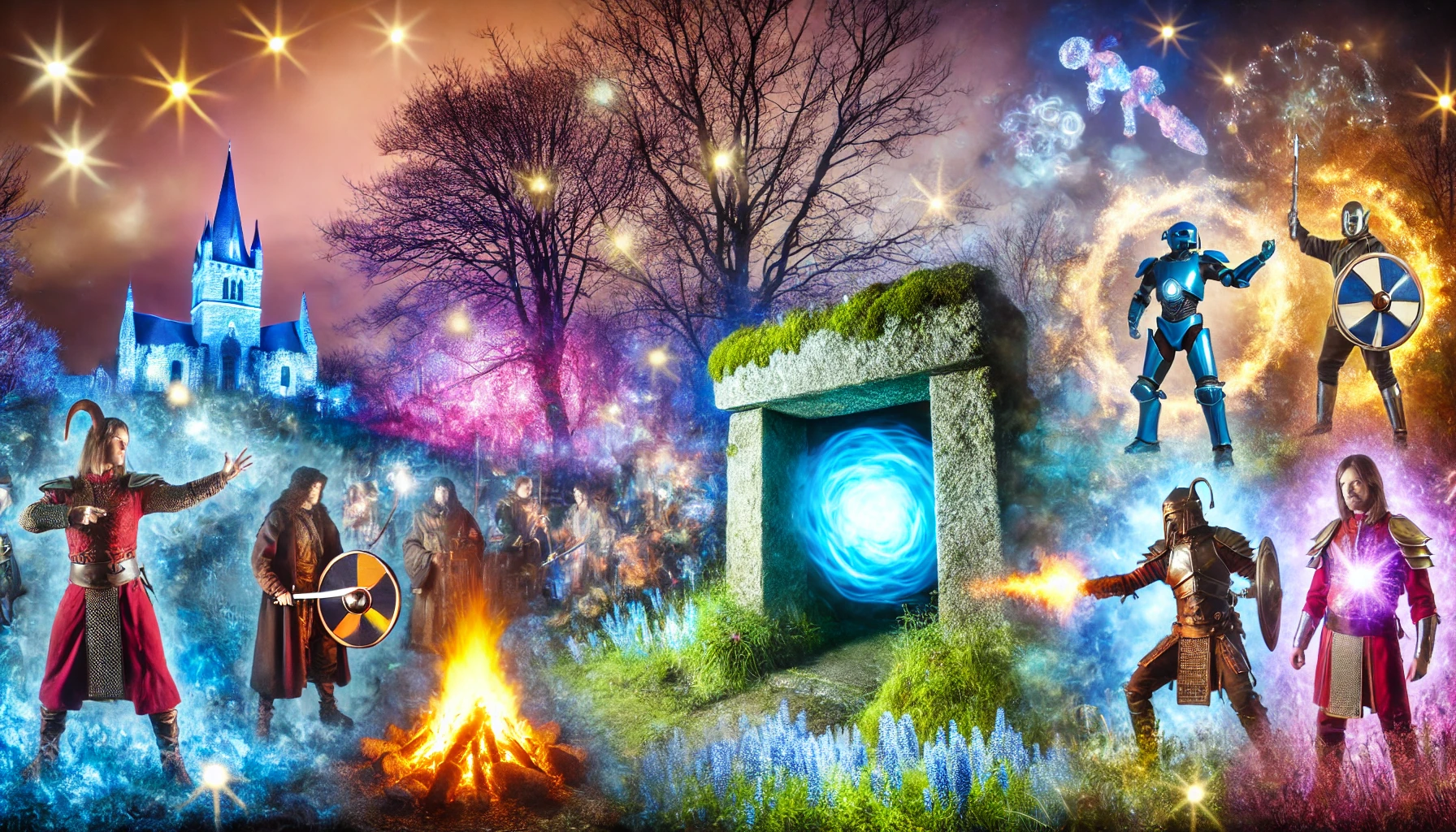
Conceptual Blending in Fiction: This surreal scene illustrates how fiction is crafted from existing ideas. Like the glowing forest, ancient portal, adventurers, robot, and floating castle, authors combine timeless concepts into new narratives, demonstrating the "Idea of Ideas" that all fiction stems from blending real elements.
Michael Alan Prestwood
Author & Natural Philosopher
Prestwood writes on science-first philosophy, with particular attention to the convergence of disciplines. Drawing on his TST Framework, his work emphasizes rational inquiry grounded in empirical observation while engaging questions at the edges of established knowledge. With TouchstoneTruth positioned as a living touchstone, this work aims to contribute reliable, evolving analysis in an emerging AI era where the credibility of information is increasingly contested.
The Prestwood Column
Menu
August 2026
»COLUMN ARCHIVE
--COLUMN--
Column Research….
1. Timeline Story
Ethical Roadmap
2. Linked Quote
“The greatest weapon against stress is our ability to choose one thought over another.”
3. Science FAQ »
Did morality evolve?
4. Philosophy FAQ »
Is the Me Too movement consistent with TST Ethics?
5. Critical Thinking FAQ »
When should you stop following the crowd?
6. History FAQ!
What did the Nuremberg Trials clarify about moral agents?
Bonus Deep-Dive Article
TST Ethical Roadmap: A Process Model for Ethical Guidance and Moral Choice

Comments

Join the Conversation! Currently logged out.
NEW BOOK! NOW AVAILABLE!!

30 Philosophers: A New Look at Timeless Ideas

by Michael Alan Prestwood
The story of the history of our best ideas!
Scroll to Top