
Phil • Cr. Think • Science • Hist • …
TST PRACTICE

By Philosopher Michael Alan Prestwood

STORY

The famous Lewis “Truth in Fiction” Paper

☐ Read
☑ Read
You’ve read this 0 times.
You’ve listened to this 0 times.

By Michael Alan Prestwood

Wed 1 Jul 2026
Published 4 months ago.
Updated 3 months ago.
Related Stories
Beer, Ale, Wine
Proto-Sinaitic script
Due Process
Fuente Magna Bowl: Forgery or Real?
World Population: 15 Million
18th Amendment
Share :
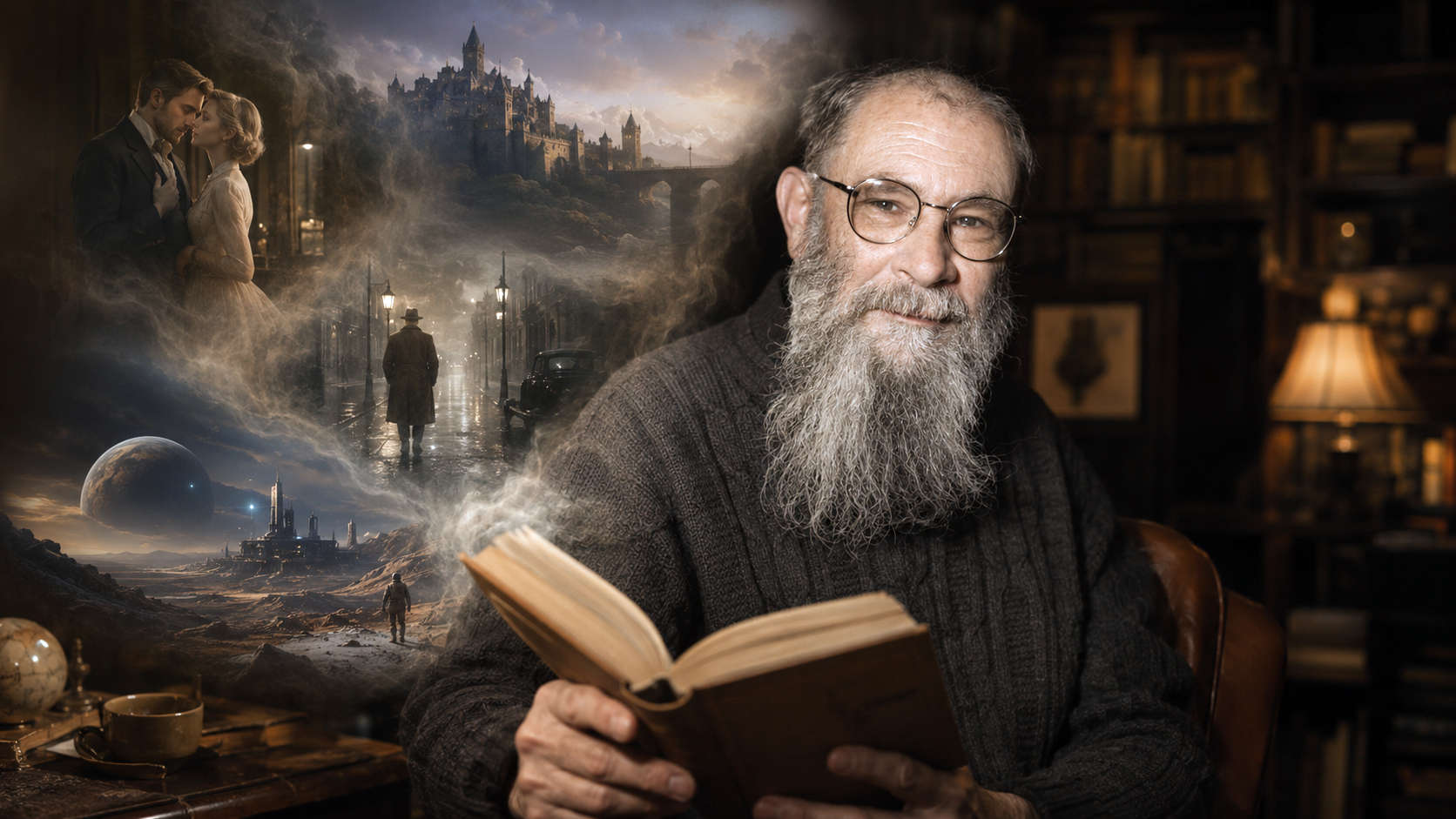
David K. Lewis gave modern philosophy a powerful way to think about fiction. A story creates a world of assumptions, and within that world, some claims become true.

The famous Lewis “Truth in Fiction” Paper

1978
by David K. Lewis

David K. Lewis, born in 1941, opened the modern technical doorway into fictional truth. In his model, we can say things like “in the Sherlock Holmes stories, Holmes lived at 221B Baker Street” without pretending Holmes was a historical person. That distinction helps separate empirical event truth from truth inside a fictional construction.

His 1978 paper, “Truth in Fiction,” asks what it means for a statement to be true within a fictional world, often framed in symbolic shorthand as “in fiction f, Φ.” This means, “Within the fictional story called f, the statement Φ is true.” The letter f stands for the fiction, while the Greek letter phi represents a statement made about it.

Lewis gave the question its modern analytic form, asking what makes a statement true within a fictional world. Aristotle had earlier argued that fiction can express universal truths about human life. The TST Idea of Ideas adds a different distinction: fictional worlds also borrow already-true ideas from reality. Trees, flight, mathematics, grief, and gravity do not become true because they appear rationally consistent within Star Wars. They remain empirically or rationally true because they belong to the Grand Rational Framework. The speculative story rearranges them alongside invented elements such as the Force. In this sense, fiction adopts reality as its starting framework, then modifies selected parts of it.

— map / TST —

TST Tracker
✓ Reading recorded.

Annotated References:

  • Lewis, “Truth in Fiction,” American Philosophical Quarterly, 1978, vol. 15, no. 1, pp. 37–46: truth conditions within fictional worlds asks what makes a statement true within a fiction.
  • Friend, Stacie. “The Real Foundation of Fictional Worlds.” Australasian Journal of Philosophy 95, no. 1 (2017): 29–42. DOI: 10.1080/00048402.2016.1149736, “the Reality Assumption” explains how fiction adopts reality as its default background and changes selected parts.
  • Prestwood, 30 Philosophers, 2024, Chapter 18, “Determining Truth from Lies” : fictional truths are true because of reality, distinguishing the borrowed components by their independent truth status—empirical, rational, or irrational.
Michael Alan Prestwood
Natural Philosopher & Author
Prestwood explores science-first philosophy, with particular attention to the convergence of disciplines. Drawing on his TST Philosophy, his work emphasizes rational inquiry grounded in empirical observation while engaging questions at the edges of established knowledge. With TouchstoneTruth positioned as a living touchstone, this work aims to contribute reliable, evolving analysis in an emerging AI era where the credibility of information is increasingly contested.
Email
Print
The Prestwood Column
Menu
October 2026
Column Research….
1. Timeline Story
The Great Quaker Debates!
2. Linked Quote
“All men are prone to differ. It is no new thing in all former ages, in all parts. Each party is most right in his own eyes.”
3. Science FAQ »
Do facts actually change minds?
4. Philosophy FAQ »
When does persuasion become manipulation?
5. Critical Thinking FAQ »
How can you tell when a debate has stopped being productive?
6. History FAQ!
What is the history of debate?
Bonus Deep-Dive Article
Roger Williams Biography and Dedication to the Freedom of Conscience

Comments

Join the Conversation! Currently logged out.

Leave a Reply

NEW BOOK! NOW AVAILABLE!!

30 Philosophers: A New Look at Timeless Ideas

by Michael Alan Prestwood
The story of the history of our best ideas!
Scroll to Top