
Weekly Insights for Thinkers

Roger Williams, Providence, R.I.

(1602-3ish to 1683)
The Founding Father of the American Founding Fathers!
ROGER WILLIAMS
Featured Story
History
Story
1644
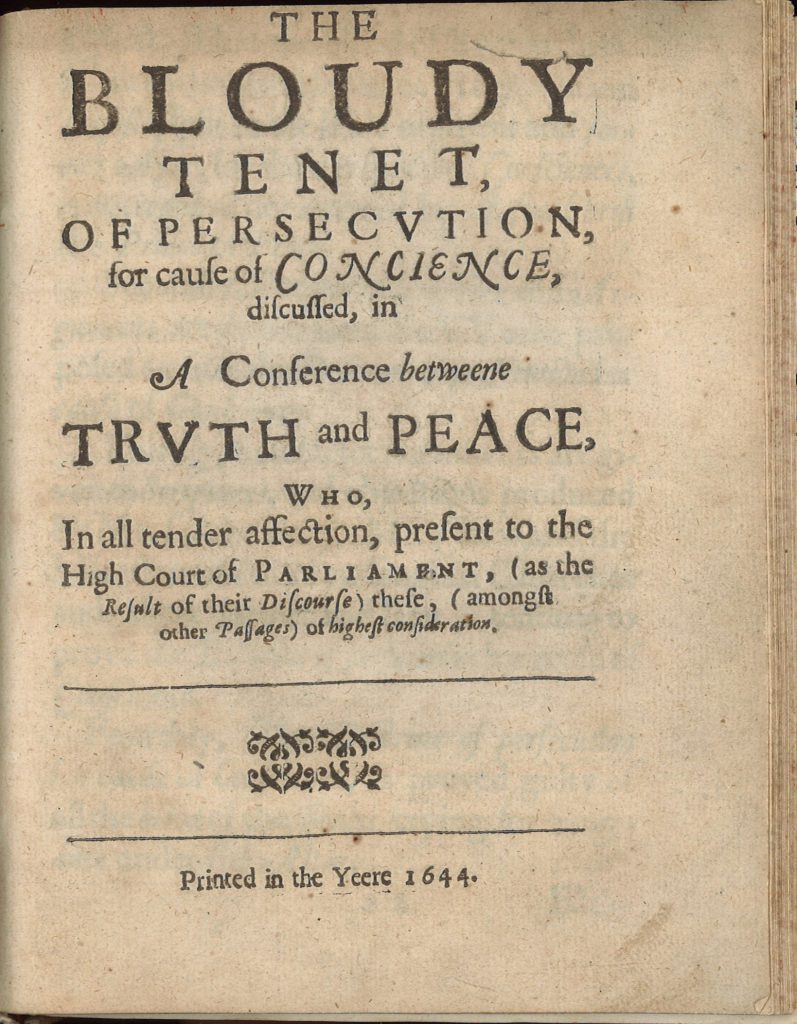
Book: The Bloudy Tenent of Persecution
Separation of Church and State
The main philosophical idea taught by Williams, Locke, and Montesquieu was that power needed to be checked, which in turn protects individual liberties. Williams split state and church. Locke established natural rights and split King and Parliament. Montesquieu came along and said let’s split government into three branches of checks and balances.
Featured QUOTE
History
Quote
“I am old and weak and bruised (with rupture and colic), and lameness on both feet.”
Roger Williams
The exact birth and death dates of Roger Williams has been lost to history…so far at least. We think he was born around 1602, give or take a few years. We know he passed in 1683, and by April 1st. We also know he was alive on January 15th. We also believe he was about 80 or 81 when he passed. It’s interesting how much is lost to time for even the famous just a few hundred years ago.
Featured FAQ
History
FAQ
Was Roger Williams a Separatist?
Separatist Term & Epistemology
If you use the modern definition of separatist that includes intolerance of others, then Roger Williams was not a separatist. Furthermore, he supported all people living, and working together in the same community for the common good. Sometimes people forget the context of the time and conflate his desire to separate from the Church of England run by the government with the separatist movement based on races. I think some with a desire to promote white supremacy do this on purpose.
Updated Tidbits
01 Jan 2026
(Updated 2 months ago)
History
FAQ
What is the “Parable of the Ship?”
Separation of Church and State
The Williams parable is about government. A response to the colonies in New England inacted the same restrictions they escaped.
01 Jan 2026
(Updated 2 months ago)
12 Dec 2025
(Updated 3 months ago)
No more posts to show
Roger Williams
A Man Nearly 400 Years Ahead of His Time

Why Roger Williams?
“If you hope to contribute something scholarly to society, even in a personal and independent way, I think you should choose one historical figure and make that person part of your journey. I chose Roger Williams partly because he is my 10th great-grandfather, but even more because he belongs to an important lineage of ideas that shaped liberty of conscience, limited government, and the broader tradition of checks on power that later influenced the Founding Fathers. I see the Magna Carta as a proto-beginning the modern West. From there, Roger Williams advanced liberty of conscience, Locke articulated natural rights, and Montesquieu gave enduring form to separation of powers. Together, they shaped the intellectual world the Founding Fathers inherited.” –Michael Alan Prestwood, 2012.

Visual Insights
Roger Williams

Roger Williams Timeline

From 1602 to 1683.
Roger Williams

Roger Williams Gallery

From 1611 to 1909.
Aricle Series
Multi-Part Reads
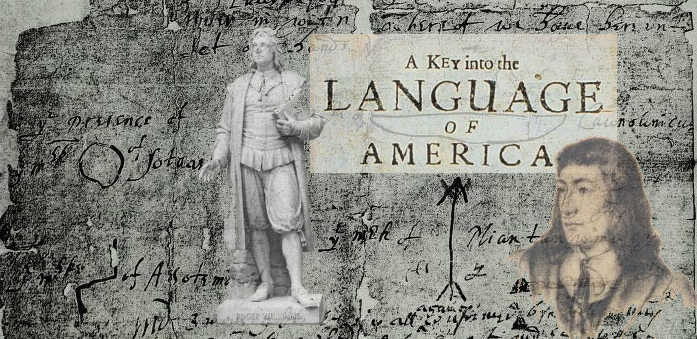
Roger Williams Himself
Bio, philosophy, & government.
Roger Williams: Family Info
The family of Roger Williams.
RW Through Winthrop
John Winthrop on Roger Williams.
Deep-Dive Articles
American CentricBook-30 PhilosophersEthics

No Kings Has Deep Historical Roots

Recent protests reflect the timeless struggle to limit power and oppression using checks and balances.
Philosophy of LawRoger Williams

Roger Williams was a 17th Century Separatist

Explore the use of this term over the centuries.
Philosophy of Law

Roger Williams was a 17th Century Separatist

Explore the use of this term over the centuries.
Philosophy of Law

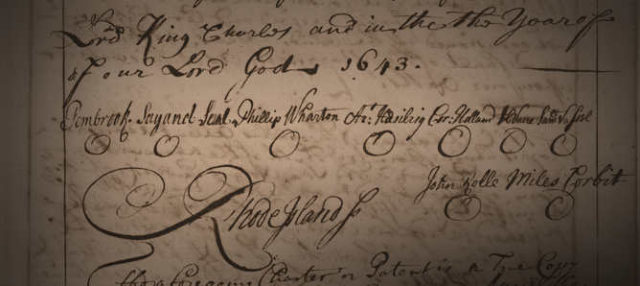
Read Text of 1643 Patent for Providence Plantations

Roger Williams created the first democracy in America in 1643. The first TRUE democracy in #ColonialAmerica. From the Patent for Providence Plantations charter: "…full Power ...
Vintage pirate compass on ancient map
Philosophy of Law

Parable of the Ship by Roger Williams, 1655

Roger Williams’ 1655 Parable of the Ship is used as an illustration of separation of church and state, liberty, and the common good. In this ...
Must-Reads
Vintage pirate compass on ancient map
Philosophy of Law

Parable of the Ship by Roger Williams, 1655

Roger Williams’ 1655 Parable of the Ship is used as an illustration of separation of church and state, liberty, and the common good. In this ...
Religion

Roger Williams Biography and Dedication to the Freedom of Conscience

My 10th great grandpa! There are plenty of articles and books on Roger Williams' accomplishments. In this article I went back and researched the earliest ...
Updated Articles
No more posts to show
Scroll to Top