
Explore Natural Philosophy

Science • Phil • Cr. Think • Hist •

QUOTE

“Empty is the argument of the philosopher which does not relieve any human suffering.”
Related Quotes
“In learning and straightway practicing, is there not pleasure also?”
“Do not dwell in the past, do not dream of the future, concentrate the mind on the now.”
Could you affirm your life so fully that you would will its eternal repetition?
“A person is a person through other persons; you can’t be human in isolation; you are human only in relationships.”
“Do not speak arrogantly or do hateful things.”
“The sad truth is that most evil is done by people who never make up their minds to be either good or evil.”
Share :
Email
Print

Mike's Takeaway:

Quote context: Although some of his work survives, this quote was documented by Diogenes Laërtius.
Source: Diogenes Laërtius, circa 200 CE, in Lives of Eminent Philosophers.
Current Reference: From chapter 2 of “30 Philosophers.”

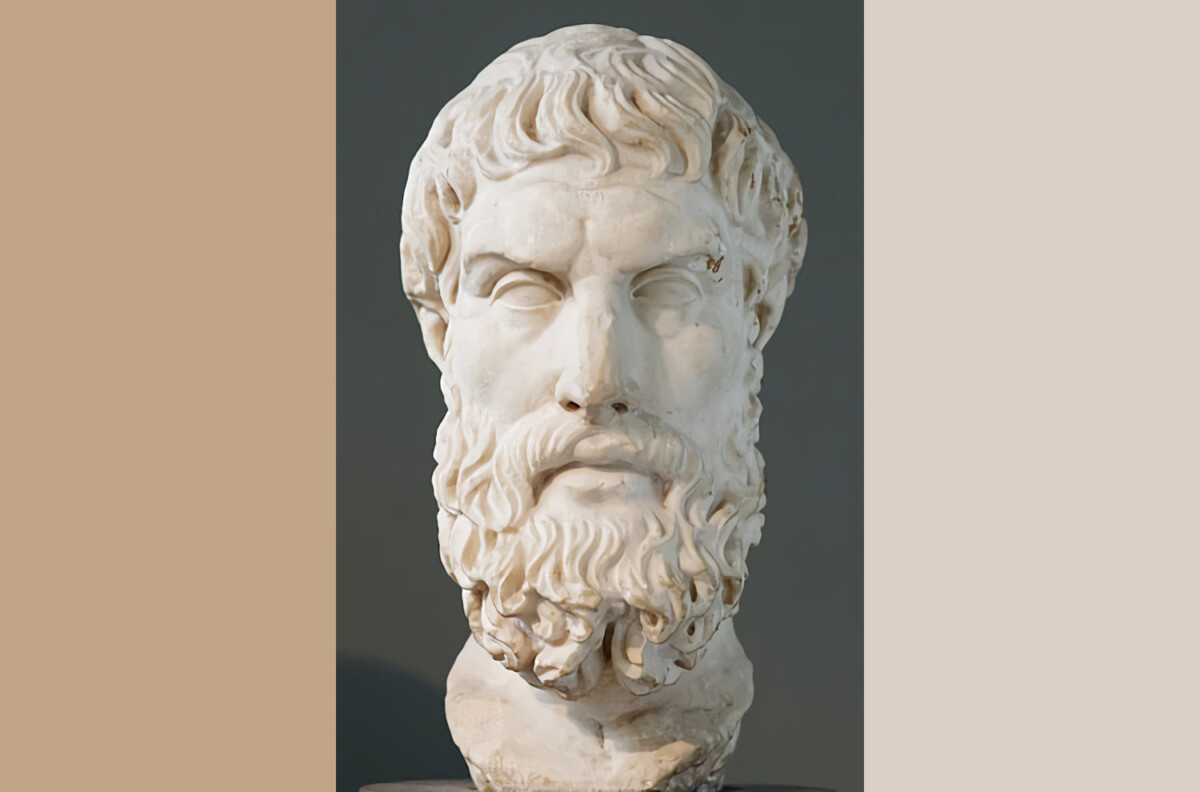
This quote encapsulates the core belief of applied philosophy—the idea that philosophy should have a tangible, beneficial impact on human life. Epicurus, a Greek philosopher from the Hellenistic period, advocated for a life guided by the pursuit of pleasure and the avoidance of pain, but not through indulgence, rather through moderation and wisdom.

It aligns with his philosophy on the practical nature of philosophical inquiry. The quote underscores his belief that philosophy should serve the purpose of easing human suffering, specifically mental and emotional anguish. Epicurus believed that knowledge and wisdom were not merely academic pursuits but tools to achieve ataraxia (peace of mind) and aponia (absence of pain).

This quote is often cited as part of his ethics of happiness and pleasure, where he argued that living a good life involves eliminating fear and unnecessary desires. While no specific written work from Epicurus directly containing this exact wording survives, it fits within the broader context of his letters, notably his Letter to Menoeceus, and his teachings preserved by later followers, including Diogenes Laërtius in Lives of Eminent Philosophers.
Analysis By Michael Alan Prestwood
01 Jan 2026
Published 2 years ago.
Updated 5 months ago.
Michael Alan Prestwood
Author & Natural Philosopher
Prestwood writes on science-first philosophy, with particular attention to the convergence of disciplines. Drawing on his TST Framework, his work emphasizes rational inquiry grounded in empirical observation while engaging questions at the edges of established knowledge. With TouchstoneTruth positioned as a living touchstone, this work aims to contribute reliable, evolving analysis in an emerging AI era where the credibility of information is increasingly contested.
This month @ TST
Column Menu
June 2026
»COLUMN ARCHIVE
Column Research….
1. Timeline Story
Secular Spirituality Settles
2. Linked Quote
“Extraordinary claims require extraordinary evidence.”
3. Science FAQ »
What is the difference between a spiritual and empirical belief?
4. Philosophy FAQ »
What is secular spirituality?
5. Critical Thinking FAQ »
How does spirituality relate to public belief?
6. History FAQ!
Is secular spirituality supported in history and science?
Bonus Deep-Dive Article
The Material-Spiritual Framework: A Philosophy of Spirituality

Comments

Join the Conversation! Currently logged out.

Leave a Reply

NEW BOOK! NOW AVAILABLE!!

30 Philosophers: A New Look at Timeless Ideas

by Michael Alan Prestwood
The story of the history of our best ideas!
Scroll to Top