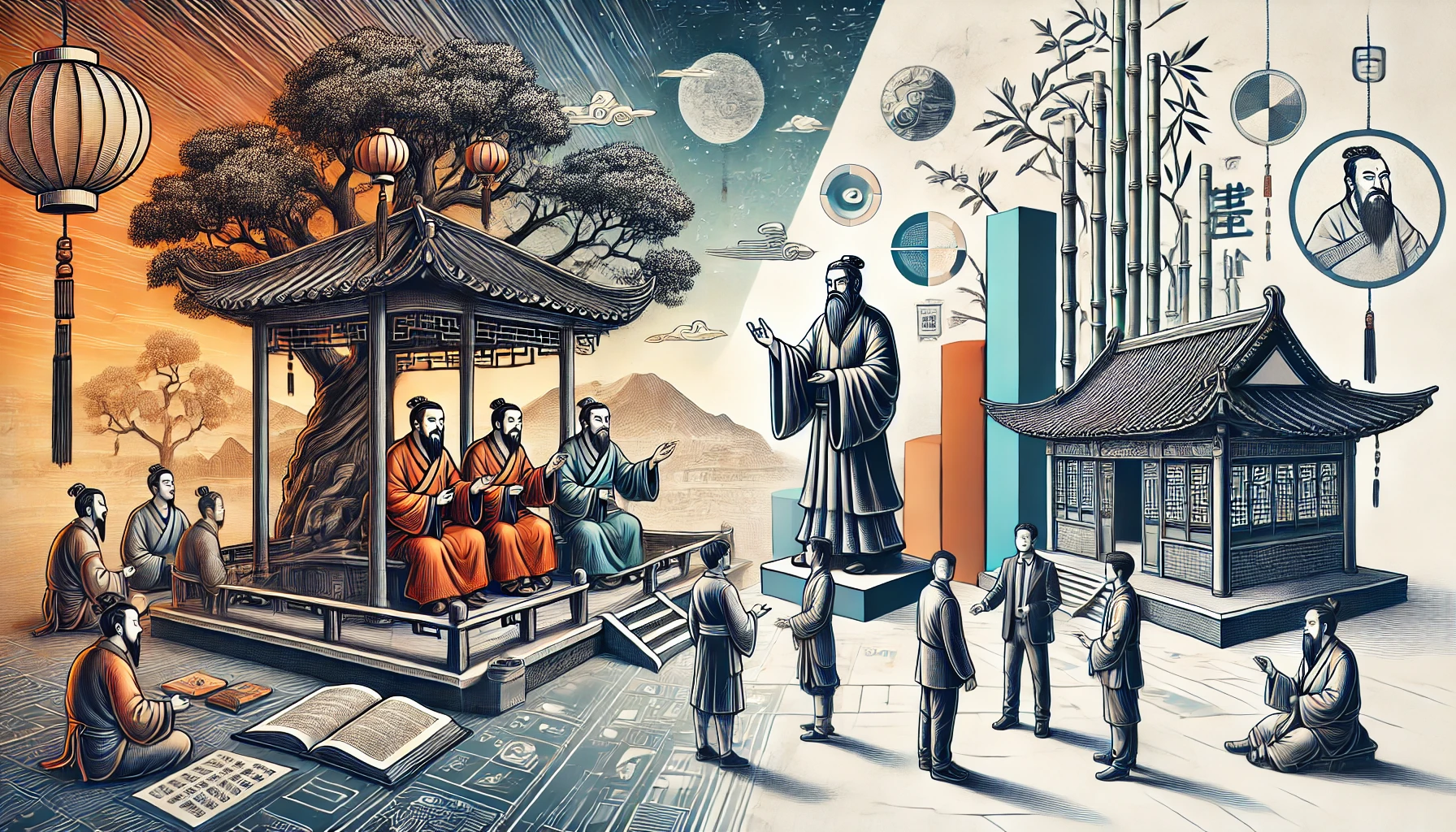



Confucianism is an ancient Chinese applied philosophy. In my writing, I explore it from the view of normalcy. As in, it teaches individuals to participate in societal norms. Not unlike Nietzsche’s Superman, he encouraged the transformation of oneself into a better person. While Nietzsche wants you to transform into your authentic self, Confucius wants you to transform into a “gentleman” or “gentleperson” (junzi). You accomplish this by redefining your sense of “normal.” This transformation involves reshaping your moral character, or “li.”
He emphasized filial piety, “xiao,” the honoring and respecting of one’s family. While this “ren” extended to one’s ancestors and the state itself, at the core of his teachings was the parent-child relationship. You act in a way that honors them.
Beyond this core, he used various relationships to guide ethical conduct. As a spouse, he taught that you respect and care for your partner. This includes maintaining harmony in the household, support, and the fostering of mutual duty. He had similar advice for friends and elders.
The ruler-subject relationship takes on special meaning. A ruler must ensure the well-being of the state, act with benevolence, and set a moral example. In return, subjects are expected to show loyalty and respect, and follow the ruler’s guidance, creating a harmonious society. If the ruler was unjust, it was up to someone to set the ruler straight. Today we might call them advisors, but Confucius named that role the “remonstrator.” This role is analogous to a union leader at a corporation. When management is out of line, it’s up to the union boss to confront them.
Confucianism originated around 500 BCE, was adopted by the state around 100 BCE, and quickly spread through Asian culture. Beyond thinkers, its emphasis on ethics and relationships continues to shape communities worldwide.