
Phil • Cr. Think • Science • Hist •
TST PRACTICE

The Philosophy Website

QUOTE

Could you affirm your life so fully that you would will its eternal repetition?
☐ Read
☑ Read
You’ve read this 0 times.
You’ve listened to this 0 times.
Related Quotes
“I have a worldview. So do you.”
“We are all tattooed in our cradles with the beliefs of our tribe.”
“For the soul is dyed the color of its thoughts.”
“The unexamined life is not worth living.”
“People are disturbed not by the things that happen, but by their opinions about the things that happen.”
“The greatest weapon against stress is our ability to choose one thought over another.”
Share :
Email
Print

Mike's Takeaway:

That question of eternal repetition is a faithful paraphrase from Nietzsche’s book “The Gay Science.” The following is a more accurate and full translation of the original Geman:

“What, if some day or night a demon were to steal after you into your loneliest loneliness and say to you: ‘This life as you now live it and have lived it, you will have to live once more and innumerable times more…’”

This is the Eternal Recurrence passage from Nietzsche. He does not present it as cosmology or metaphysics, but as a psychological and existential test. This framing is not despair, nor doctrine. It is responsibility and affirmation.

Nietzsche wrote extensively on the eternal recurrence and his framing is clear. Live your life in a way that you would want to live it forever. The following quote from his German book “Ecco Homo” frames it as life affirmation.

“My formula for greatness in a human being is amor fati: that one wants nothing to be different, not forward, not backward, not in all eternity.”

Here Nietzsche is saying his “eternal recurrence” has an emotional core. That core, a love of fate. If you truly love your fate, you would accept its eternal return.
 

Analysis By Michael Alan Prestwood
07 Jul 2026
Published 8 months ago.
Updated 1 month ago.
TST Tracker
✓ Reading recorded.
Deep-Dive Article: Existential Toolkit: Evolution’s Consciousness Misstep
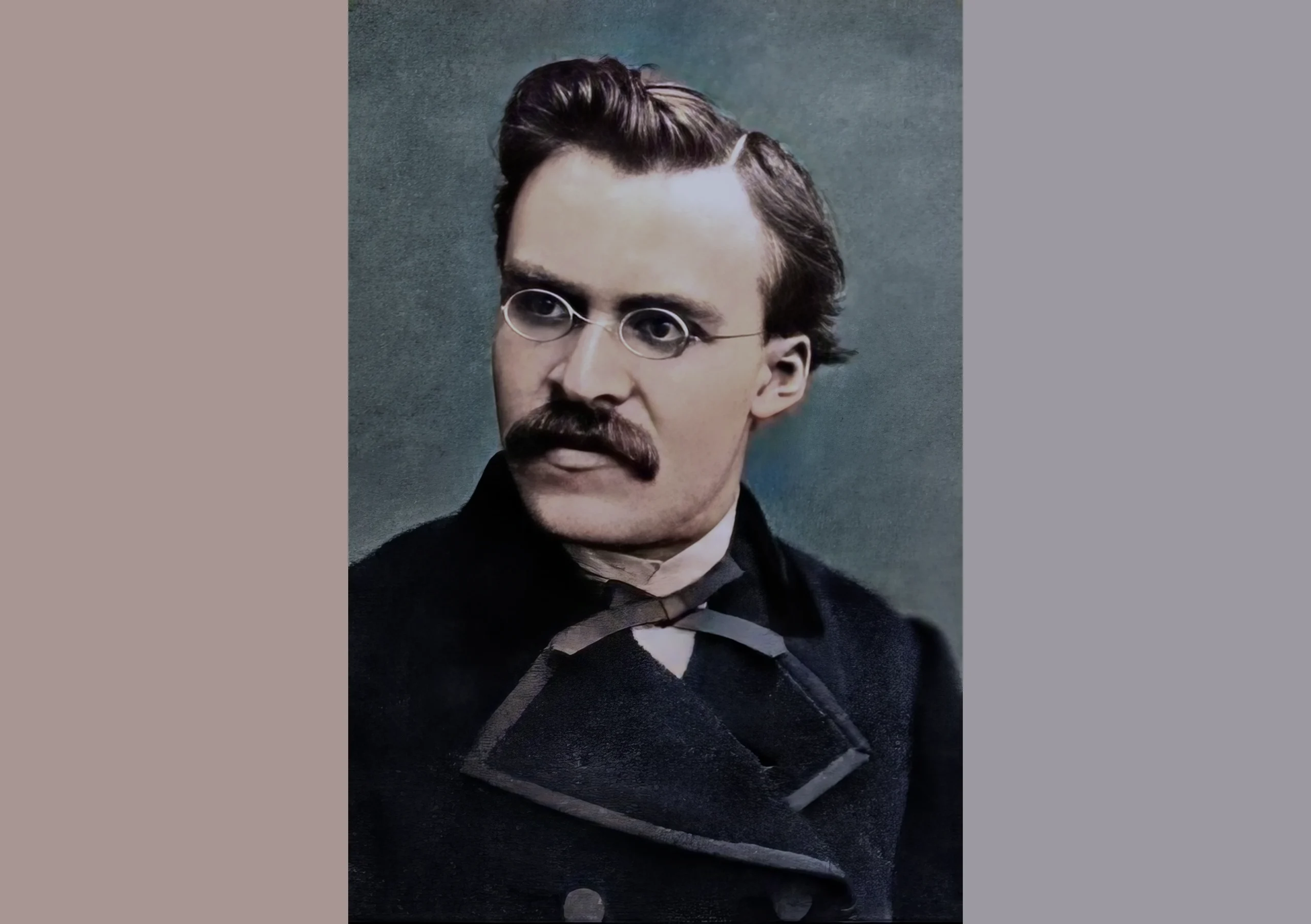
Friedrich Nietzsche, born 1844, was a German philosopher who challenged morality, religion, truth, and modern culture. He became a professor young, then lived as an independent writer while battling poor health. His ideas on nihilism, the Übermensch, eternal recurrence, and self-overcoming still provoke and inspire. Never married, he died in 1900.
Michael Alan Prestwood
Author & Natural Philosopher
Prestwood writes on science-first philosophy, with particular attention to the convergence of disciplines. Drawing on his TST Framework, his work emphasizes rational inquiry grounded in empirical observation while engaging questions at the edges of established knowledge. With TouchstoneTruth positioned as a living touchstone, this work aims to contribute reliable, evolving analysis in an emerging AI era where the credibility of information is increasingly contested.
The Prestwood Column
Menu
September 2026
Column Research….
1. Timeline Story
Hume’s Is–Ought Problem
2. Linked Quote
“I meet with no proposition that is not connected with an ought, or an ought not.”
3. Science FAQ »
Can science prove flourishing should be our goal?
4. Philosophy FAQ »
What is the difference between a normative aim and a normative directive?
5. Critical Thinking FAQ »
Is flourishing for all just utilitarianism?
6. History FAQ!
What is the history of the idea of flourishing in philosophy?
Bonus Deep-Dive Article
Flourishing for All: The Normative Aim of TST Philosophy

Comments

Join the Conversation! Currently logged out.

Leave a Reply

NEW BOOK! NOW AVAILABLE!!

30 Philosophers: A New Look at Timeless Ideas

by Michael Alan Prestwood
The story of the history of our best ideas!
Scroll to Top