Weekly Insights for Thinkers

Science  Philosophy  Critical Thinking  History  Politics RW  AI  Physics  •  Evolution  Astronomy 30 Phil Book More…
Science  Phil  Cr. Think  Hist 

2-Cognitive Age

Cognitive Age (50,000 to 125,000 years ago): The time during which our raw cognitive abilities stabilized our last bit of brain power.

Divje Babe Flute

Location: Divje Babe Cave, Slovenia Attribution: Possibly Neanderthal Material: Bear femur Discovered in the 1990s, this flute-like artifact features holes resembling those used for producing music. If confirmed as a flute, it would suggest that Neanderthals possessed musical traditions. However, some scholars argue these holes might be from animal activity. The Divje Babe flute continues […]

Divje Babe Flute Read More »

Cuban Underwater City: More Research Needed

The sea offers tremendous resources and stability. The rising and receding oceans continue to destroy the homes of many. How many unknown cultures in our vast history thrived on the coast for millennia?   The site discovered off the coast of Cuba, also known as the “Cuban Underwater Pyramids,” includes pyramid-like structures and other geometric formations

Cuban Underwater City: More Research Needed Read More »

Extinction: Homo Erectus

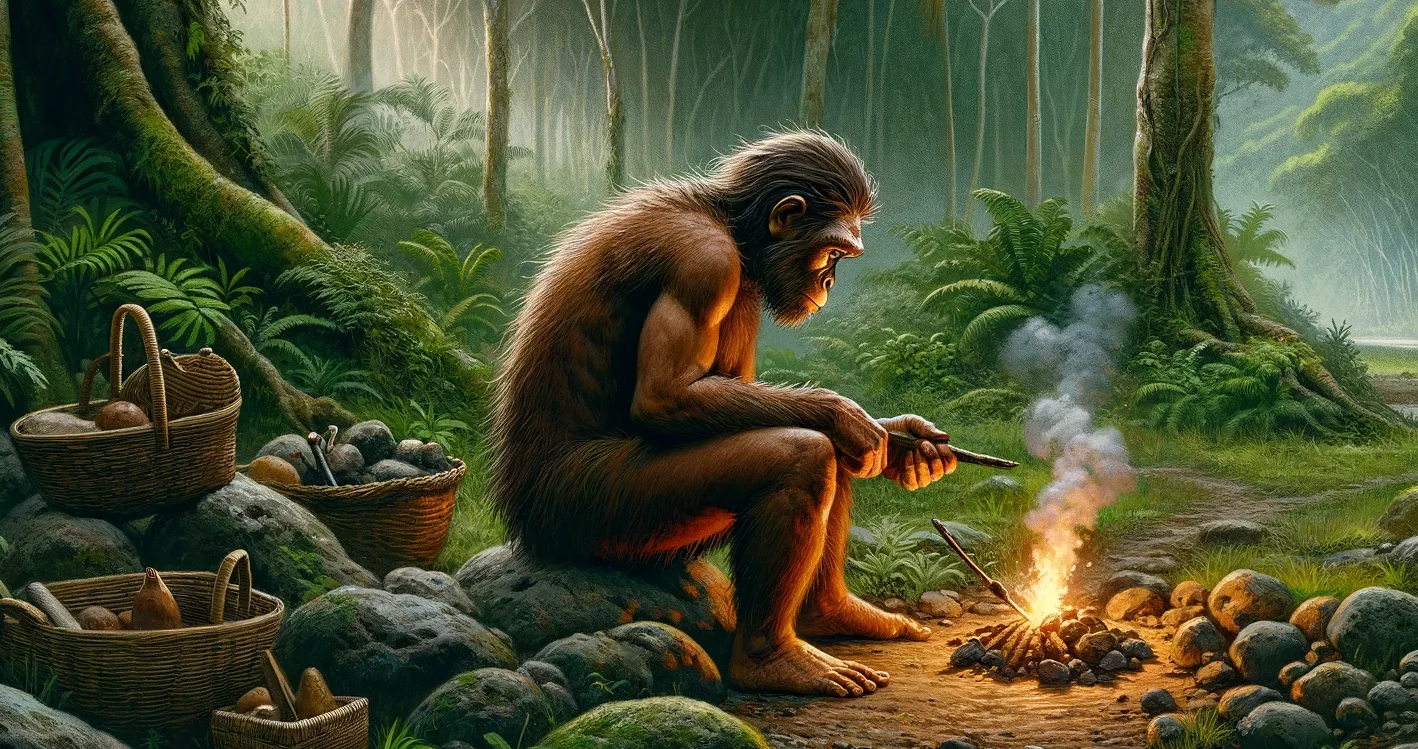
Homo erectus and humans last coexisted in Javanese in Asia around 50,000 years ago. Imagined image above: A late-stage Homo erectus individual in Java, Indonesia, focused on crafting a tool from volcanic rock near a simple fire, set within the lush tropical rainforest. This visualization aims to capture the essence and appearance of Homo erectus

Extinction: Homo Erectus Read More »

World Population: 1.5 Million

Cognitive Revolution By 70,000 BCE. Population range: 500,000 to 2.5 million. Given the uncertainties and lack of direct data, the following are speculative estimates. Africa-Middle East: 50-60% or 600,000 to 1 million people Africa, being the origin of modern humans, likely had the highest population density at this time, particularly in Sub-Saharan regions which were

World Population: 1.5 Million Read More »

Seasonal Settlements at Klasies River Caves

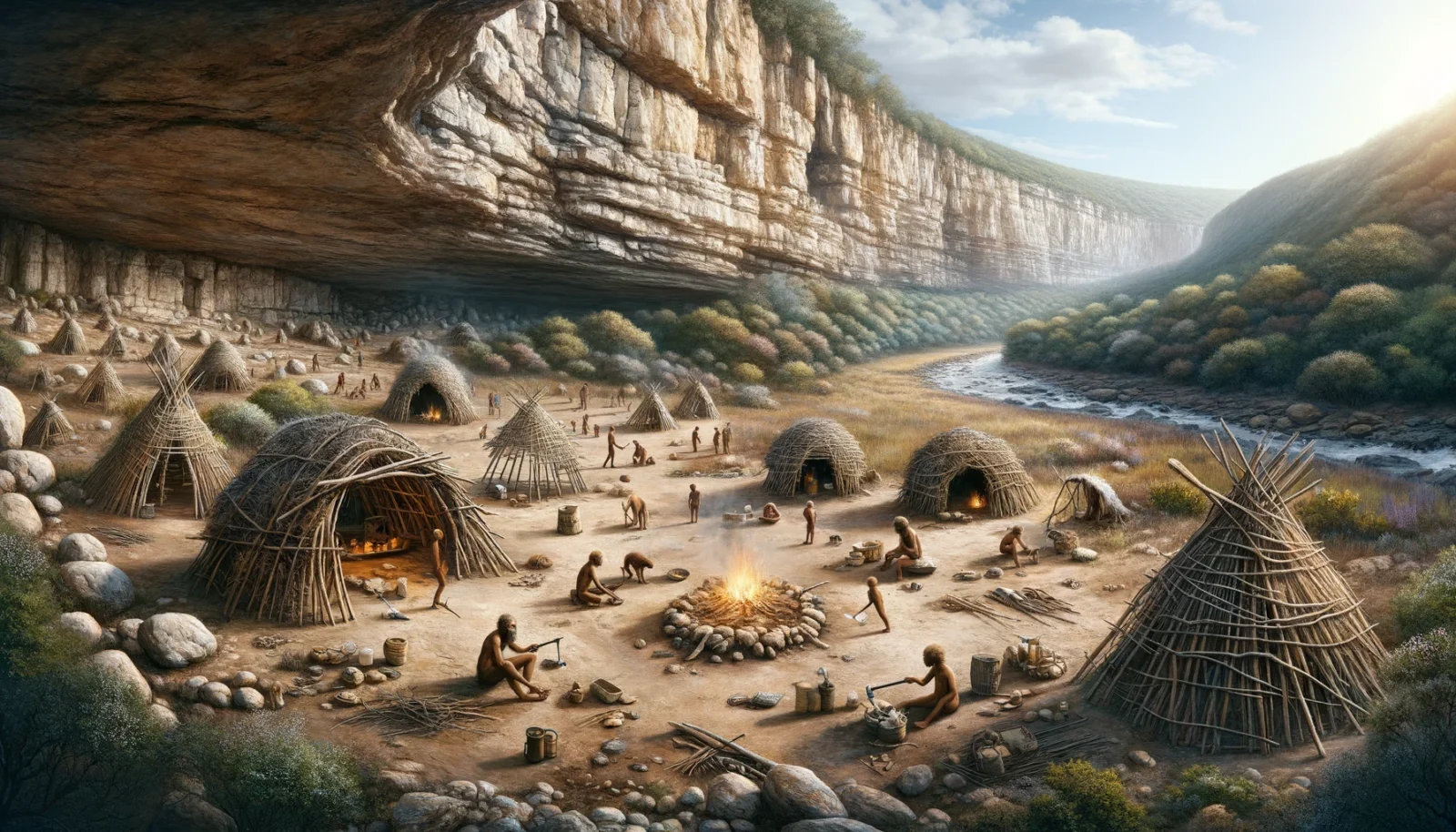
Earliest known seasonal settlement in the Africa/Middle East zone: In the diverse and rich landscapes of what is now South Africa, the Klasies River Caves served as a vital seasonal haven for early modern humans. Positioned strategically along the coast, these caves were revisited across generations, suggesting a shared understanding among different groups about the

Seasonal Settlements at Klasies River Caves Read More »

The Settlement of Australia

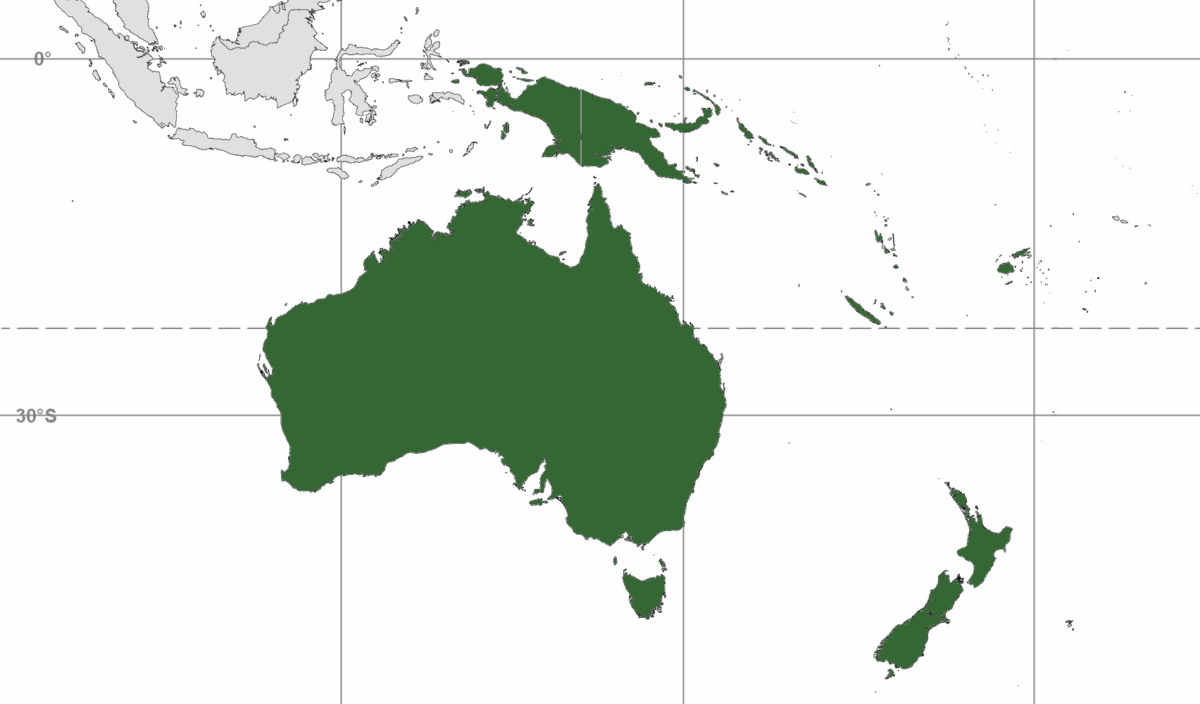
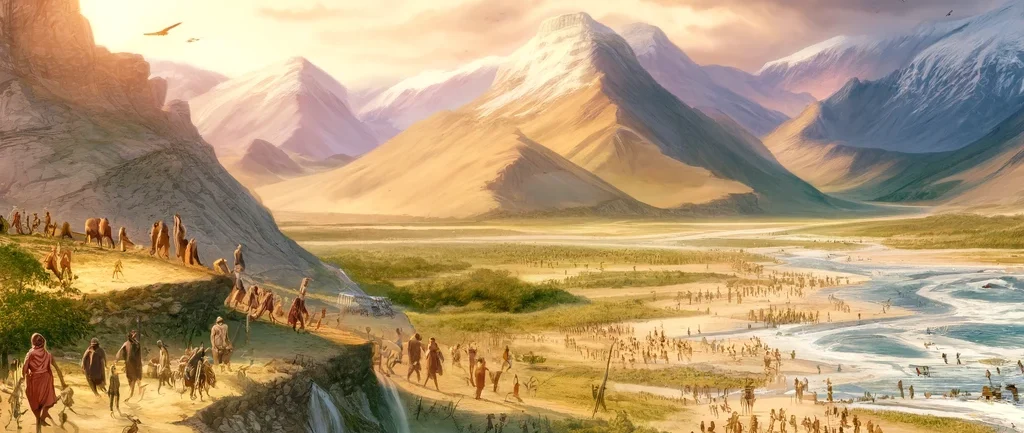
2,600 Generations Ago (from 2020 CE) Long before the sails of European explorers dotted the horizon, the Australian continent witnessed the arrival of its first human inhabitants. Archaeological evidence, such as ancient tools and cave art, suggests that people arrived in Australia at least 65,000 years ago, marking one of the earliest known human migrations

The Settlement of Australia Read More »

Oldest Known Bracelet

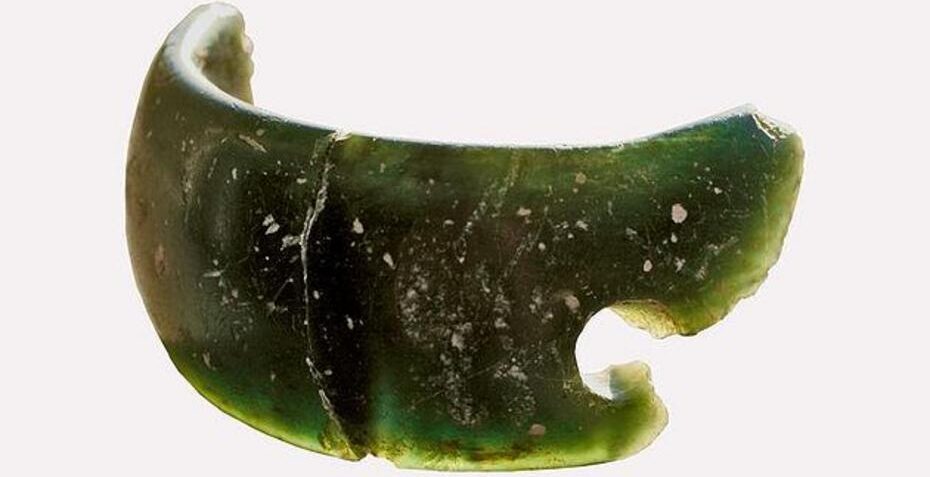
Denisovan: This bracelet dates from 70,000 to 40,000 BCE. It was discovered inside the Denisova Cave beside ancient human remains. The Denisova Cave is a cave located in Siberia, Russia. Other cave finds include woolly mammoth and woolly rhino bones. Scientists say there is evidence that the bracelet’s maker used a drill. This is the

Oldest Known Bracelet Read More »

Spiral strands of DNA on the dark background

“The” Human DNA

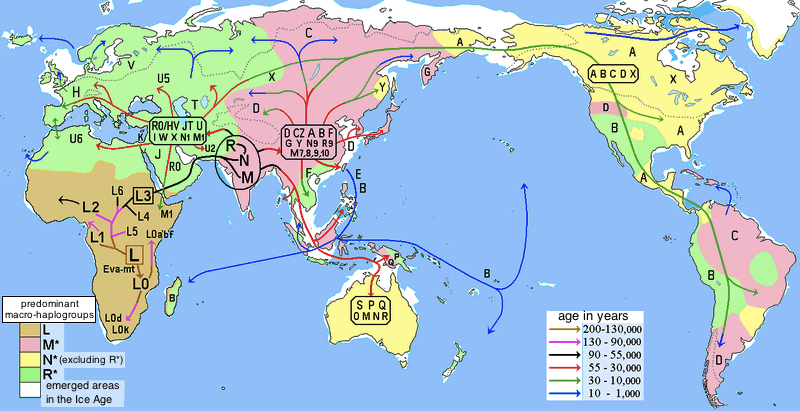
2,400 Generations Ago The modern human DNA evolved sometime between 71,000 and 51,000 BCE. Imagine that. A human baby born today, and a human baby born in 60,000 BCE have nearly indistinguishable DNA. There are differences but essentially humans are the same now as they were then. The popular website 23andme.com focuses on 23 changes in

“The” Human DNA Read More »

Scroll to Top