South America Splits from Africa
Over millions of years, the modern-day South America and Africa separated during the breakup of the supercontinent Pangaea.
South America Splits from Africa Read More »


Master Timeline
Over millions of years, the modern-day South America and Africa separated during the breakup of the supercontinent Pangaea.
South America Splits from Africa Read More »

North America splits from Europe causing diverging evolutionary lines. Over millions of years, the modern-day Europe (Eurasian plate) and North America (North American Plate) separated during the final breakup of Pangaea in the early Cenozoic Era. This split is a later part of that breakup and created the North Atlantic Ocean.
Opening of the North Atlantic Ocean Read More »
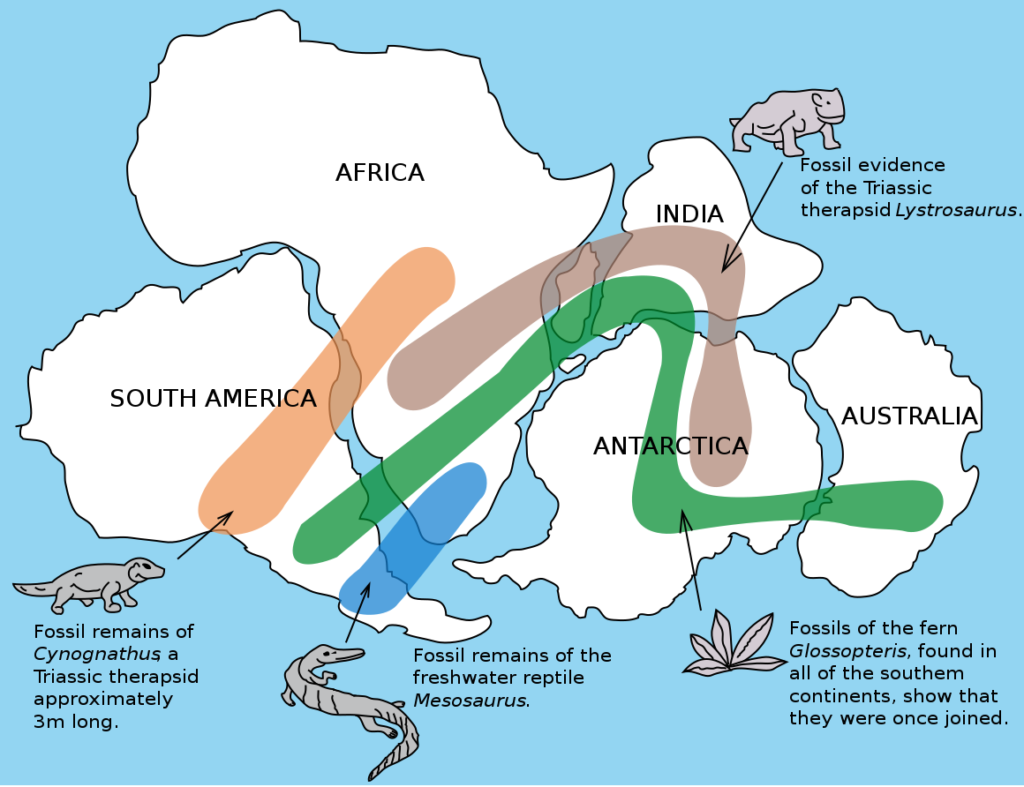
By dating rocks and fossils scientists can document the movement of the continents over time. To confirm and refine this science, geologists study rocks, paleontologists study fossils, and anthropologists study human societies, cultures, and relics. The location and dating of rocks, fossils, and relics allow us to understand the distant past. Cynognathus, circa 242 million

Animation of the break-up of the supercontinent Pangaea and the subsequent drift of its constituents, from the Early Triassic to recent (250 Million BCE to 1 CE). The super continent Pangaea existed from about 335 to 175 Million BCE.
Pangaea Super Continent Breakup Read More »
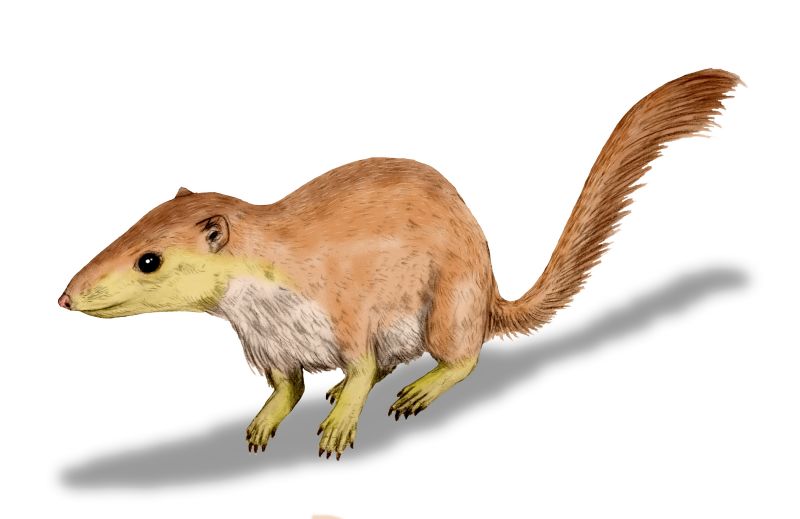
Within mammals, only primates have binocular vision, grasping hands, and flat nails–instead of claws. Purgatorius might have had all three earning it the earliest known proto-primate label. It lived in Eastern Montana about 66 million years ago during the very last years of the Cretaceous period. It lived through the K-T extinction event and the extinction
Purgatorius — Earliest known proto-primate. Read More »

2,400 Generations Ago The modern human DNA evolved sometime between 71,000 and 51,000 BCE. Imagine that. A human baby born today, and a human baby born in 60,000 BCE have nearly indistinguishable DNA. There are differences but essentially humans are the same now as they were then. The popular website 23andme.com focuses on 23 changes in
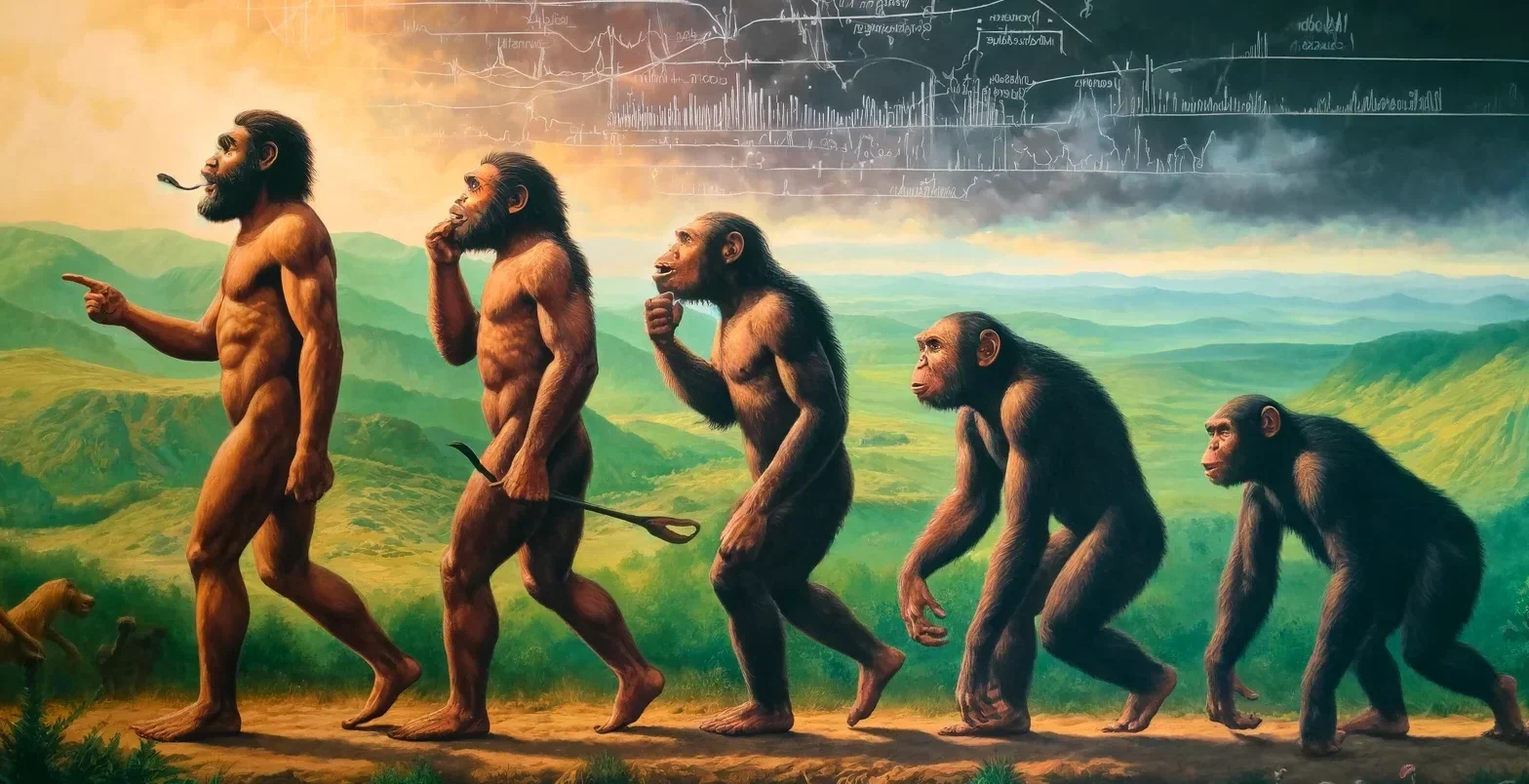
Around 700,000 years ago, the development of a human-like hyoid bone suggests early hominins may have begun transitioning from simple vocalizations to more structured speech. This period marks a critical evolutionary point for Homo heidelbergensis, whose anatomical adaptations for speech, coupled with advanced tool use and complex social structures, indicate possible use of rudimentary language.
Hyoid Bone: Speach Emerges Read More »
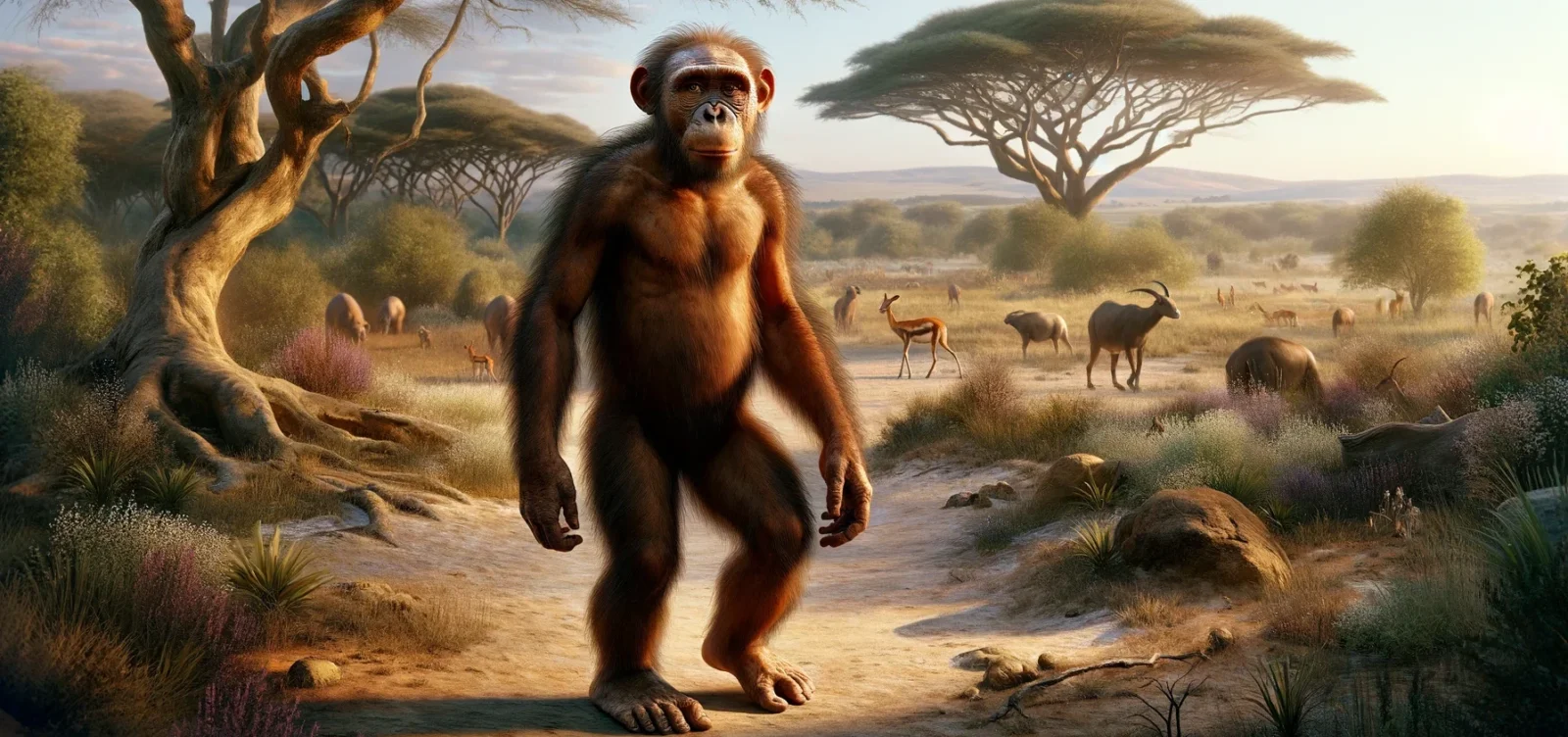
92,000 Generations Ago Earliest Identified Human: Earlier hominins are “humanoid,” due to their human-like features, but the term “human” is reserved for species in the genus Homo. Homo habilis is the earliest known of these “early humans.” First Earth Explorer: Known as the “handy man,” Homo habilis’s association with the earliest stone tools is evidence
Homo habilis: Our Intelligence Settles. Read More »

240 Generations Ago Interpreting the date God created the Earth by reading and interpreting the Bible is very difficult. You can put dates on events, time between events, etc. then convert it to the modern Julian calendar. One popular interpretation is Sunday, October 23, 4004 BCE. Generating this date, and similar, rely on the Ussher
4004 BCE, The Bible’s Earth Creation Date Read More »
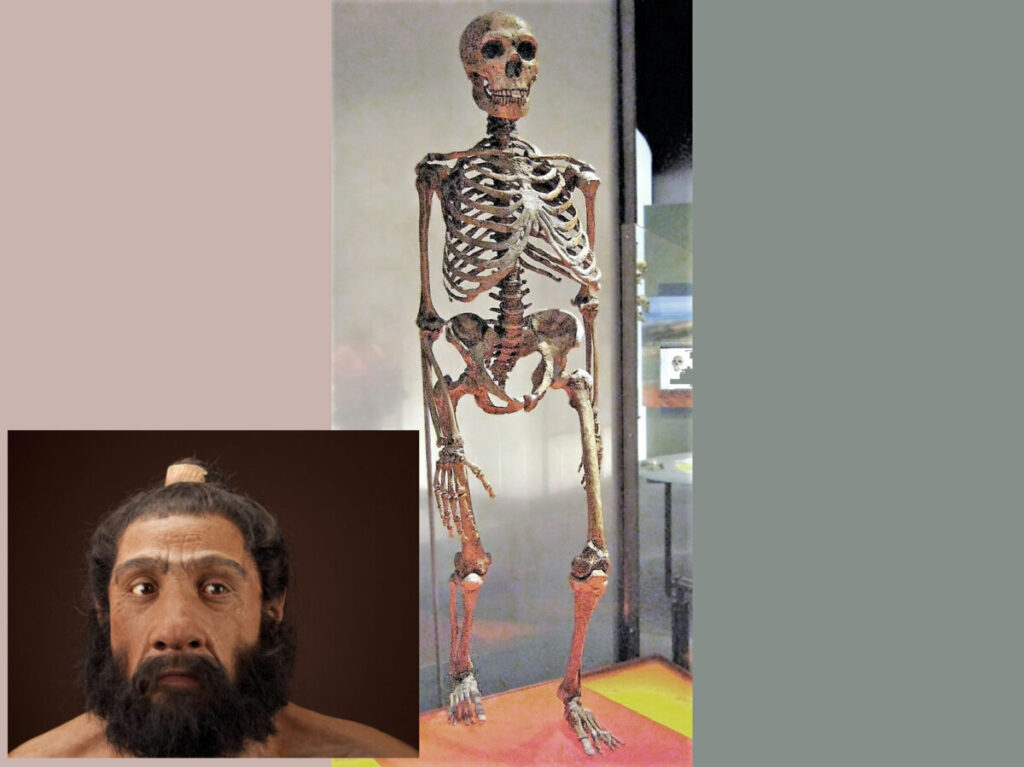
16,000 Generations Ago True symbolic thought emerges before 430,000 BCE: The discovery in 2018 of Neanderthal art dating back to 68,000 years ago, proved symbolic thought in Neanderthals. It also indicates strongly that symbolic thought evolved in or before our common ancestor about 430,000 years ago. This must be true unless either they evolved it
Homo neanderthalensis: Verified True Symbolic Thought Read More »
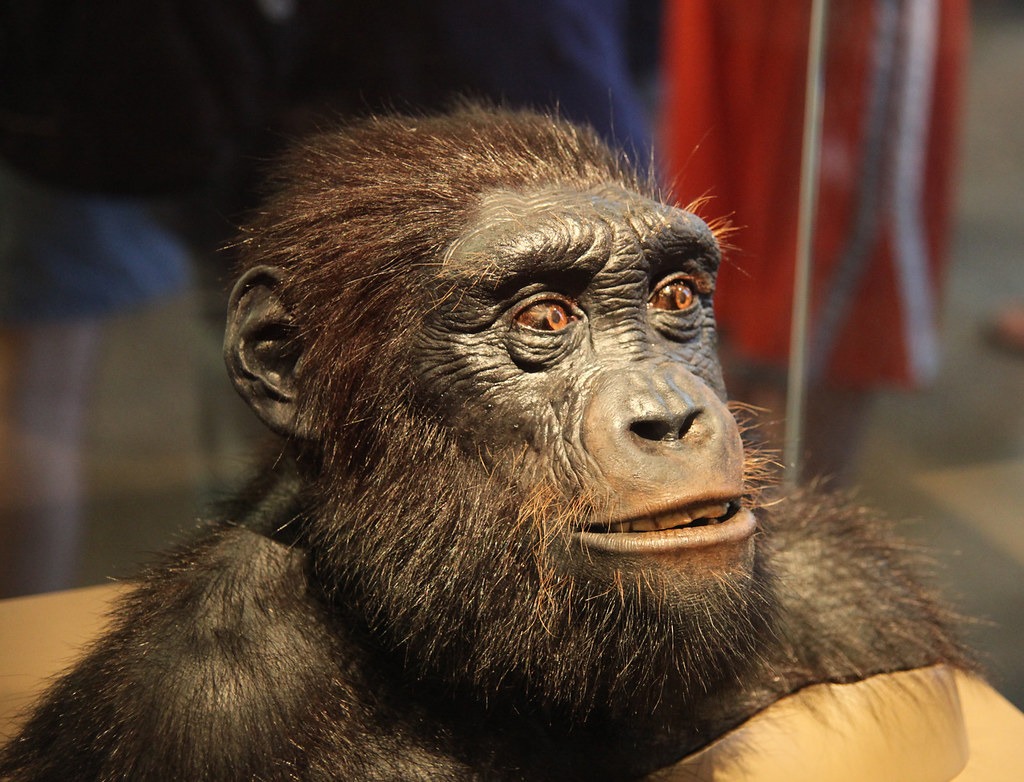
300,000 Generations Ago (from 2020 CE) Hominini Tribe: The last common ancestor with humans and the pan genus (chimpanzees and bonobos) lived around 7.5 mya. This branch of pan splits again about 1.5 mya into two species: chimpanzees and bonobos. Humans did not evolve from Chimpanzees, but both are the current evolution of a common
Chimpanzees Branch Off (CHLCA) Read More »

360 Generations Ago Earliest known permanent settlement in the Africa/Middle East zone. Jericho, located in the West Bank, Palestinian Territories, stands as one of the earliest known permanent settlements in the Africa/Middle East zone, with continuous habitation dating back to at least the 9th millennium BCE. Situated near an oasis in the Jordan Valley, Jericho’s

5 Generations Ago In 1905, radiometric dating was discovered. It is a method used to date rocks and other objects based on the known decay rate of radioactive isotopes. This technique is used to date rocks. Paleontologists regularly order discoveries in chronological order and estimate their age. Knowing the age of rocks allows paleontologists to assign known
Radiometric Dating Read More »

In 1946, Willard Libby created the method for dating organic materials by measuring their content of carbon-14, a newly discovered radioactive isotope of carbon. This dating technique provides objective age estimates within a few decades for carbon-based objects that originated from living organisms.
Radiocarbon Dating Read More »
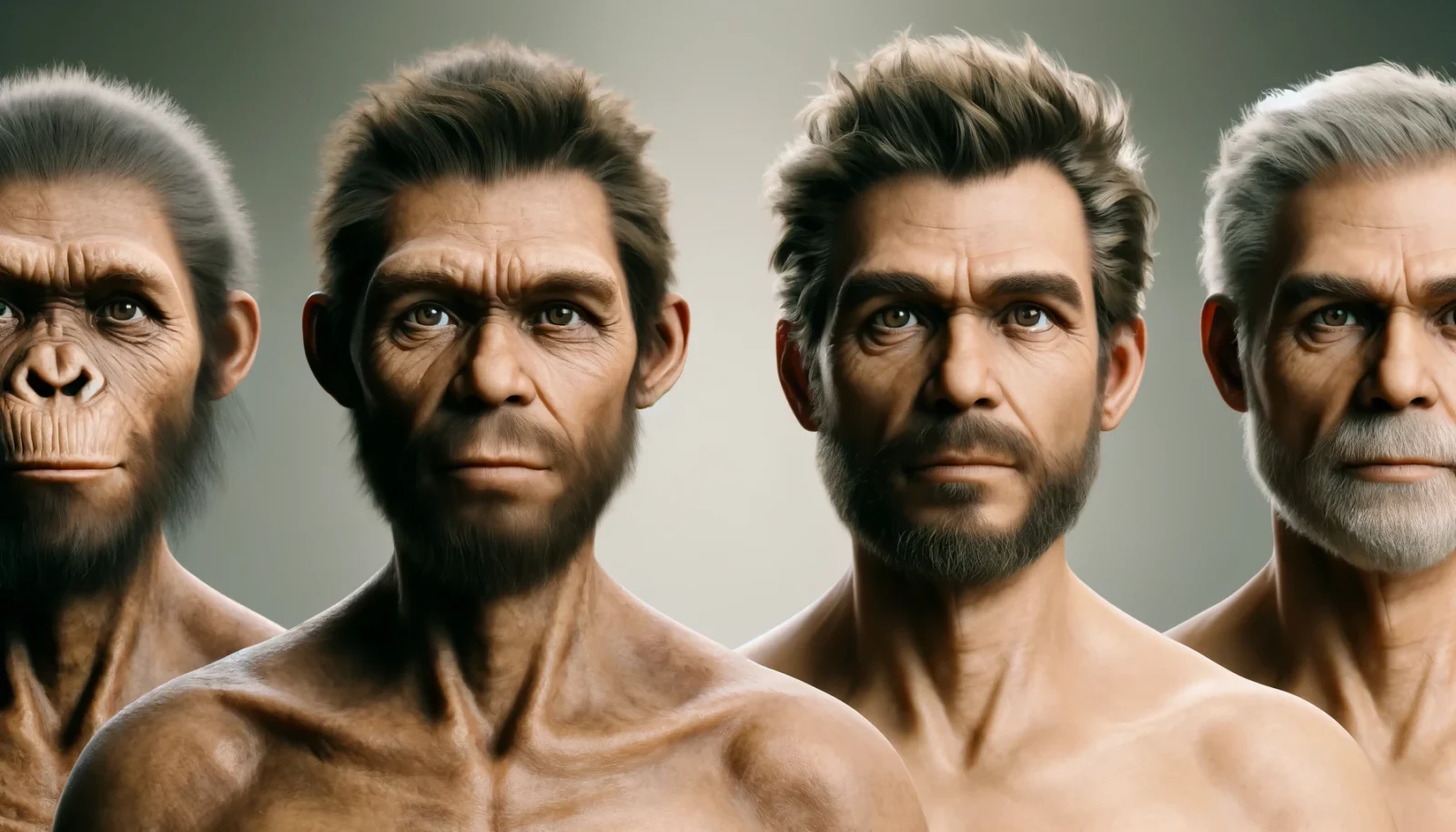
12,600 Generations Ago The first humans evolved in Africa about 315,000 BCE. These first humans had most of the traits we identify as human including looking and thinking much as we do. They used brain power, innovation, and teamwork. They spoke and controlled fire. Their lives were complex. Over the next 250,000 years they evolved
Homo Sapiens: Advanced Transcendental Intelligence Read More »

Treachery and Seduction This book was published for the first time in April 2014. At times, paper was scarce so on occasion Roger used existing books to write down his thoughts. Near the end of his life, Roger Williams scrawled an encrypted essay in the margins of a colonial-era book. This unpublished scribbles or “essay”
Roger’s Last Known Essay Read More »
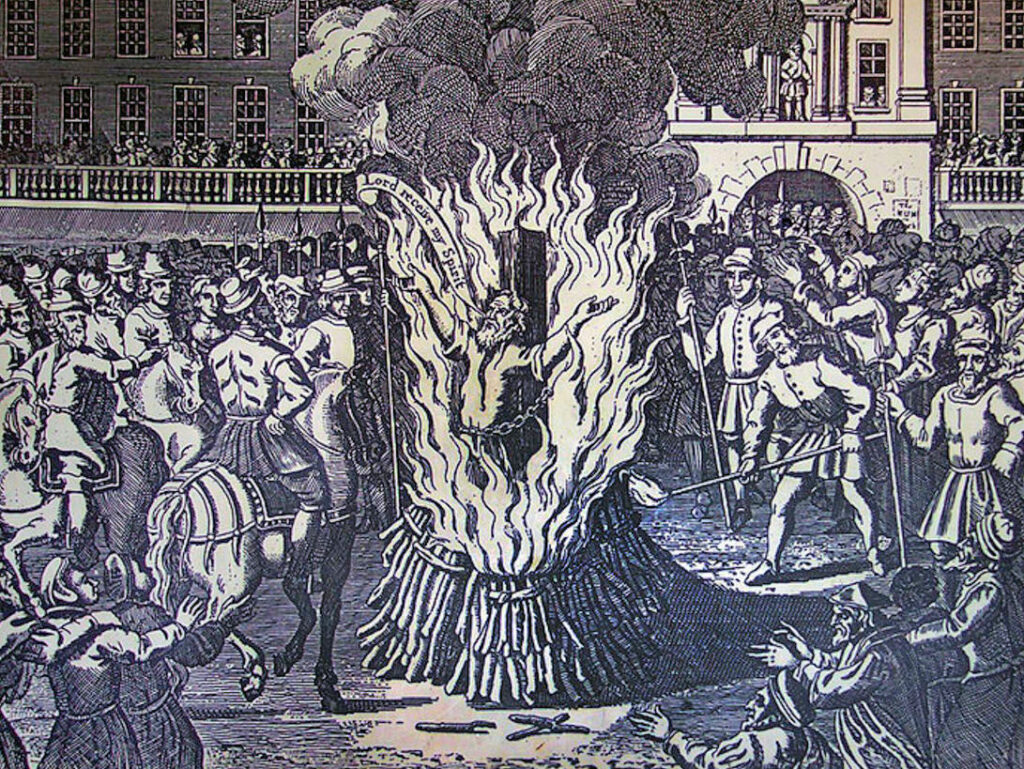
Bartholomew Legate was the last man burned at the stake in Smithfield where Roger Williams grew up. Just like Roger’s father, Bartholomew was in the clothing industry and may have interacted with Roger’s father at his shop. Either way, Roger Williams was about ten years old when Bartholomew was burned at the stake for simply
Bartholomew Legate Burned at the Stake Read More »
Congress granted citizenship to all Native Americans born in the U.S. Until 1924, Native Americans were not citizens of the United States. Many Native Americans had, and still have, separate nations within the U.S. on designated reservation land. Even after the Indian Citizenship Act, some Native Americans weren’t allowed to vote because the right to
Native Americans Citizenship Read More »
Outlawed poll taxes as a voting requirement in federal elections. Conservatives used poll taxes to disenfranchise black voters in several states.