

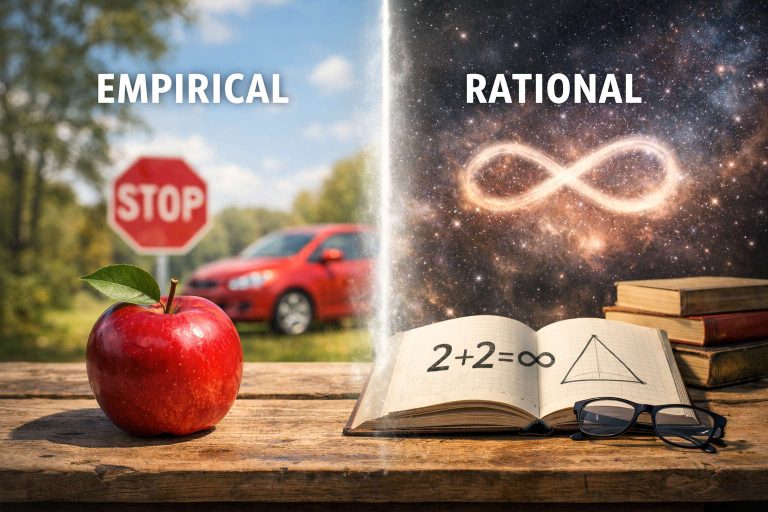
Is red an empirical idea?
Empirical ideas describe the material world through direct experience, while rational ideas describe it indirectly by organizing, interpreting, and extending what direct experience reveals.

Do we experience reality directly?
We do not experience raw reality directly; we experience the brain’s structured interpretation of sensory input.
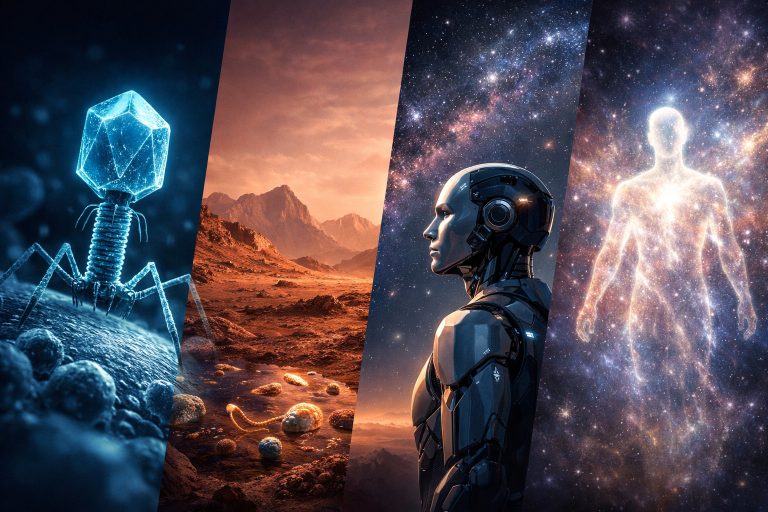
What Is Life?
Life has a standard biological definition, but the moment we explore edge cases—AI, extraterrestrial microbes, immortal beings—the concept stretches beyond chemistry into cognition and identity.
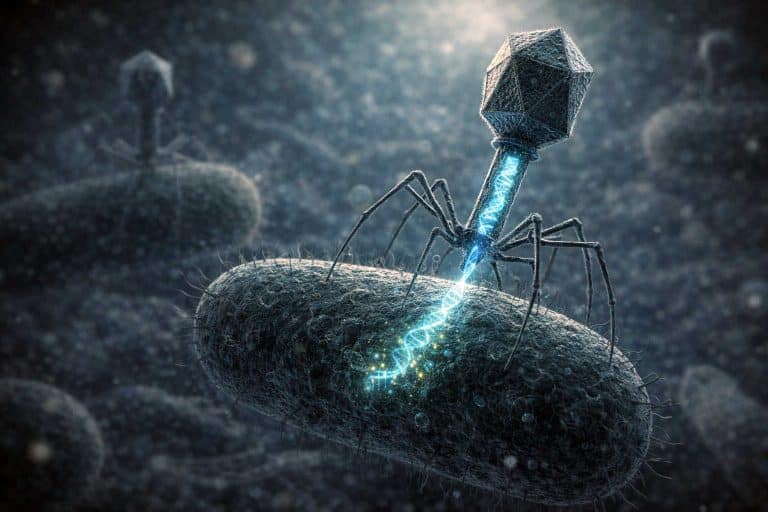
Are viruses alive?
The definition of life is not absolute; it is a human classification built around a cluster of biological properties such as metabolism, reproduction, and evolution.

What ancient human species first realized it was going to die?
The awareness of personal mortality likely emerged gradually in the genus Homo, becoming probable by the time of Homo heidelbergensis and unmistakable in Neanderthals and ...
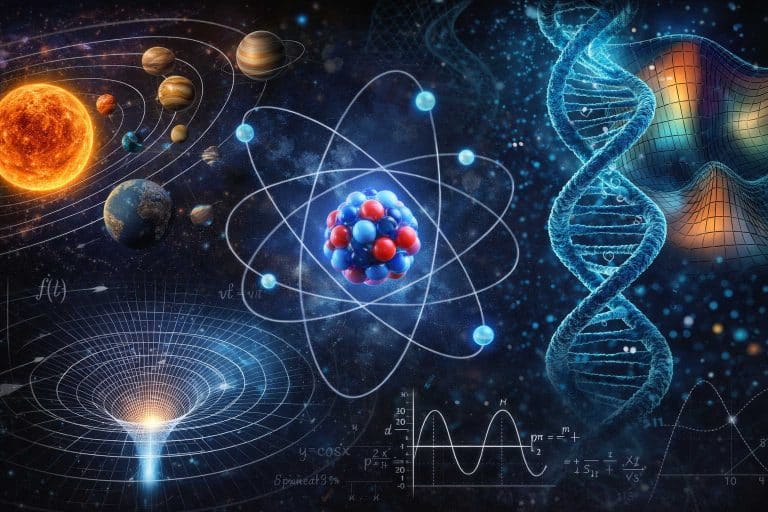
Why do scientific models work if they aren’t literally true?
Scientific models succeed not because they are perfectly true, but because they reliably capture patterns in reality.

What is Deception Research?
Deception research shows that authority-driven situations often override personal judgment, replacing morality with obedience.

Why do complex systems fail when proportionality is removed?
Complex systems remain stable only when responses scale appropriately to the problem they are addressing.
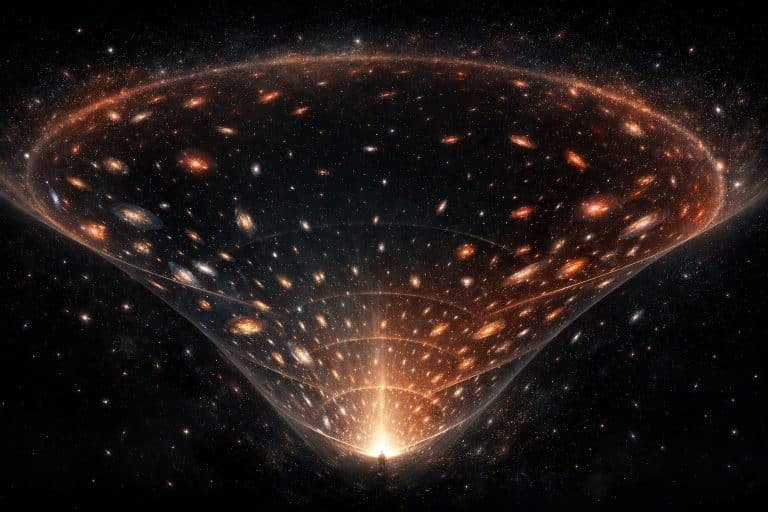
Could the CMB be proof of an inifinite universe?
The Cosmic Microwave Background isn’t the edge of space in an infinite universe—it’s the oldest light we can see, marking a boundary in time, not ...
Why is Planck time important?
Planck time marks the boundary where our best current physical theories stop describing reality reliably.
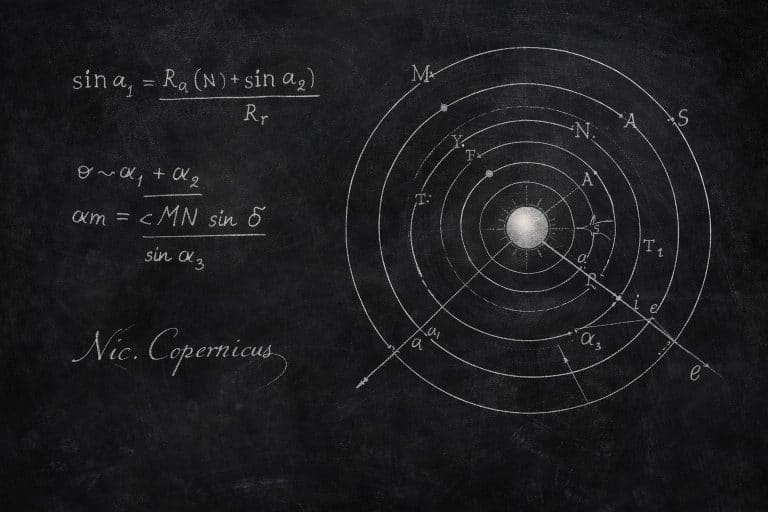
Did Copernicus prove that Earth moves around the Sun?
Nicolaus Copernicus did not prove heliocentrism—he built a model that explained the sky better than any alternative available at the time.
What does neuroscience say about “identity?”
Science says you are physically changing all the time and the story you tell about yourself is less a fixed thing and more a maintained ...
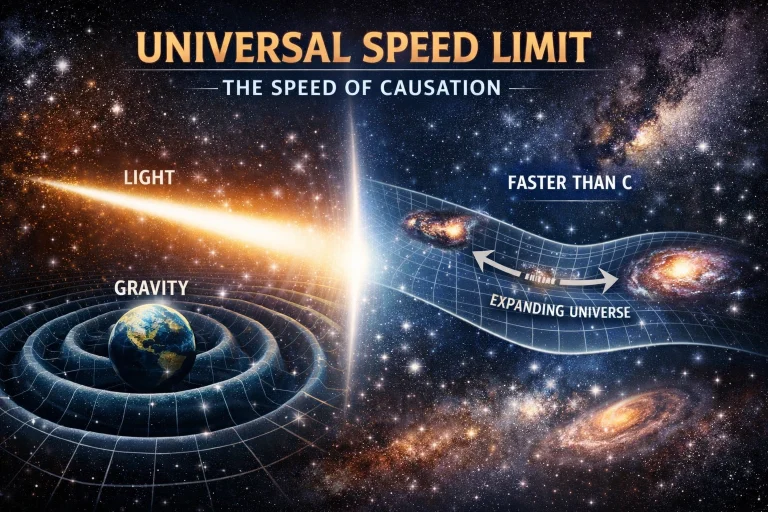
Is “the speed of light” really the best name for the universe’s maximum speed?
The “universal speed limit” isn’t about light: it’s the limit for causation within our universe, even as space itself expands faster.
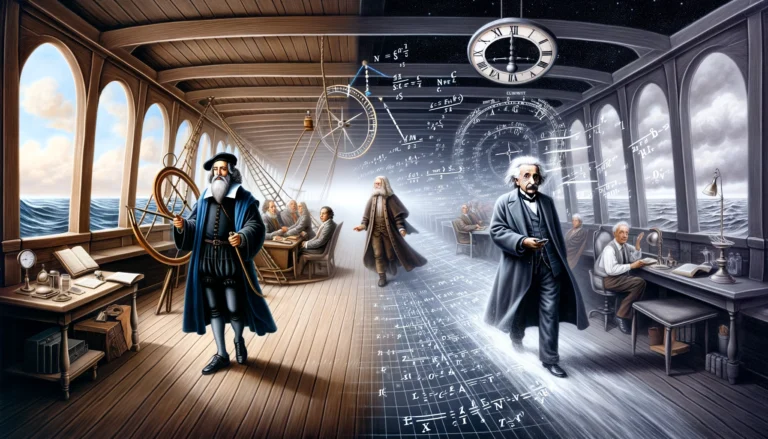
Trivia: Did Einstein or Galileo discover the Relativity Principle?
In shaping modern cosmology, Galileo articulated the relativity principle in 1632, Newton made gravity universal in 1687, and Einstein revealed gravity as the curvature of ...
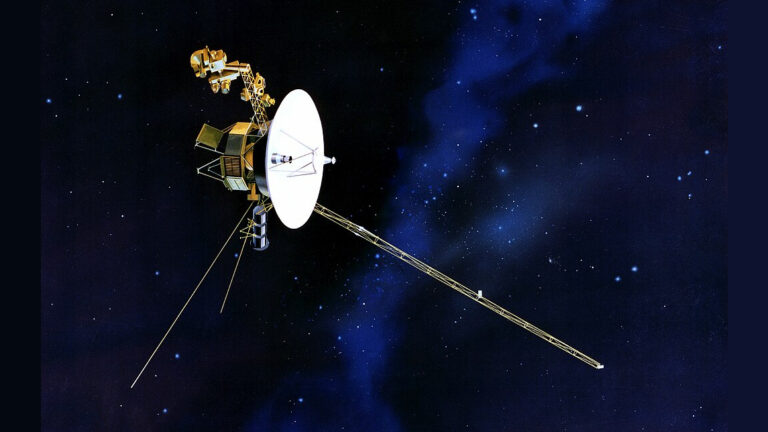
Why hasn’t Voyager been damaged by space dust?
Space feels dangerous, but its extreme emptiness makes collisions incredibly rare.

Will the night sky have stars nearly forever?
Our constellations feel permanent, yet aren't. The stars themselves, bound together in our galactic neighborhood, will light our night sky for nearly forever.

Are dogs and wolves the same species?
Yes. Dogs and wolves are the same species biologically, with dogs classified as a domesticated subspecies of the gray wolf.

When did play evolve in mammals?
Play evolved many times in evolution as a survival tool. Mammalian-like play emerged about 190 million years ago.

Is the 8.7-million-year-old Anadoluvius a human ancestor?
Anadoluvius turkae is a reminder of just how messy evolution is. The discovery highlights the diversity of great apes during the Miocene and how different ...

Is science tainted by bias?
Science is touched by human bias, but its strength lies in being a self-correcting process.