
Explore Science-first Philosophy

FAQ

Will the night sky have stars nearly forever?

Wed 5 Feb 2025
Published 1 year ago.
Updated 4 months ago.
Related FAQs
Trivia: How many moons does the solar system have: less than or more than 200?
What is the history behind quantum mechanics?
How far away is Voyager 1?
Can humans breathe the air of other planets?
Is Trump simply wrong when he says water destroys magnets?
Does the Fermi paradox lack good thinking?
Share :
Email
Print

Will the night sky have stars nearly forever?

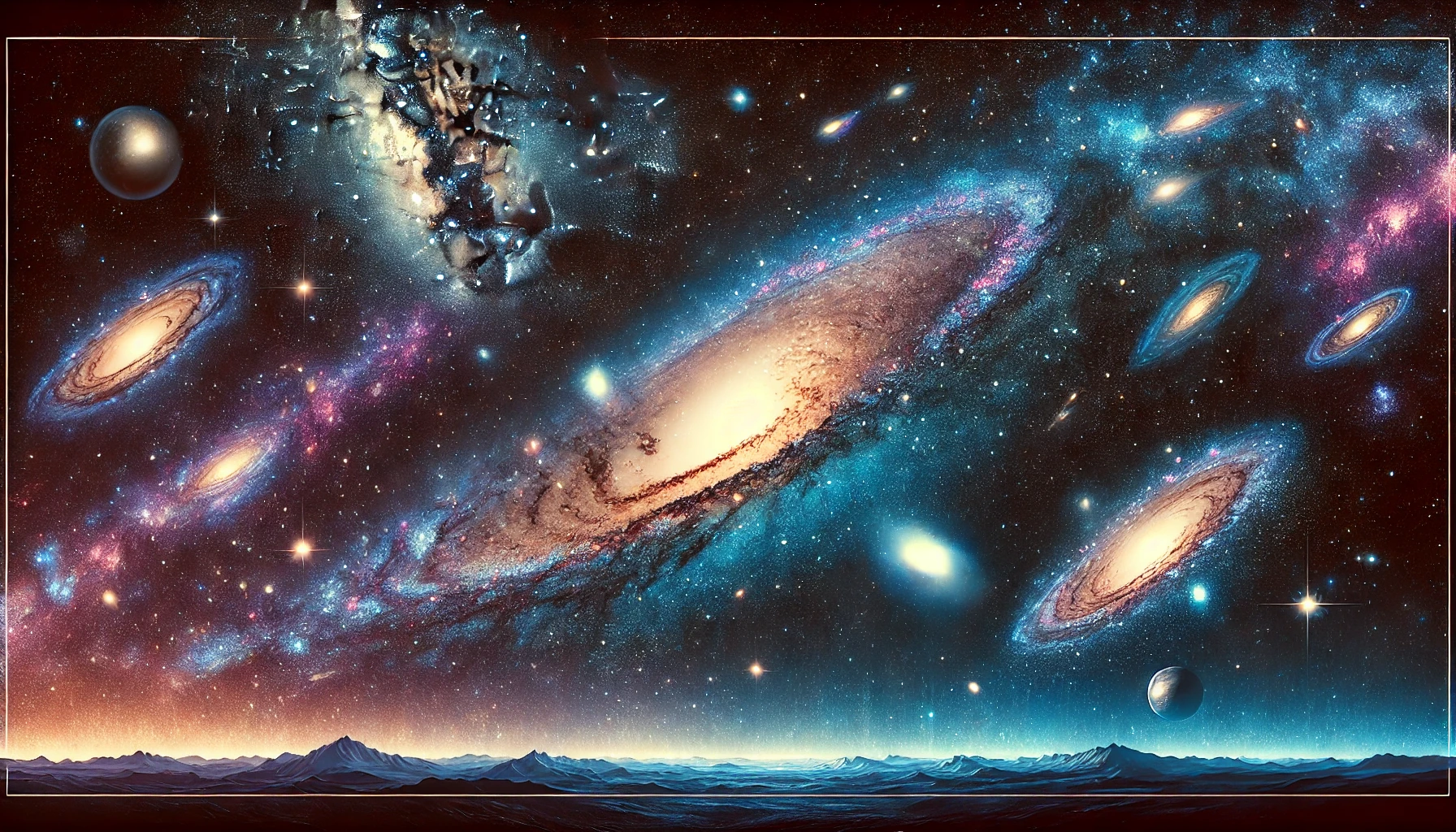
YES! Well, nearly forever. Does that surprise you? Did you think the expanding universe would someday erase the stars from our night sky? Here’s the truth as understood by modern astrophysicists: while the universe is expanding, the stars you see at night, nearly all part of our Milky Way, are gravitationally bound—and always will be.

The constellations change shape at varying rates and the night sky is quite different every 10,000 years or so. So, the shapes we see today were quite different from just 10,000 years ago. But, a night sky full of constellations will always be a part of our future.

And, our galaxy is part of a Local Group of over 50 galaxies, all gravitationally bound together. Just as planets orbit the Sun, the stars, galaxies, and dust within our Local Group are locked together in a cosmic “island.”

How big is this island? Imagine this: both Star Wars and Star Trek take place entirely within a galaxy. Star Trek takes place in the Milky Way, and Star Wars takes place a long time ago in a galaxy far, far away. Our Local Group of galaxies is an unimaginably vast expanse of space. While trillions of distant galaxies will vanish beyond the cosmic horizon, our Local Group will remain bound together, for at least trillions of years.

Over time, some galaxies will merge. For example, the Milky Way and Andromeda are on a collision course and will one day form a massive galaxy. But this process is so slow that the night sky will change imperceptibly on human timescales. And stars are far apart, they’re unlikely to collide. Instead, their gravitational pull will reshape the stars into a new galaxy.
— map / TST —

Deep-Dive Article: The Expanding Universe Explained
If science is right, the Earth will last another 5 billion years and the universe will expand for trillions of years.
Michael Alan Prestwood
Author & Natural Philosopher
Prestwood writes on science-first philosophy, with particular attention to the convergence of disciplines. Drawing on his TST Framework, his work emphasizes rational inquiry grounded in empirical observation while engaging questions at the edges of established knowledge. With TouchstoneTruth positioned as a living touchstone, this work aims to contribute reliable, evolving analysis in an emerging AI era where the credibility of information is increasingly contested.
This month @ TST
Column Menu
May 2026
»COLUMN ARCHIVE
--COLUMN--
Column Research….
1. Timeline Story
Book: The Idea of History
2. Linked Quote
“The historian without his facts is rootless…the facts without their historian are…meaningless.”
3. Science FAQ »
Is science tainted by bias?
4. Philosophy FAQ »
Debating History: Should We Say “Dark Ages” or “Middle Ages?”
5. Critical Thinking FAQ »
What is the preservation bias?
6. History FAQ!
Did Einstein’s driver really give one of his early talks?
Bonus Deep-Dive Article
TST Philosophy of History: Empirical Narrative Realism

Comments

Join the Conversation! Currently logged out.
NEW BOOK! NOW AVAILABLE!!

30 Philosophers: A New Look at Timeless Ideas

by Michael Alan Prestwood
The story of the history of our best ideas!
Scroll to Top