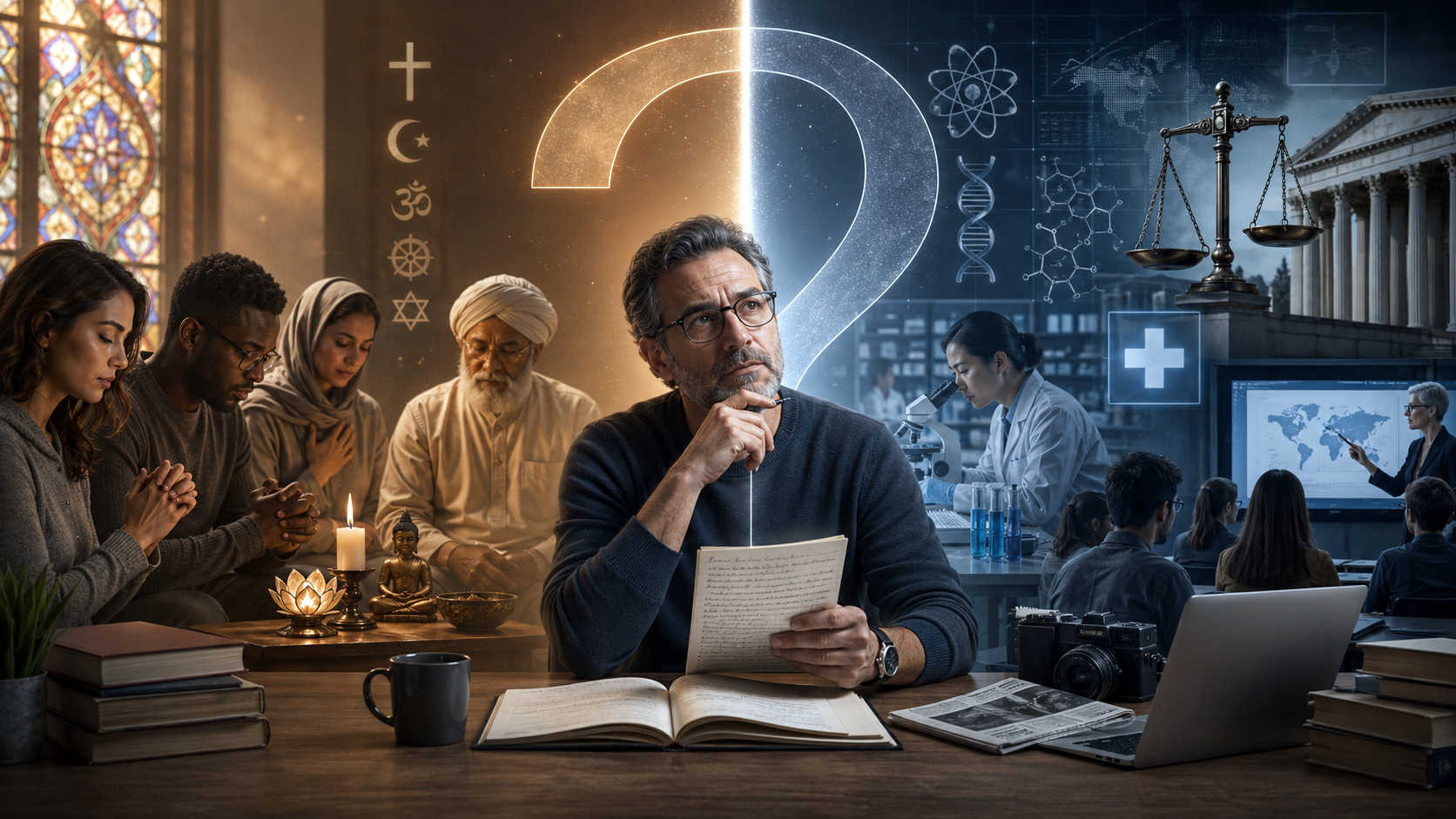
Dawkins argues that religious belief is not merely mistaken, but harmful. His criticism is aimed at believing without sufficient evidence, teaching children religious identity before they can evaluate it, and allowing religious claims to influence public systems.
Dawkins’s concerns are real. Belief is not harmless just because it is personal. When belief reaches into shared reality, it carries responsibility. Evidence matters when someone claims prayer cures disease, or that science should be rejected for scripture, or that law should enforce religious teachings. Those all belong to pubic truth which requires evidence.
For much of my life, I identified as an atheist, and I agreed with Dawkins. Fully. Religion is harmful. For a long time, that is all I could see. I thought the answer was to convert the religious. Over time, I came to understand that humans are going to belief what they belief. The knowledge of death alone can make larger stories feel emotionally verified.
I always agreed that religion did some good too. It can provide belonging, ritual, and a way to endure suffering. Those are not imaginary benefits. They are real. For many people, it is the place they go when life breaks them. It is where they find help, identity, and people who show up.
Dawkins is right when he challenges faith that overrides public systems. He is right when he objects to coercion and indoctrination. But he is often too blunt when he treats all religious belief as the same kind of error.
The question is not merely whether a belief is unproven. The question is whether it causes harm, blocks truth, or gets forced onto others.