Explore Science-first Philosophy

FAQ

Is Richard Dawkins right that religious belief is harmful?

Mon 11 May 2026
Published 38 minutes ago.
Updated 38 minutes ago.
Related FAQs
What is the history of Confucianism?
Did the Buddha believe in rebirth or reincarnation?
What is Ontology and why is it important?
What is the difference between a true believer, an empiricist, and a true skeptic?
How does the idea of Identity in Christ fit within TST?
What are the six realms of karma?
Share :
Email
Print

Is Richard Dawkins right that religious belief is harmful?

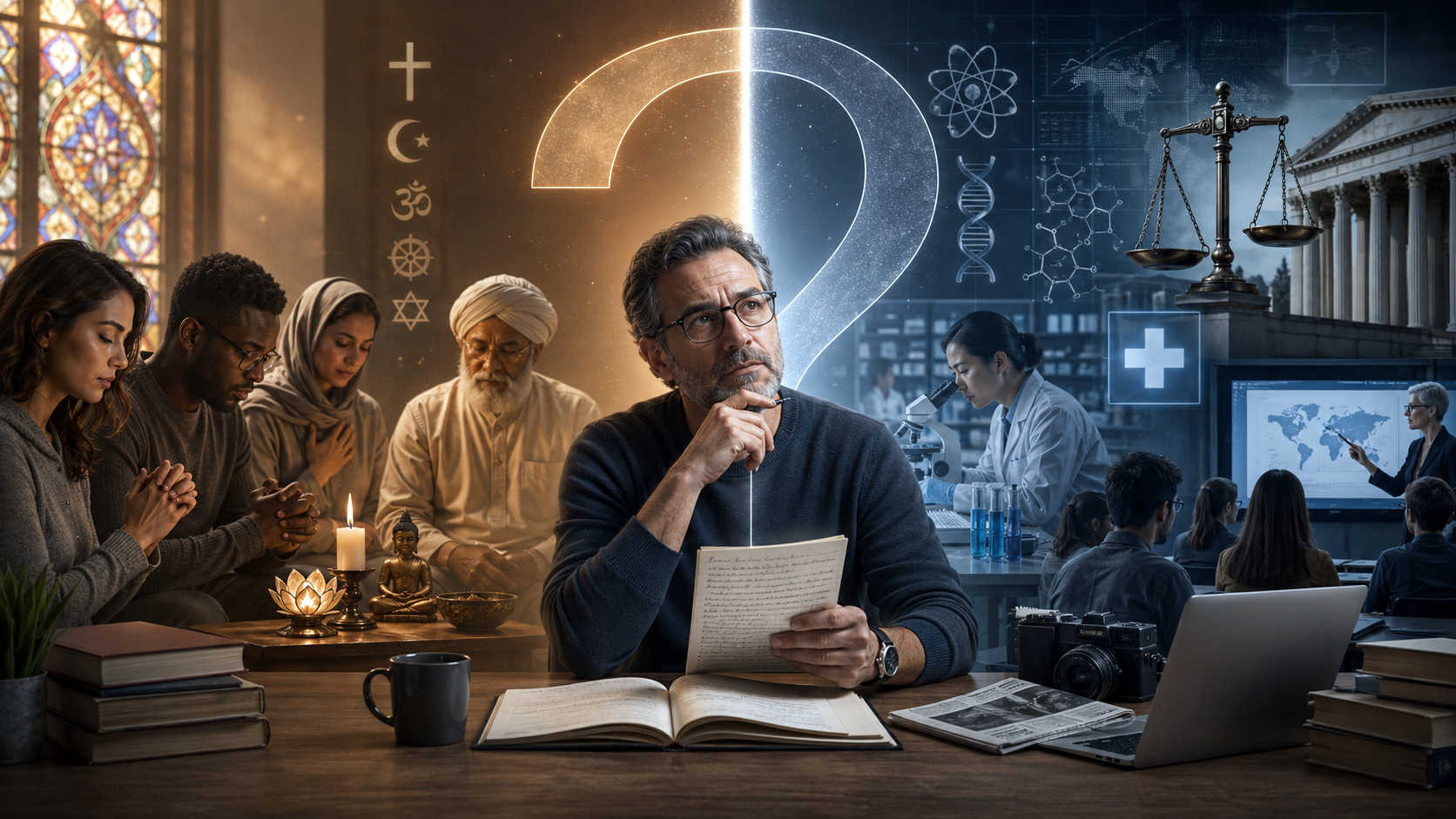
Richard Dawkins argues that religious belief is not merely mistaken, but often harmful. His criticism is especially aimed at faith-based thinking: believing without sufficient evidence, teaching children religious identity before they can evaluate it, and allowing religious claims to influence science, education, medicine, law, or politics. He has described faith in very strong moral terms, including as one of the world’s great evils.

TST agrees with part of Dawkins’s concern. Belief is not harmless just because it is personal. When a belief reaches into shared reality, it carries responsibility. If someone claims prayer cures disease better than medicine, or that science should be rejected because of scripture, or that public law should enforce one religion’s teachings, then evidence matters. At that point, private belief has become a public truth claim.

But TST does not agree that all religious belief is automatically harmful.

Using the Idea of Ideas, we first classify the claim. A claim about the physical world is empirical and must answer to evidence. A theological argument may be rational if it is logically structured, though still unproven. A personal spiritual belief may be speculative, meaningful, or identity-forming without becoming public truth. The problem begins when speculative belief is treated as established fact.

So is Dawkins right? He is right that religious belief can be harmful when it dismisses evidence, shields itself from criticism, or controls public life. He is right to challenge faith when it overrides science, law, journalism, medicine, or education. But he is too blunt if he treats all religious belief as the same kind of error.

TST’s answer is calibrated confidence.

Private belief should be held with humility. Public claims require public evidence. And no belief, religious or not, should be allowed to ignore reality when other people are affected.

— map / TST —

Evidentialism is the view that belief should be supported by evidence. Epistemic responsibility is the duty to believe carefully and proportion beliefs to evidence.
Michael Alan Prestwood
Author & Natural Philosopher
Prestwood writes on science-first philosophy, with particular attention to the convergence of disciplines. Drawing on his TST Framework, his work emphasizes rational inquiry grounded in empirical observation while engaging questions at the edges of established knowledge. With TouchstoneTruth positioned as a living touchstone, this work aims to contribute reliable, evolving analysis in an emerging AI era where the credibility of information is increasingly contested.
This month @ TST
Column Menu
May 2026
»COLUMN ARCHIVE
--COLUMN--
Column Research….
1. Timeline Story
Book: The Idea of History
2. Linked Quote
“The historian without his facts is rootless…the facts without their historian are…meaningless.”
3. Science FAQ »
Is science tainted by bias?
4. Philosophy FAQ »
Debating History: Should We Say “Dark Ages” or “Middle Ages?”
5. Critical Thinking FAQ »
What is the preservation bias?
6. History FAQ!
Did Einstein’s driver really give one of his early talks?
Bonus Deep-Dive Article
TST Philosophy of History: Empirical Narrative Realism

Comments

Join the Conversation! Currently logged out.
NEW BOOK! NOW AVAILABLE!!

30 Philosophers: A New Look at Timeless Ideas

by Michael Alan Prestwood
The story of the history of our best ideas!
Scroll to Top