
Explore Natural Philosophy

Phil • Cr. Think • Science • Hist •

STORY

Genus Kenyapithecus: EI Emerges

By Michael Alan Prestwood

Fri 3 May 2024
Published 2 years ago.
Updated 1 month ago.
Related Stories
Long-Term Memory Evolves: Tiktaalik
Genus Proconsul (Self-Awareness Settles)
Presentient Animals Emerge: The Ediacaran Prelude
Laughter Emerges
Early Play Evolves in Mammals
Homo neanderthalensis: Verified True Symbolic Thought
Share :
Emotional intelligence did not begin with humans. Its roots reach deep into the great ape line, where survival depended not only on strength or instinct, but on noticing others, managing reactions, and living inside social relationships. In Kenyapithecus, we may be looking near the dawn of that deeper emotional world.

Genus Kenyapithecus: EI Emerges

Lived 16 to 14 Million Years Ago
Prefrontal–limbic integration, Reading others, Modulating reaction

The last common ancestor with humans and orangatans lived around 16 mya.

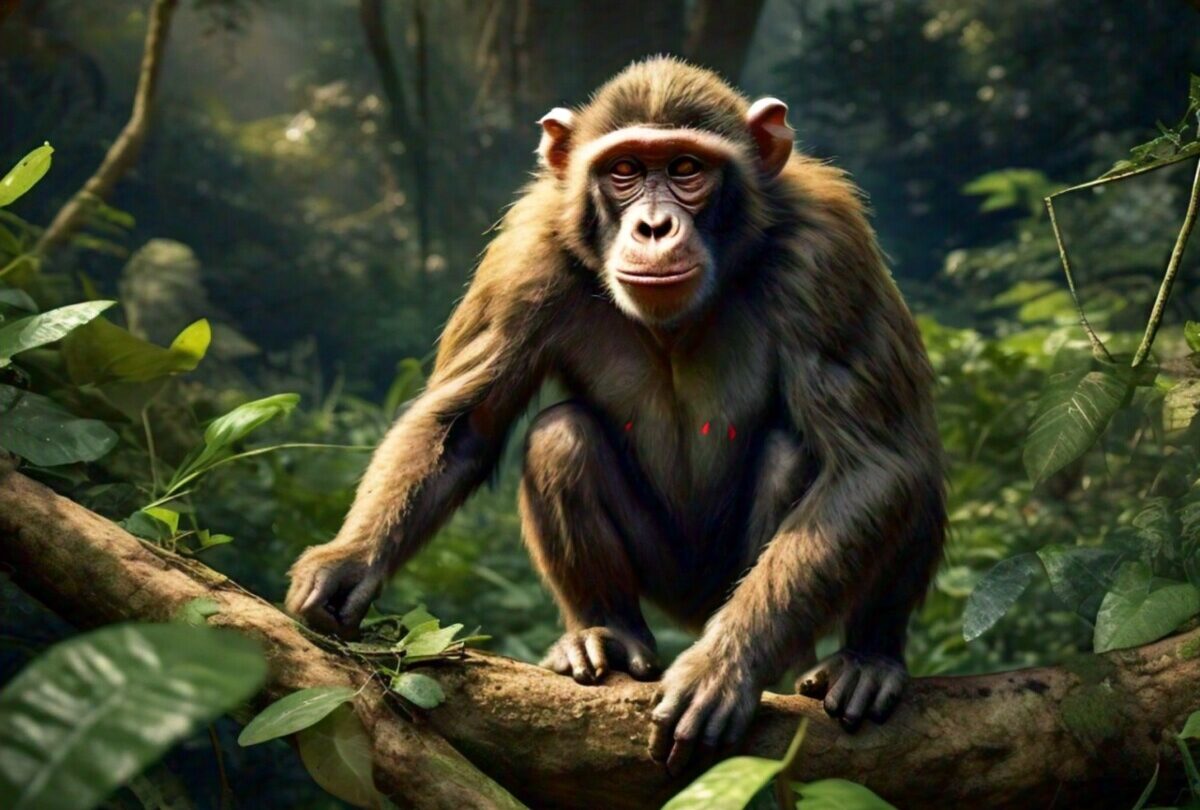
Great Apes LCA candidate: Kenyapithecus is an extinct genus of great ape that lived in Kenya from around 16 to 14 million years ago. It is considered a potential candidate for the last common ancestor of all great apes, including humans, chimpanzees, gorillas, and orangutans. Kenyapithecus had a mix of primitive and advanced features, with a brain size slightly larger than that of modern chimpanzees and a more human-like dental structure. Its face was likely more flat and human-like than modern great apes, and it may have had a more upright posture. While its exact relationship to modern great apes is still debated, Kenyapithecus provides important insights into the evolution of the great ape lineage.

Complex EI Emerges: Orangutans fall into the Complex EI category. They exhibit a broad spectrum of emotionally intelligent behaviors, including empathy, where they show concern for the welfare of others; the use of emotional cues to communicate and navigate complex social landscapes; self-control and mood management; and problem-solving that incorporates emotional states. Their ability to engage in morally influenced behaviors, such as sharing based on social bonds or altering their behavior to maintain social harmony, underscores their capacity for complex emotional intelligence. Orangutans’ nuanced social interactions, care for their young, and responses to environmental and social challenges demonstrate a sophisticated understanding and management of emotions that align with the hallmarks of complex EI.

— map / TST —

Michael Alan Prestwood
Author & Natural Philosopher
Prestwood writes on science-first philosophy, with particular attention to the convergence of disciplines. Drawing on his TST Framework, his work emphasizes rational inquiry grounded in empirical observation while engaging questions at the edges of established knowledge. With TouchstoneTruth positioned as a living touchstone, this work aims to contribute reliable, evolving analysis in an emerging AI era where the credibility of information is increasingly contested.
Email
Print
The Prestwood Column
Menu
July 2026
»COLUMN ARCHIVE
--COLUMN--
Column Research….
1. Timeline Story
The famous Lewis “Truth in Fiction” Paper
2. Linked Quote
“Truth is stranger than fiction…[which] is obliged to stick to possibilities;”
3. Science FAQ »
Why does fiction feel real?
4. Philosophy FAQ »
Can authors create fiction beyond our universe?
5. Critical Thinking FAQ »
How do we know what is true in a fictional world?
6. History FAQ!
What is the history of philosophy of fiction?
Bonus Deep-Dive Article
TST Philosophy of Fiction: Imaginative Realism

Comments

Join the Conversation! Currently logged out.

Leave a Reply

NEW BOOK! NOW AVAILABLE!!

30 Philosophers: A New Look at Timeless Ideas

by Michael Alan Prestwood
The story of the history of our best ideas!
Scroll to Top