
Weekly Insights for Thinkers

Related Quotes
“I am old and weak and bruised (with rupture and colic), and lameness on both feet.”
“…allegories…lay hold of the hidden sense which is concealed beneath the words”
“People are disturbed not by the things that happen, but by their opinions about the things that happen.”
“Identity is easy — it’s me, whatever that is.”
“The Dao that can be told is not the eternal Dao; The name that can be named is not the eternal name.”
“Follow the path of least resistance and live in harmony with the Dao.”
Share :

Mike's Takeaway:

Quote context: Surviving quote by later philosophers including Plato and Aristotle who directly read “On Nature.”
Source: From his work “On Nature,” a collection of writings now lost.
Current Reference: Used in chapter 7 of 30 Philosophers.

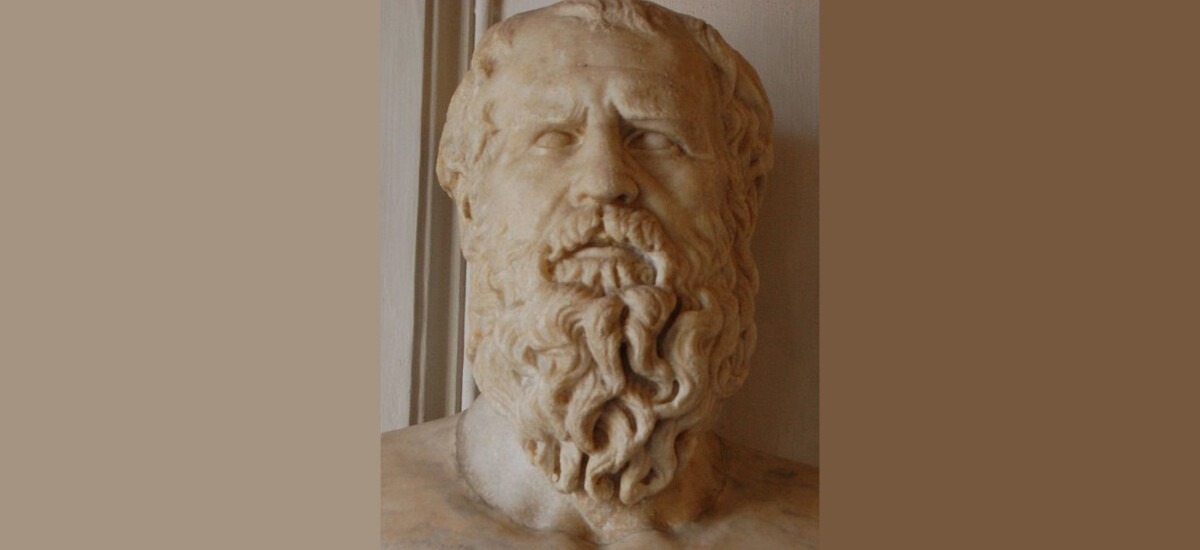
Chapter 7 of 30 Philosophers transitions from Eastern luminaries to their counterparts in the West. The pre-Socratic philosophers, guided by a new rational perspective, challenged the stronghold of mythology, and propelled human thought onto a trajectory marked by reason. Little is known for sure about Heraclitus. Born around 535 BCE, stories indicated he lived about 60 years.

Heraclitus’ timeless observation,

“No man ever steps in the same river twice,”

captures the essence of change and impermanence. The river, ever-flowing and dynamic, is a metaphor for the ceaseless flux of existence. Each step into its waters finds them altered—flowing past, ever new, never the same. And just as the river transforms, so too does the person stepping into it. We are shaped by each passing moment, accumulating experiences that alter who we are. This profound imagery invites us to reflect on the fleeting nature of life and the inevitability of change.

In this elegant simplicity, Heraclitus reveals a deep truth about the human condition: we are both participants in and witnesses to the ever-unfolding stream of existence. His philosophy challenges us to embrace the chaos and beauty of life’s transient nature, encouraging us to find meaning not in permanence but in the act of becoming. It’s a reminder that clinging to what was can blind us to the opportunities and growth inherent in what is. The river of life flows forward, carrying with it our fears, hopes, and aspirations, urging us to evolve.

This quote also serves as a beacon of hope and renewal. If no river is the same, then no mistake, failure, or sorrow is permanent. Every moment is a new current, offering fresh possibilities. By stepping into the river with awareness, we can adapt, learn, and transform. Heraclitus’ words resonate across the ages, reminding us that change is not just inevitable—it is the source of life’s vitality and creativity. In embracing the flow, we find ourselves anew.
Analysis By Michael Alan Prestwood
12 Dec 2025
Published 1 year ago.
Updated 3 months ago.
Michael Alan Prestwood
Author & Natural Philosopher
Prestwood writes on science-first philosophy, with particular attention to the convergence of disciplines. Drawing on his TST Framework, his work emphasizes rational inquiry grounded in empirical observation while engaging questions at the edges of established knowledge. With TouchstoneTruth positioned as a living touchstone, this work aims to contribute reliable, evolving analysis in an emerging AI era where the credibility of information is increasingly contested.
This Week @ TST
March 11, 2026
»Edition Archive
WWB Research….
1. Story of the Week
Galileo: Observation Corrects the Map
2. Quote of the Week
“The Dao that can be told is not the eternal Dao; The name that can be named is not the eternal name.”
3. Science FAQ »
Is red an empirical idea?
4. Philosophy FAQ »
Does infinity exist?
5. Critical Thinking FAQ »
Was math discovered or invented?
6. History FAQ!
Is Philo’s interpretation related to the split in the Idea of Ideas?
Bonus Deep-Dive Article
TST Metaphysical Position: The Split

Comments

Join the Conversation! Currently logged out.

Leave a Reply

NEW BOOK! NOW AVAILABLE!!

30 Philosophers: A New Look at Timeless Ideas

by Michael Alan Prestwood
The story of the history of our best ideas!
Scroll to Top