
Phil • Cr. Think • Science • Hist • …
TST PRACTICE

By Philosopher Michael Alan Prestwood

FAQ

Did Einstein’s driver really give one of his early talks?

☐ Read
☑ Read
You’ve read this 0 times.
You’ve listened to this 0 times.
Sun 9 Jun 2024
Published 2 years ago.
Updated 3 months ago.
Related FAQs
Can authors create fiction beyond our universe?
Why are invalid fear-based arguments so effective?
Is Terrance Howard correct when he says zero does not exist?
Is it logical to vote for a candidate based on just one issue?
What is the preservation bias?
Why does fiction feel real?
Share :
Email
Print

Did Einstein’s driver really give one of his early talks?

No — sorry. I really wish I could say this wonderful tale is true, but it’s not. Let’s use it to demonstrate the historical category of ideas.

First, the story.

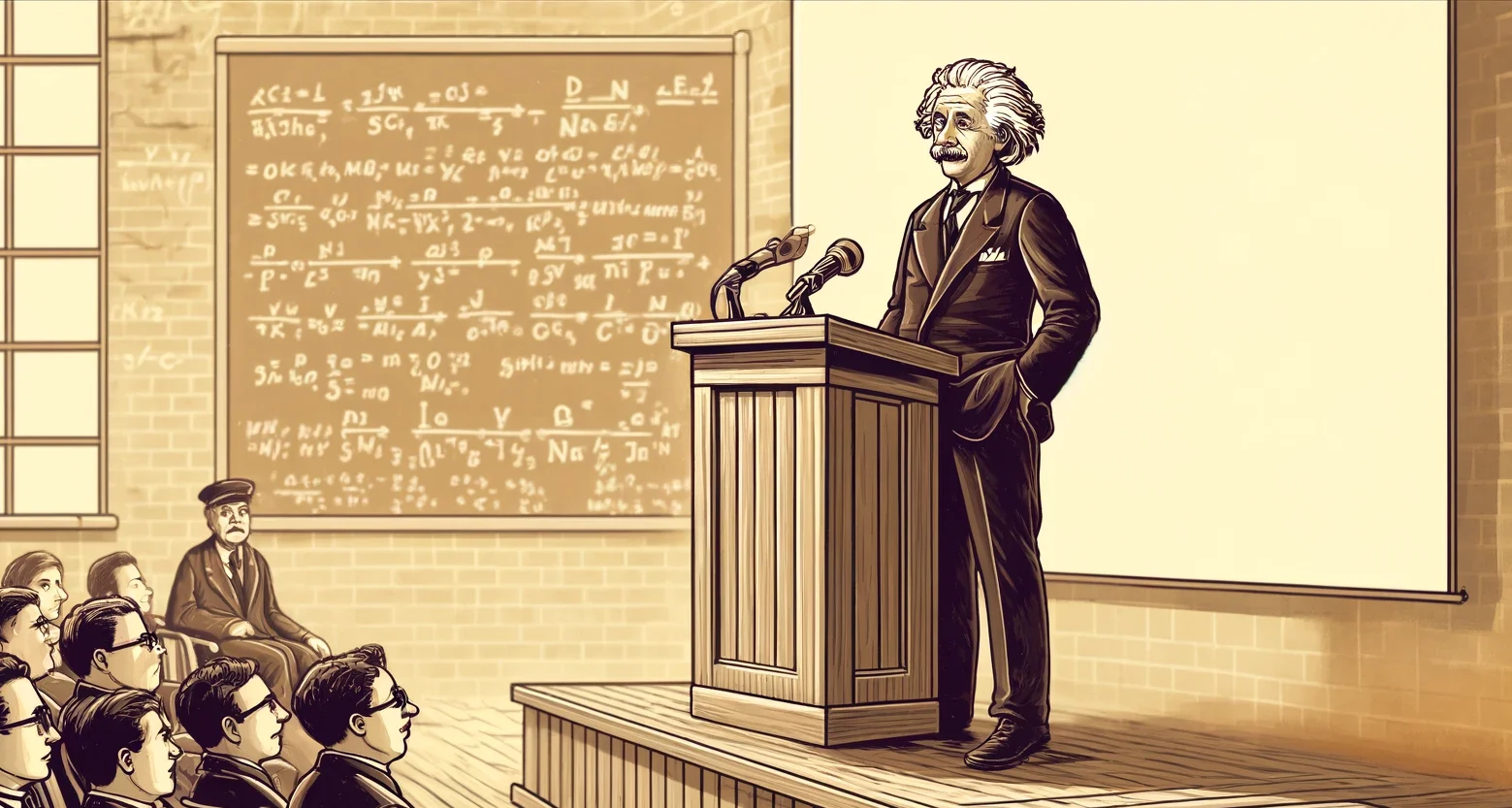
Early in Einstein’s career, after giving the same lecture many times, he complained to his driver about how repetitive it had become. The driver, having heard it over and over, joked that he could give the lecture himself. Einstein, amused, took him up on it. For one event, they switched places. The driver delivered the talk beautifully while Einstein sat in the audience. Then someone asked a difficult question. Without missing a beat, the driver replied that the answer was so simple even his driver could explain it. Einstein then stood up and answered.

I love that story. It makes Einstein humble, playful, and brilliant. It also supports a wonderful idea: if you understand something well enough, you can explain it simply. And others can too. No wonder the story spread.

But stories can have charm and life lessons, and still not be true. Historical stories are true only when they align with reality. In this case, the support is missing. Einstein nor his driver left us this story. No one in their families or in the audience either. No friend or reliable third-party source either. As history, that matters. A lot.

So the calibrated answer is simple: it is probably fiction. Not useless fiction. Not bad fiction. Just fiction. Fiction can still teach real lesson, but they cannot be treated as public truth.

Some stories feel true because they fit what we want to believe. They carry meaning. But confidence must rise only as high as the evidence allows. For now, unless something turns up, Einstein’s driver story belongs in the charming legend category.
— map / TST —

TST Tracker
✓ Reading recorded.
The Einstein driver story is charming, memorable, and probably fiction. That makes it useful: history requires evidence, not just a good moral. A story can teach something valuable without earning confidence as public truth.
Michael Alan Prestwood
Author & Natural Philosopher
Prestwood writes on science-first philosophy, with particular attention to the convergence of disciplines. Drawing on his TST Framework, his work emphasizes rational inquiry grounded in empirical observation while engaging questions at the edges of established knowledge. With TouchstoneTruth positioned as a living touchstone, this work aims to contribute reliable, evolving analysis in an emerging AI era where the credibility of information is increasingly contested.
The Prestwood Column
Menu
October 2026
Column Research….
1. Timeline Story
The Great Quaker Debates!
2. Linked Quote
“All men are prone to differ. It is no new thing in all former ages, in all parts. Each party is most right in his own eyes.”
3. Science FAQ »
Do facts actually change minds?
4. Philosophy FAQ »
When does persuasion become manipulation?
5. Critical Thinking FAQ »
How can you tell when a debate has stopped being productive?
6. History FAQ!
What is the history of debate?
Bonus Deep-Dive Article
Roger Williams Biography and Dedication to the Freedom of Conscience

Comments

Join the Conversation! Currently logged out.
NEW BOOK! NOW AVAILABLE!!

30 Philosophers: A New Look at Timeless Ideas

by Michael Alan Prestwood
The story of the history of our best ideas!
Scroll to Top