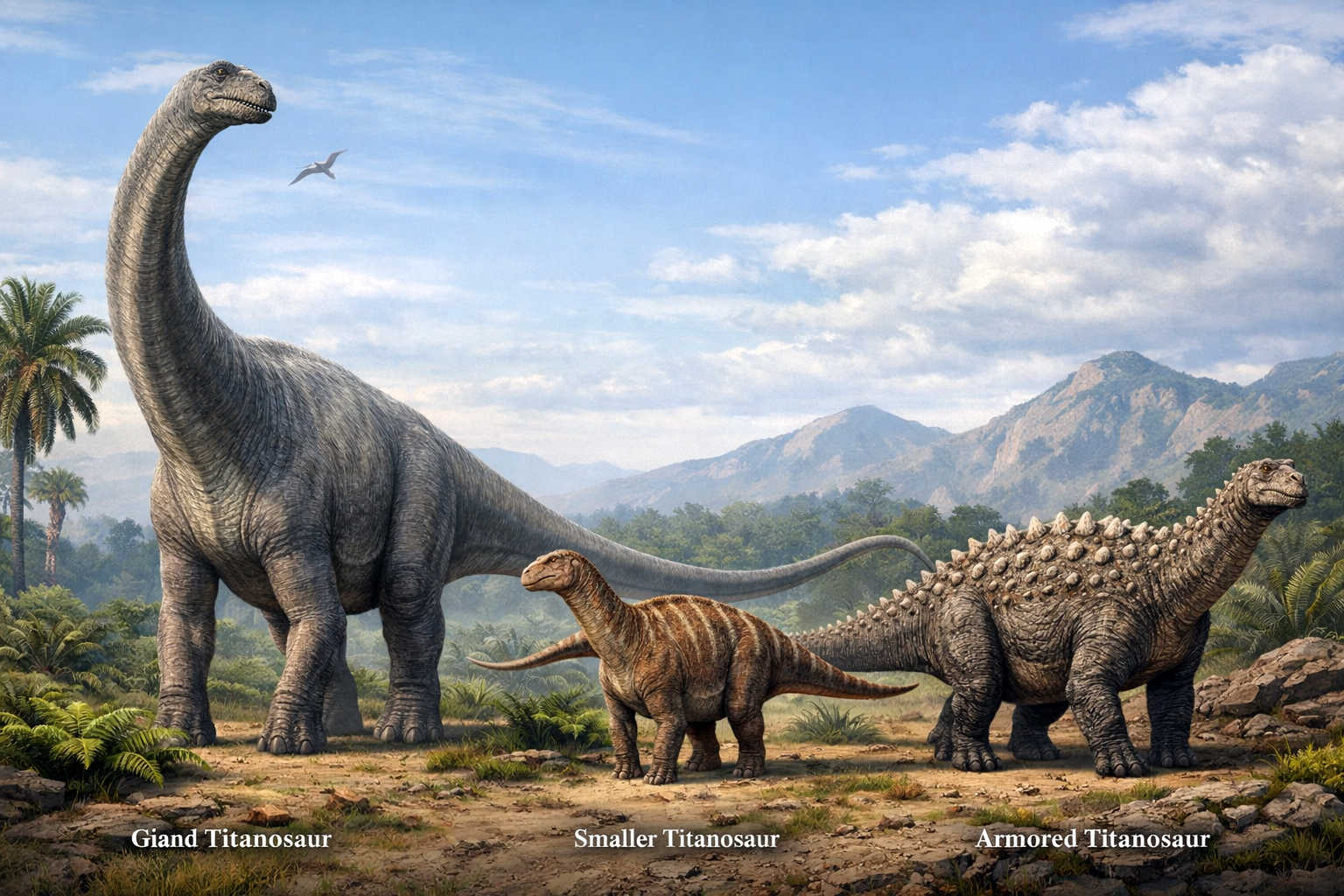
The Last Sauropods
The last sauropods were titanosaurs—the final surviving long-necked dinosaurs, still ranging from giants to smaller and even armored forms at the end of the Cretaceous.
The Last Sauropods Read More »


The last sauropods were titanosaurs—the final surviving long-necked dinosaurs, still ranging from giants to smaller and even armored forms at the end of the Cretaceous.
The Last Sauropods Read More »
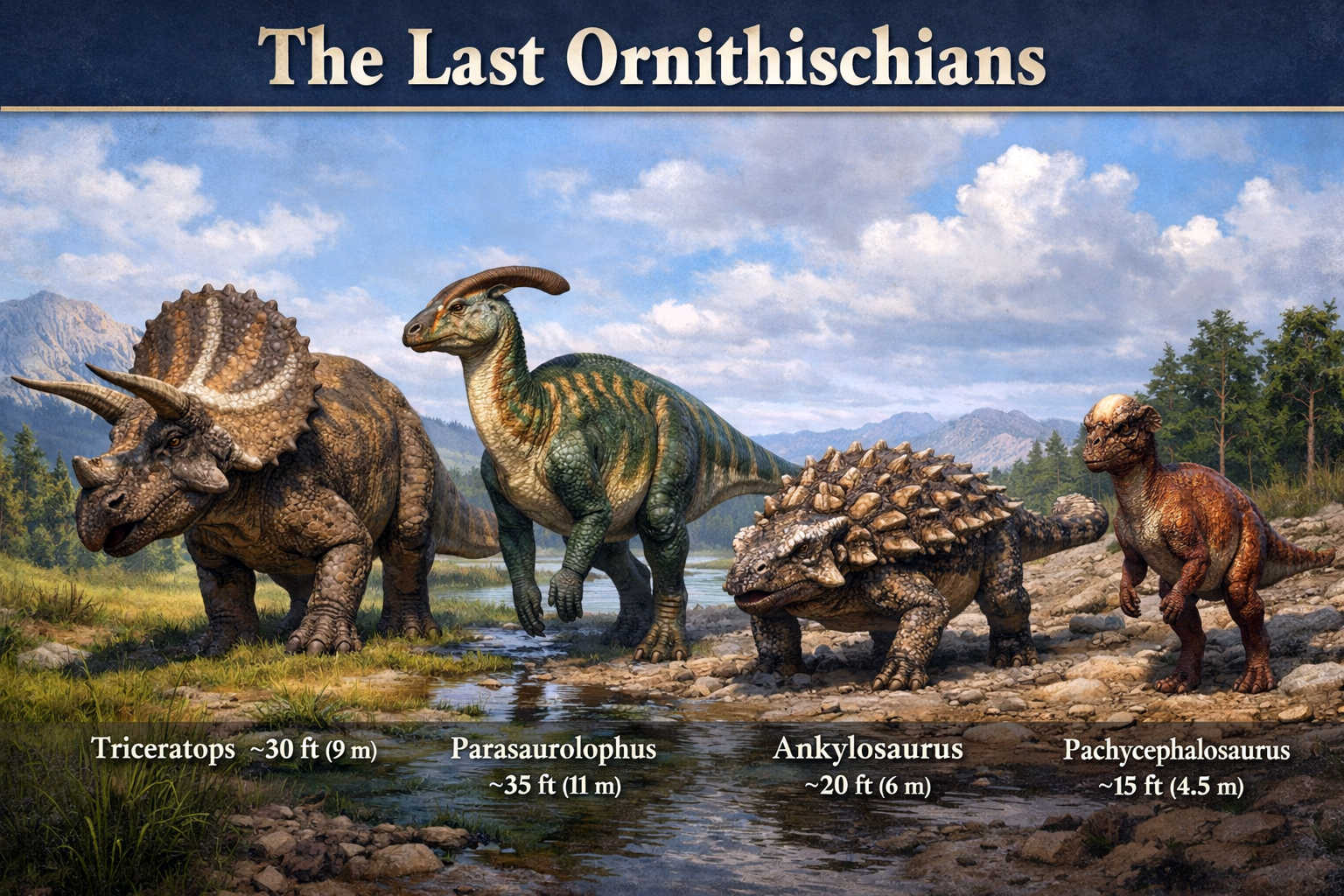
Even near the end, ornithischians remained a diverse and successful branch of plant-eating dinosaurs.
The Last Ornithischians Read More »
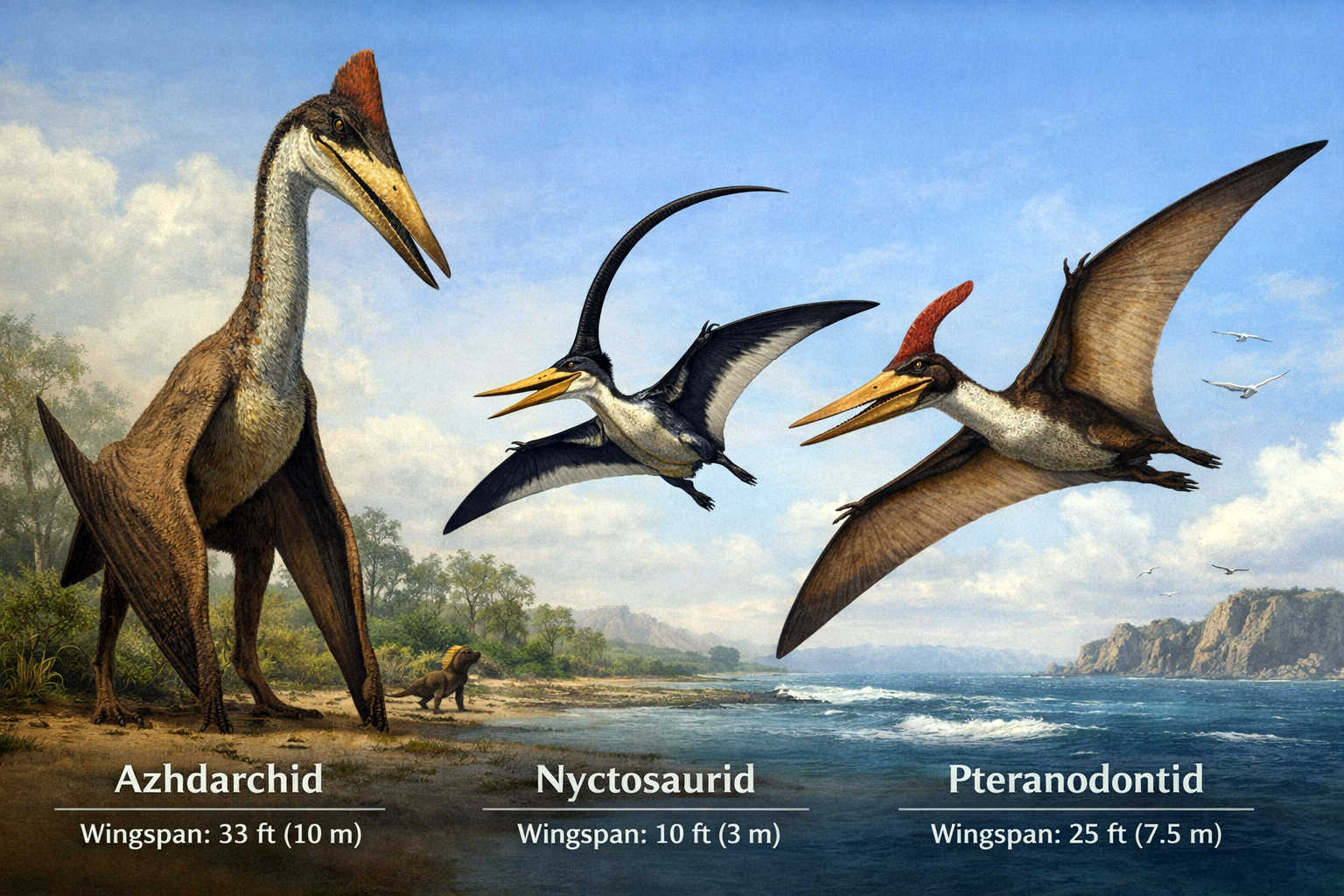
The last pterosaurs were not all the same, and they were not simply faded leftovers.
The Last Pterosaurs Read More »
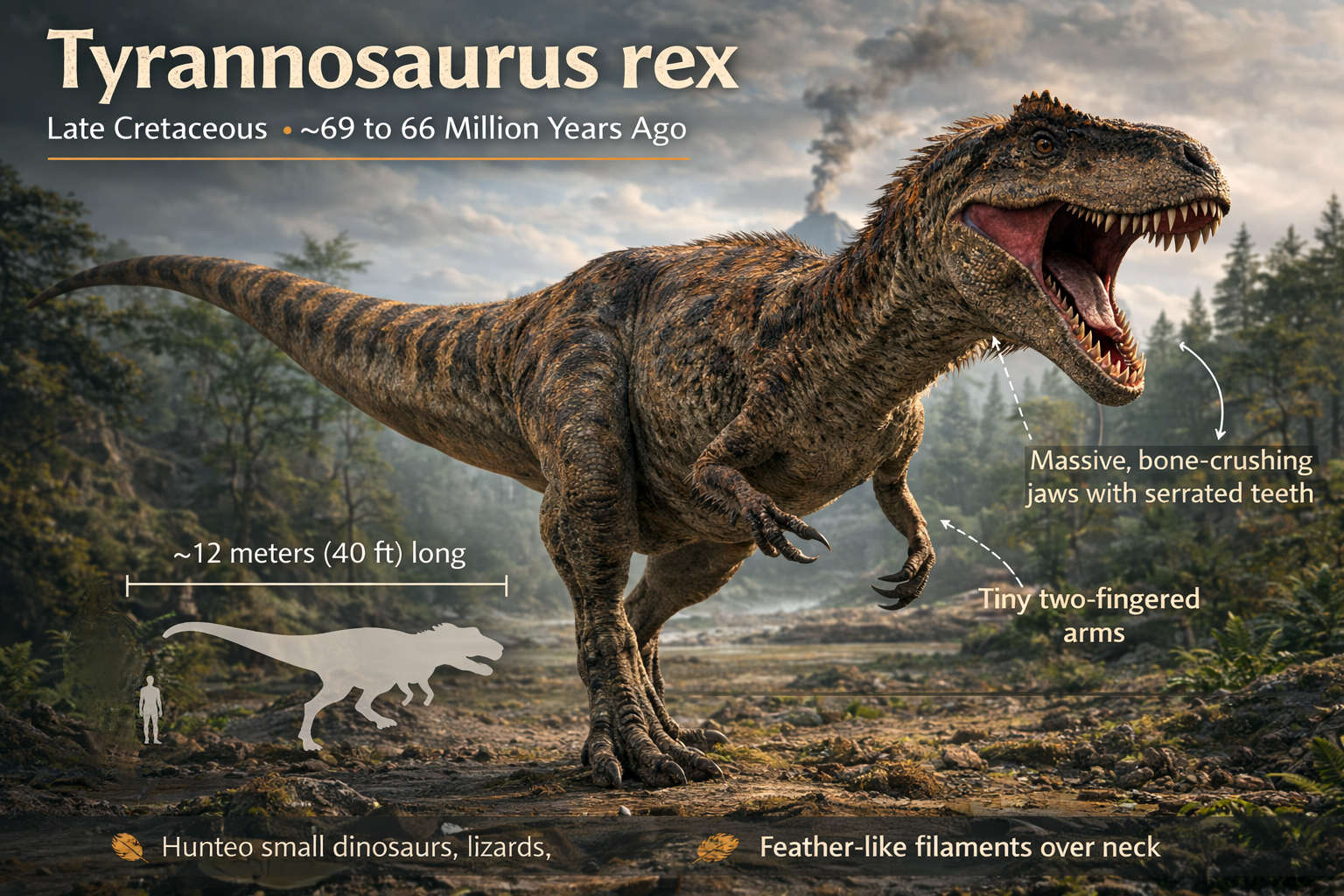
T. rex lived in western North America about 69 to 66 million years ago. All dinosaurs, except potentially three lines of birds, went extinct 66 million years ago, when the Chicxulub asteroid hit.
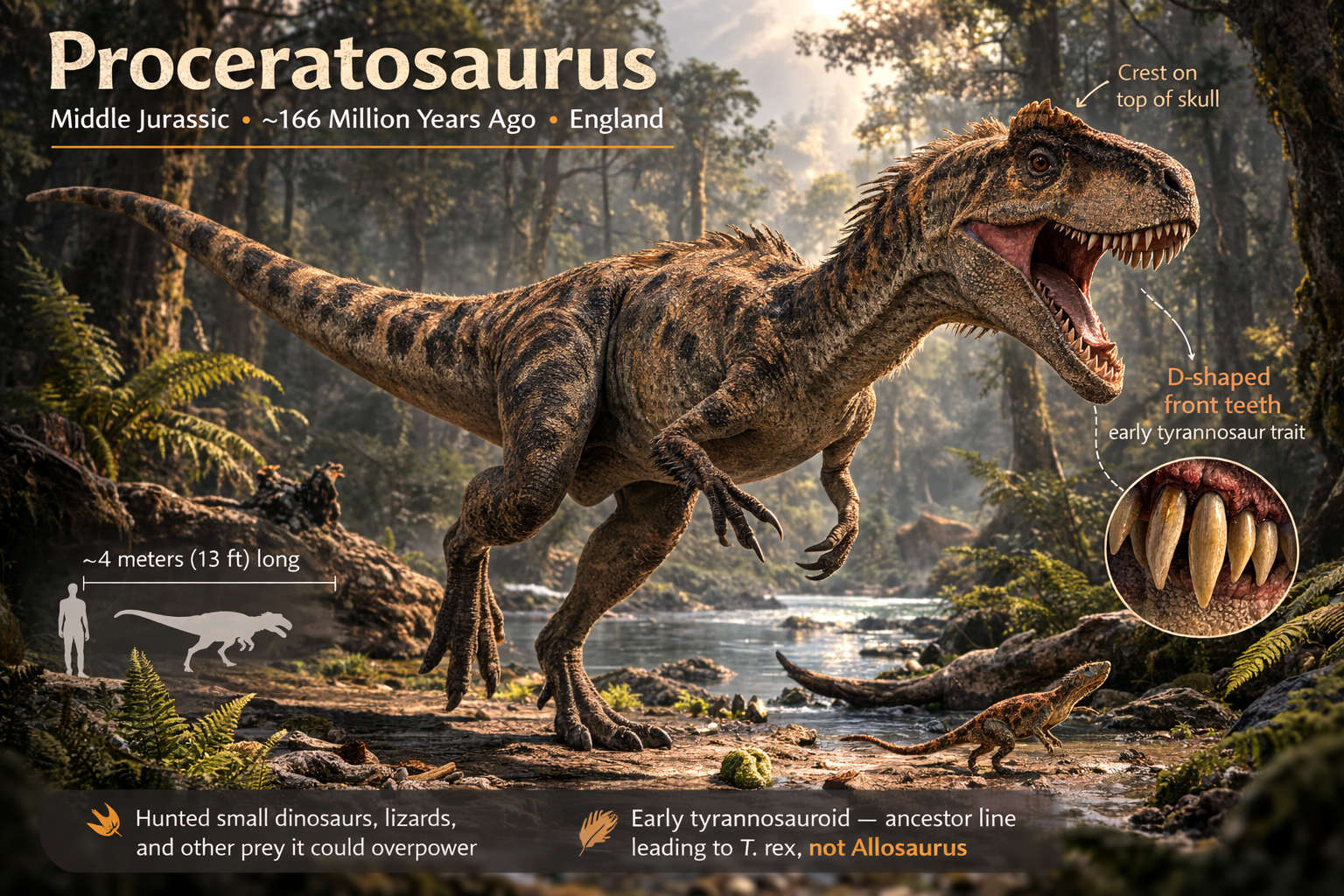
Proceratosaurus had the same general tyrannosaur-style look: a big head, long tail, strong hind legs, short forelimbs, and a built-for-biting predator shape: D-shaped front teeth and a crest on top of the skull.
Proceratosaurus (T.Rex ancestor) Read More »
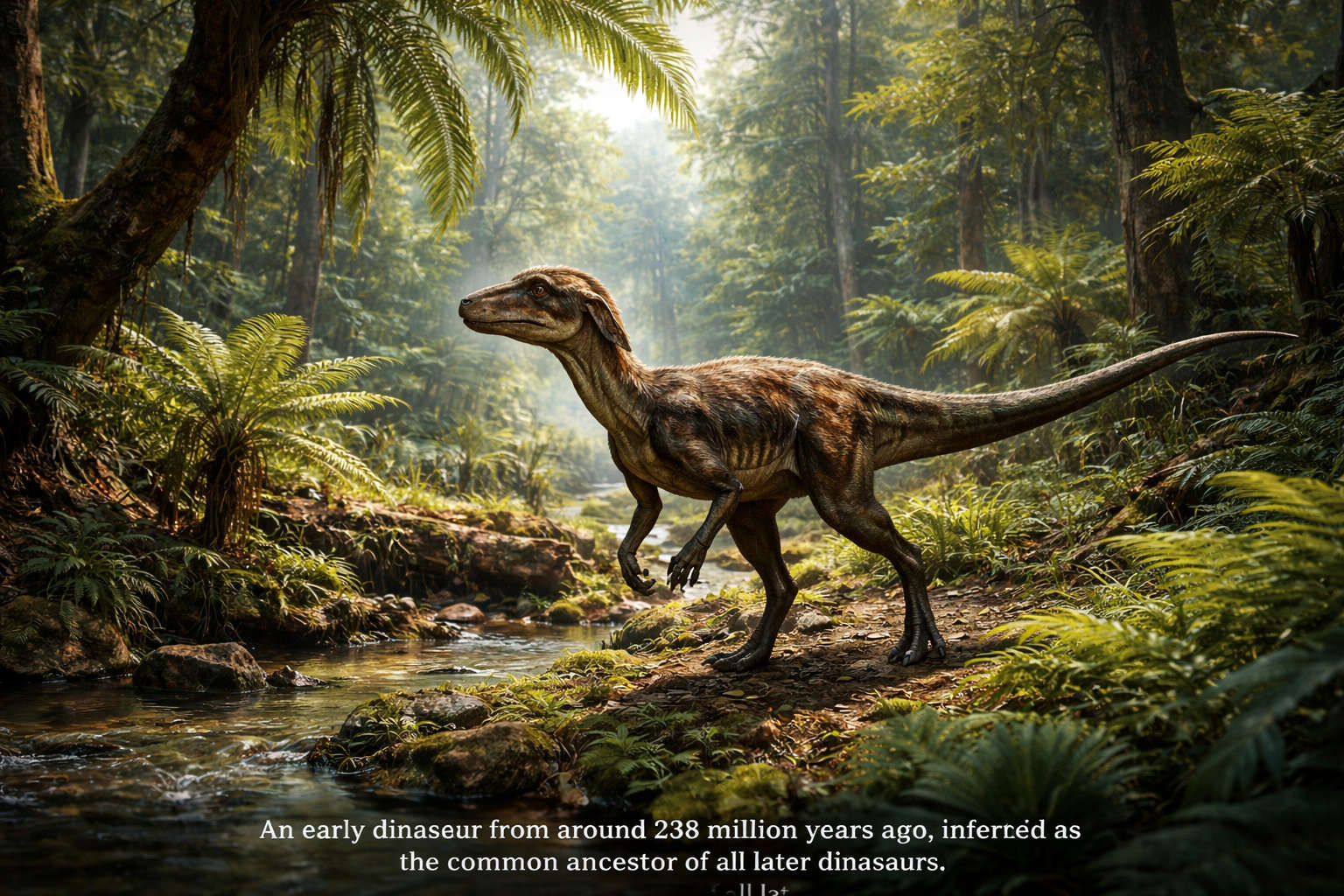
Before the famous branches split into predators, long-necks, horned giants, and birds, there was one early ancestral species. One population eventually led to all dinosaurs: Allosaurus, Styracosaurus, and Diplodocus.
Dinosauria Emerge: True Dinosaurs! Read More »
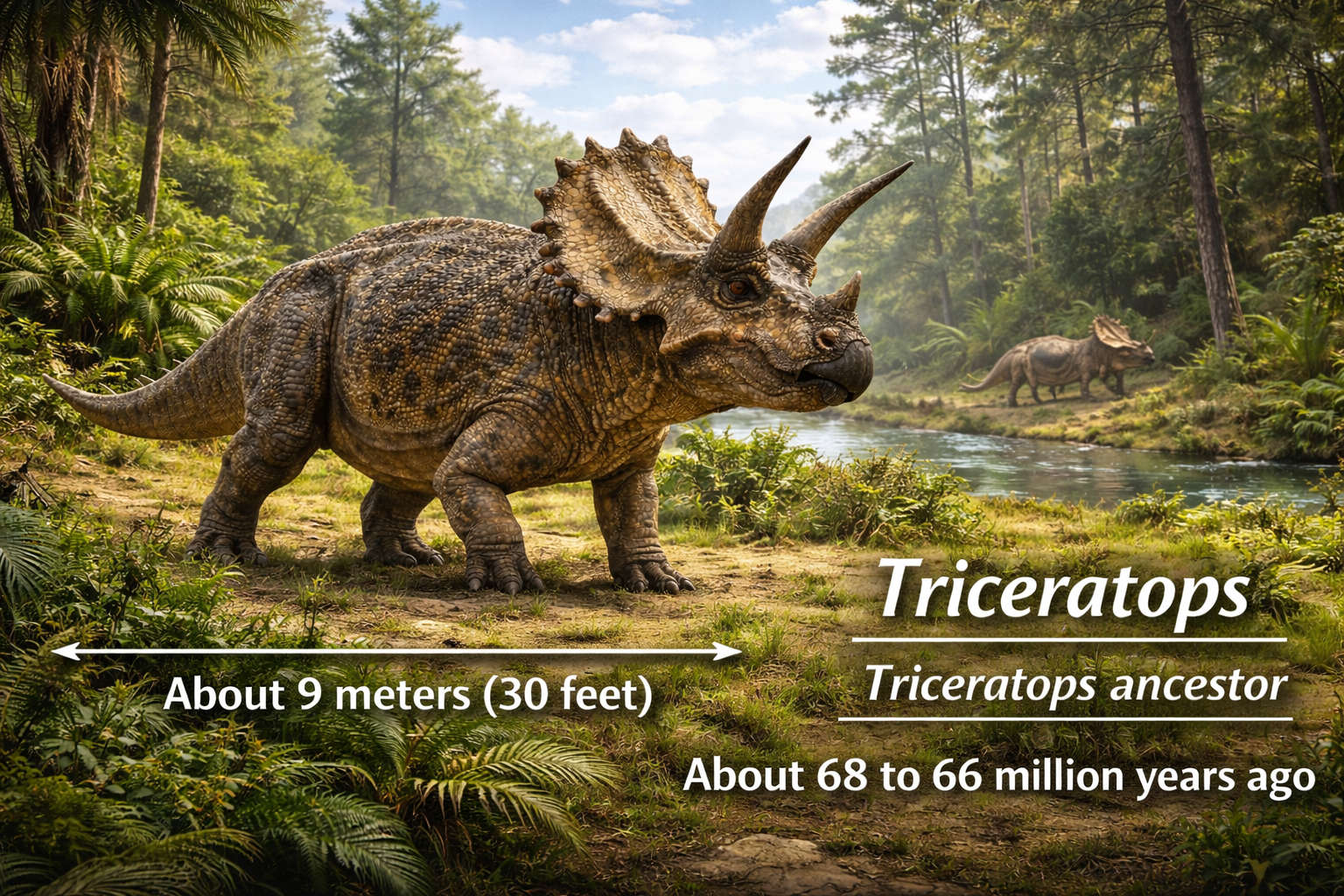
Triceratops, one of the last great horned dinosaurs, roamed western North America at the very end of the Age of Dinosaurs with its three horns, broad frill, and heavy four-legged build.
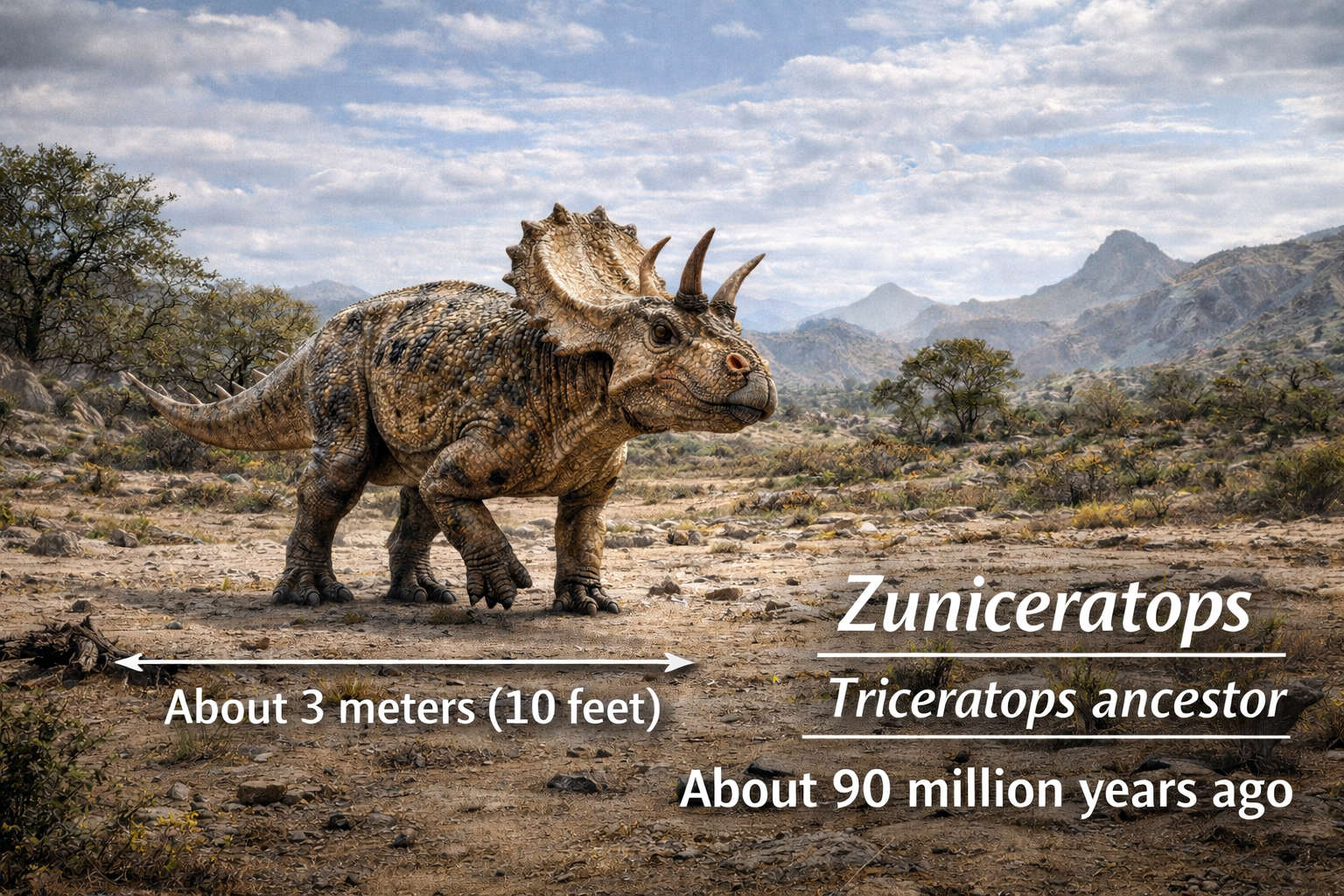
Zuniceratops shows an earlier stage in the evolution of the horns and frill later made famous by Triceratops.
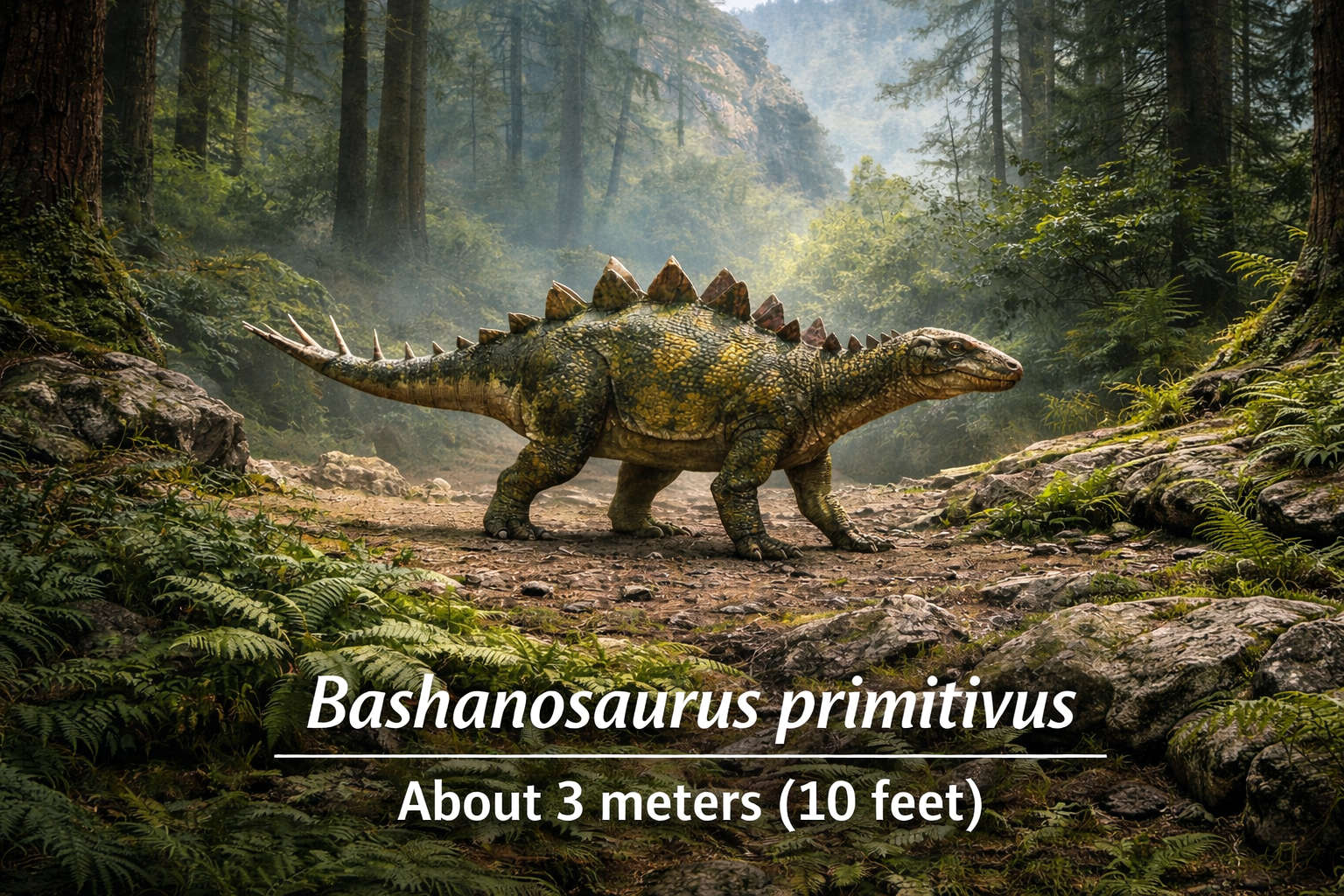
Bashanosaurus primitivus is one of the earliest known stegosaurs and a strong candidate for representing an early form close to the ancestry of later plated dinosaurs like Stegosaurus.
Bashanosaurus primitivus Read More »
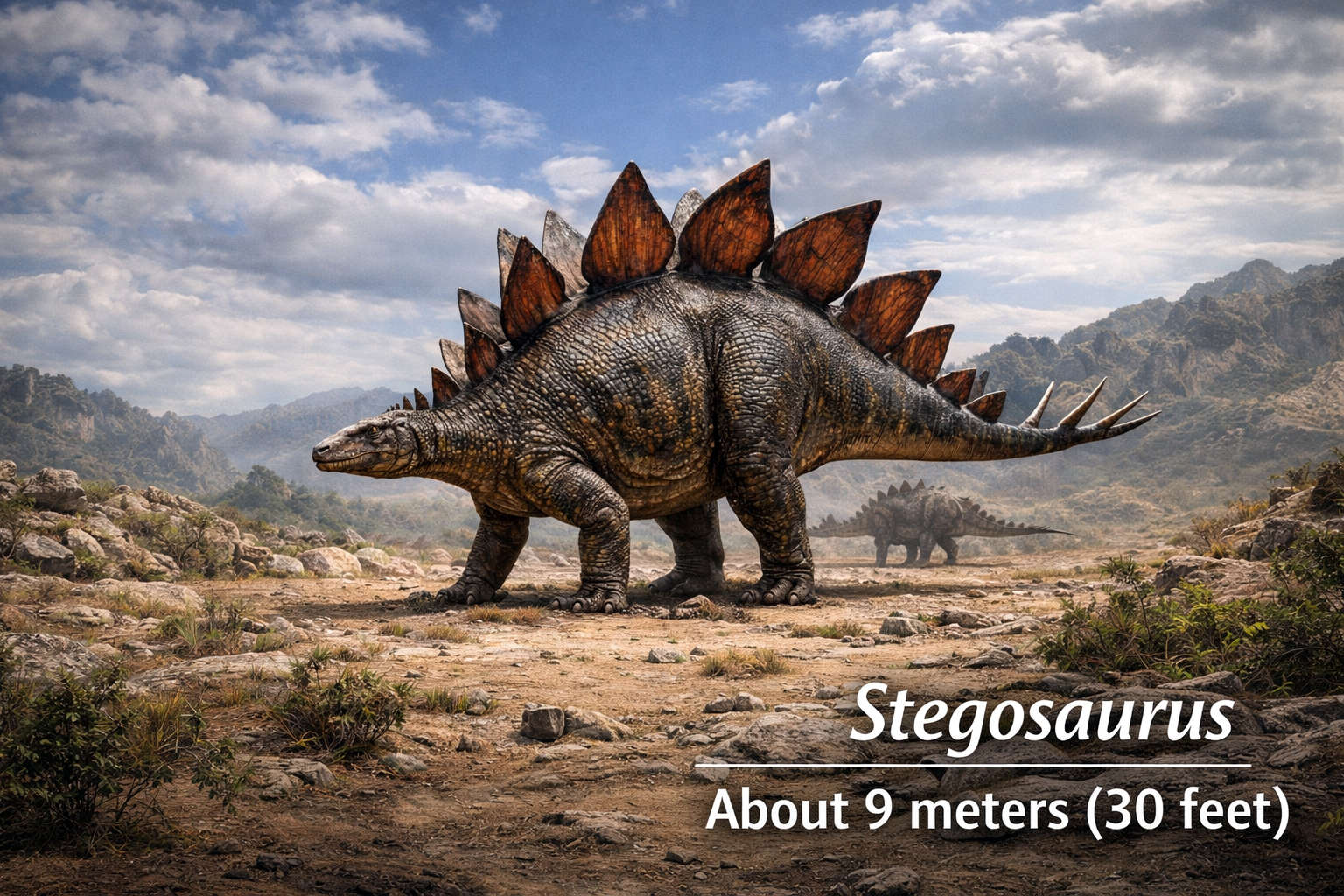
Stegosaurus is the classic plated dinosaur most people picture: large back plates, a small head, and a spiked tail used for defense. It lived late in the Jurassic.

Neoaves is the enormous living bird branch that includes all birds that are not part of the ostrich-tinamou branch and not part of the duck-chicken branch.
Neoaves Birds Emerge (from Neognathae) Read More »
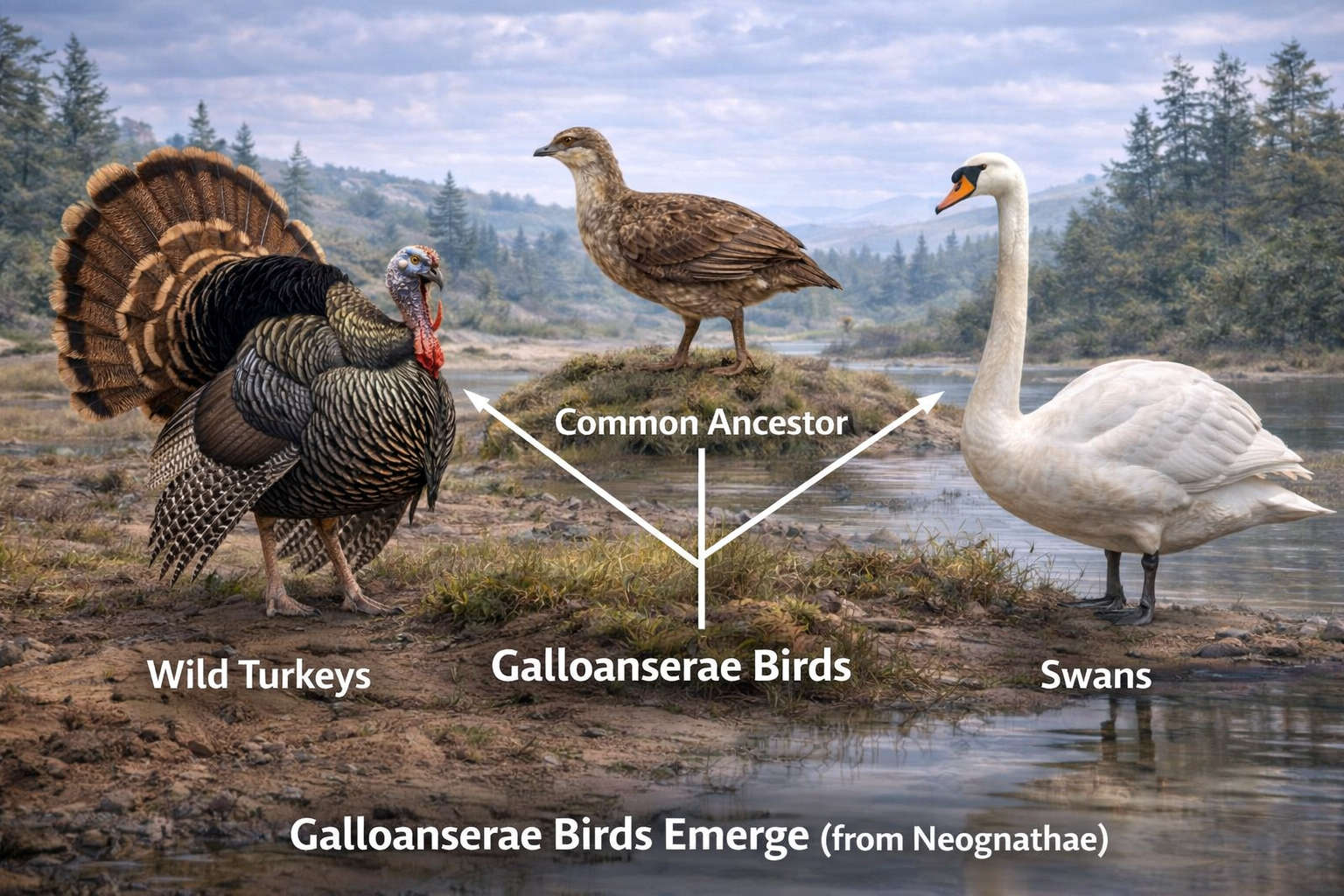
Galloanserae is the living bird branch that includes landfowl and waterfowl: chickens, turkeys, pheasants, ducks, geese, and swans.
Galloanserae Birds Emerge (from Neognathae) Read More »
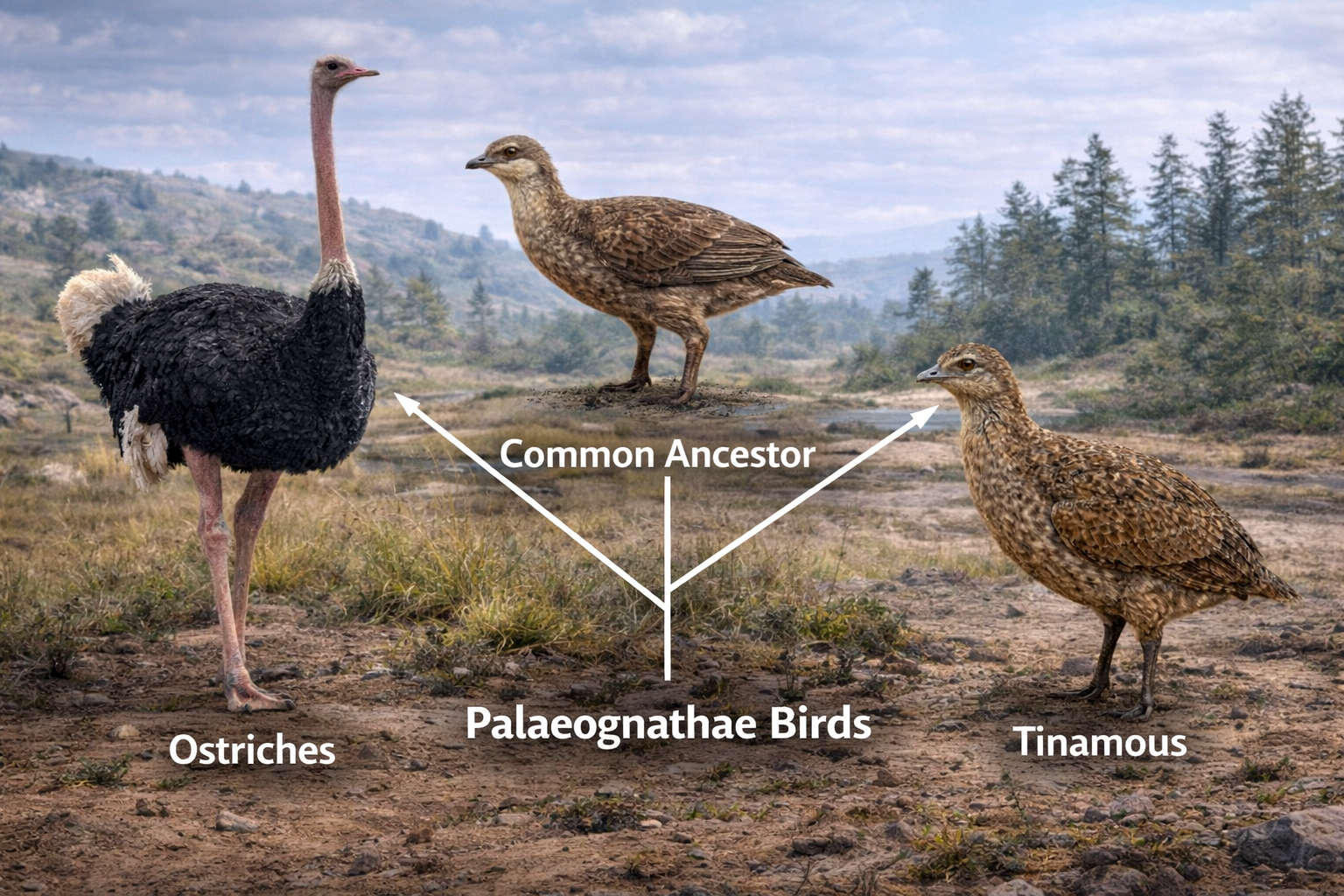
Palaeognathae is the living bird branch that includes ostriches, emus, cassowaries, rheas, kiwis, and tinamous.
Palaeognathae Birds Emerge Read More »
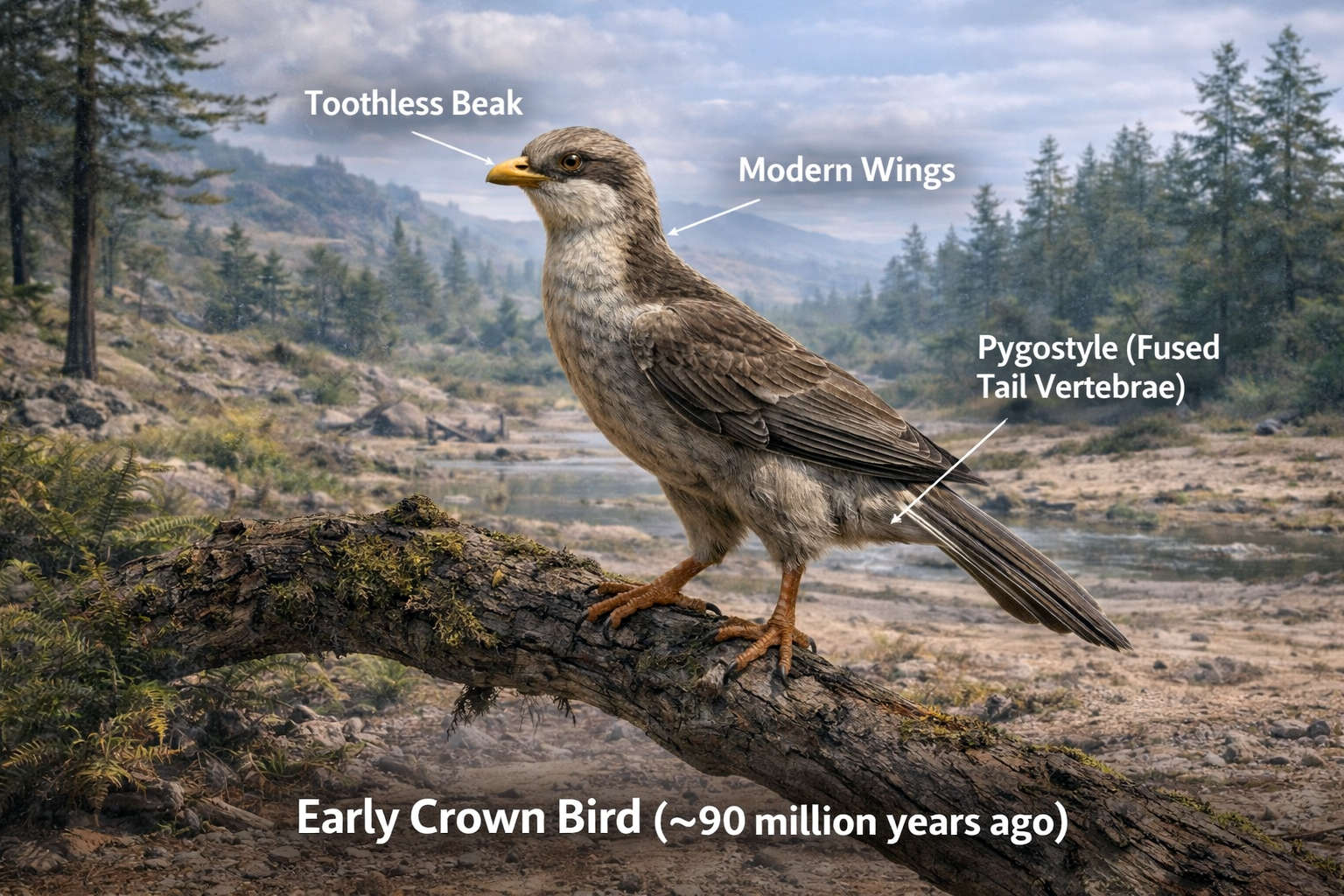
Three branches of modern birds evolved from within neornithes: Struthio camelus (the ostrich), Gallus gallus (chickens), and Passer domesticus (the house sparrow is a good one).
Neornithes (Crown Birds) emerge Read More »
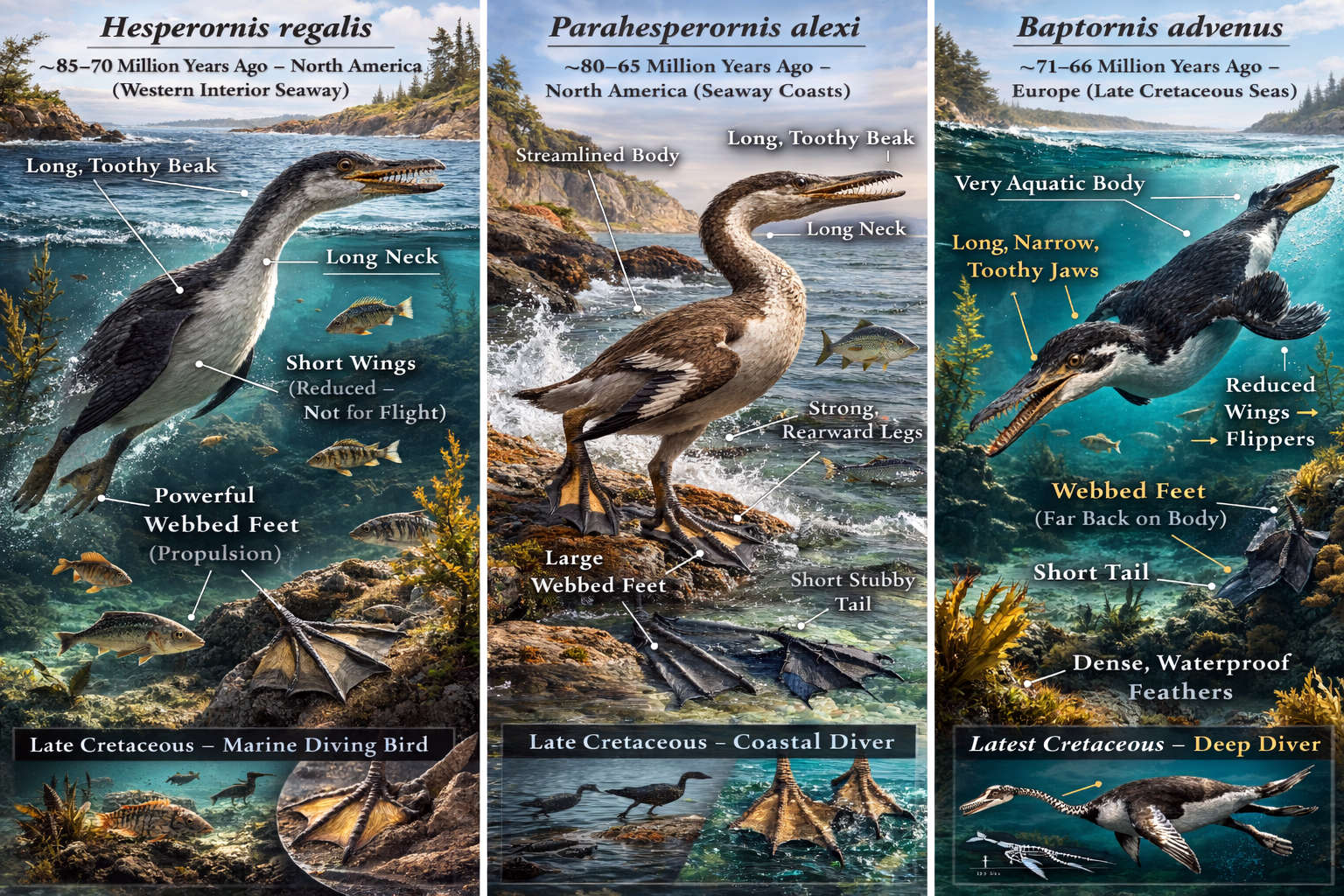
Hesperornithiformes were early, highly specialized diving birds that evolved before modern birds.
Hesperornithiformes Birds Emerge (Now Extinct) Read More »
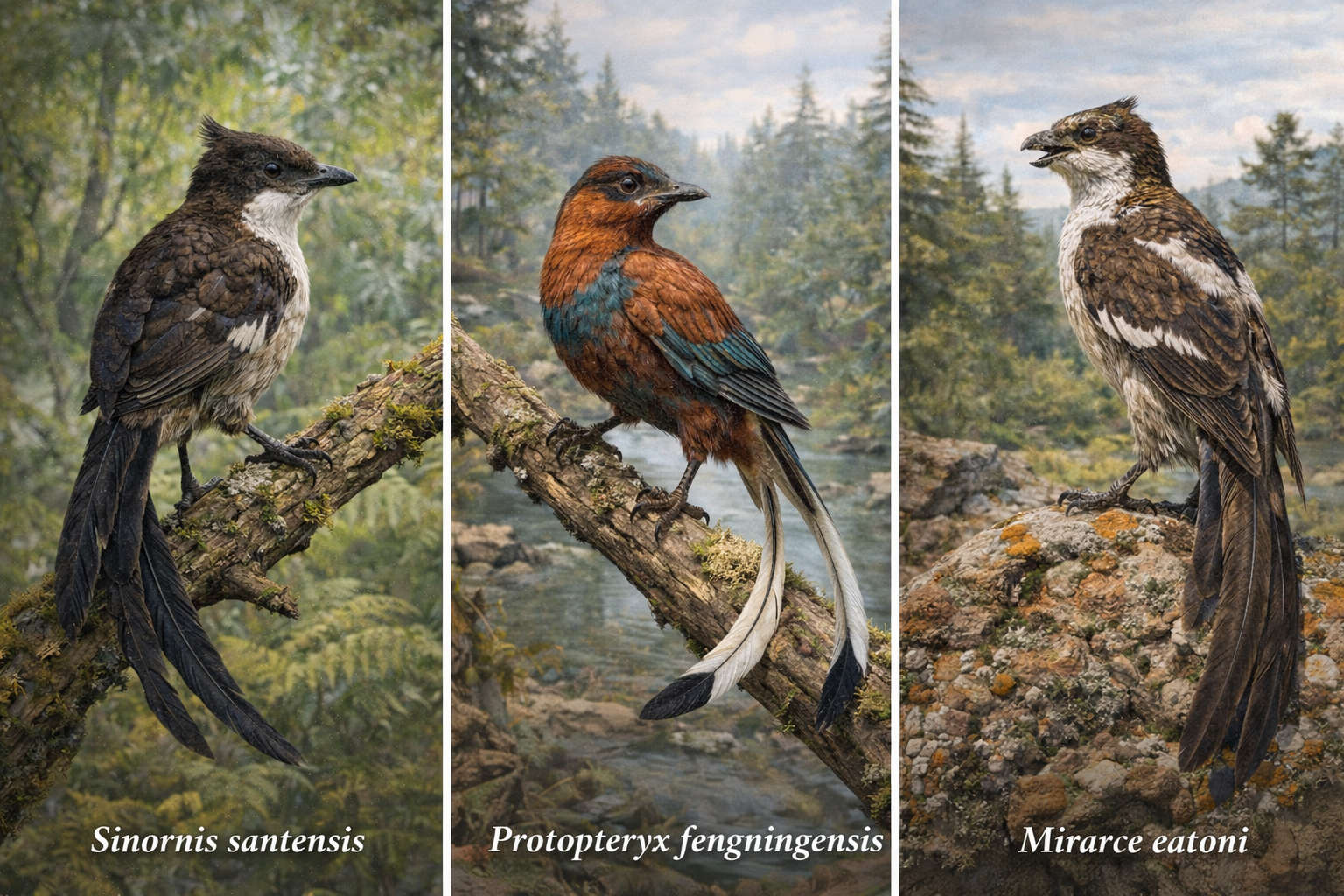
Enantiornithes were one of the most successful early bird branches of the Cretaceous, but unlike Confuciusornithiformes, they generally kept their teeth and often looked a bit more like small, sharp-faced bird-dinosaurs than beaked proto-birds.
Enantiornithes Birds Emerge (Now Extinct) Read More »

Weird carryovers and side experiments: clawed wings, elaborate ribbon-like tail feathers, and a mix of advanced beak features with a still primitive dinosaurian body.
Confuciusornithiformes Birds Emerge (Now Extinct) Read More »
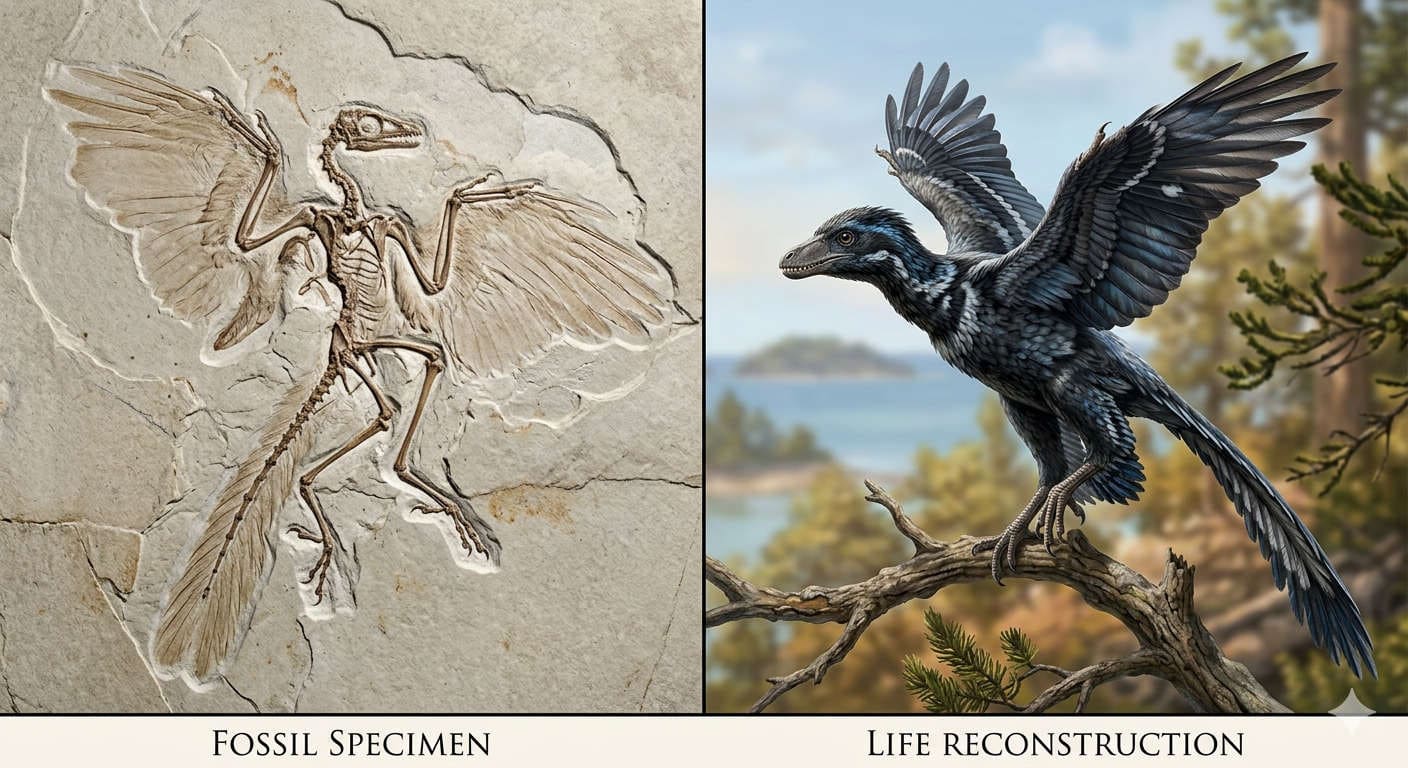
Archaeopteryx, from about 150 million years ago, is an early bird that still looked strikingly dinosaurian, with feathers and wings alongside teeth, clawed hands, and a long tail.
First True Bird: Archaeopteryx Read More »
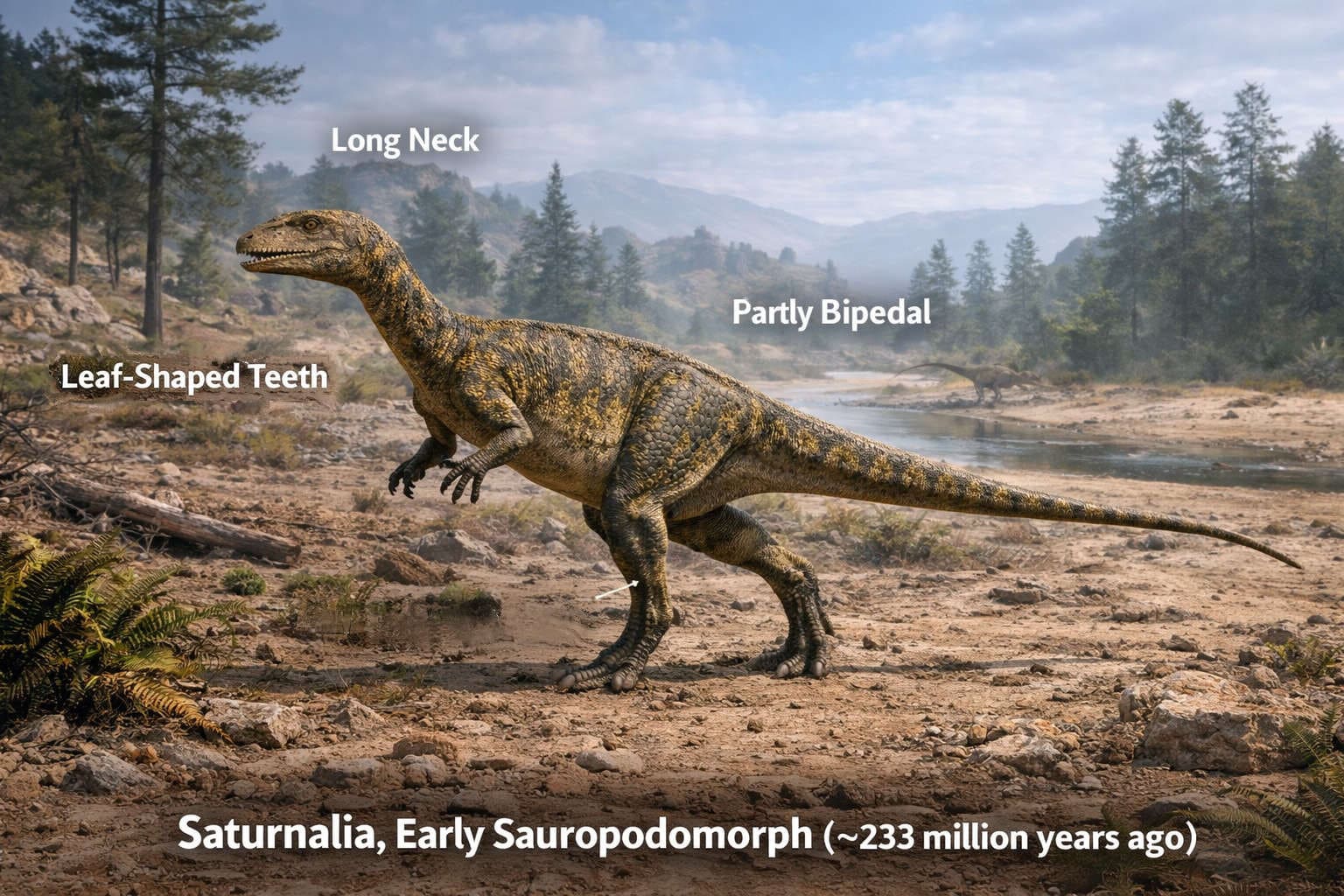
Sauropodomorphs, in their early forms, were lightly built, often partly bipedal, with long necks, small heads, leaf-shaped teeth, and grasping hands.
Sauropodomorph Line Diverges Within Dinosaria (from Saurischia) Read More »
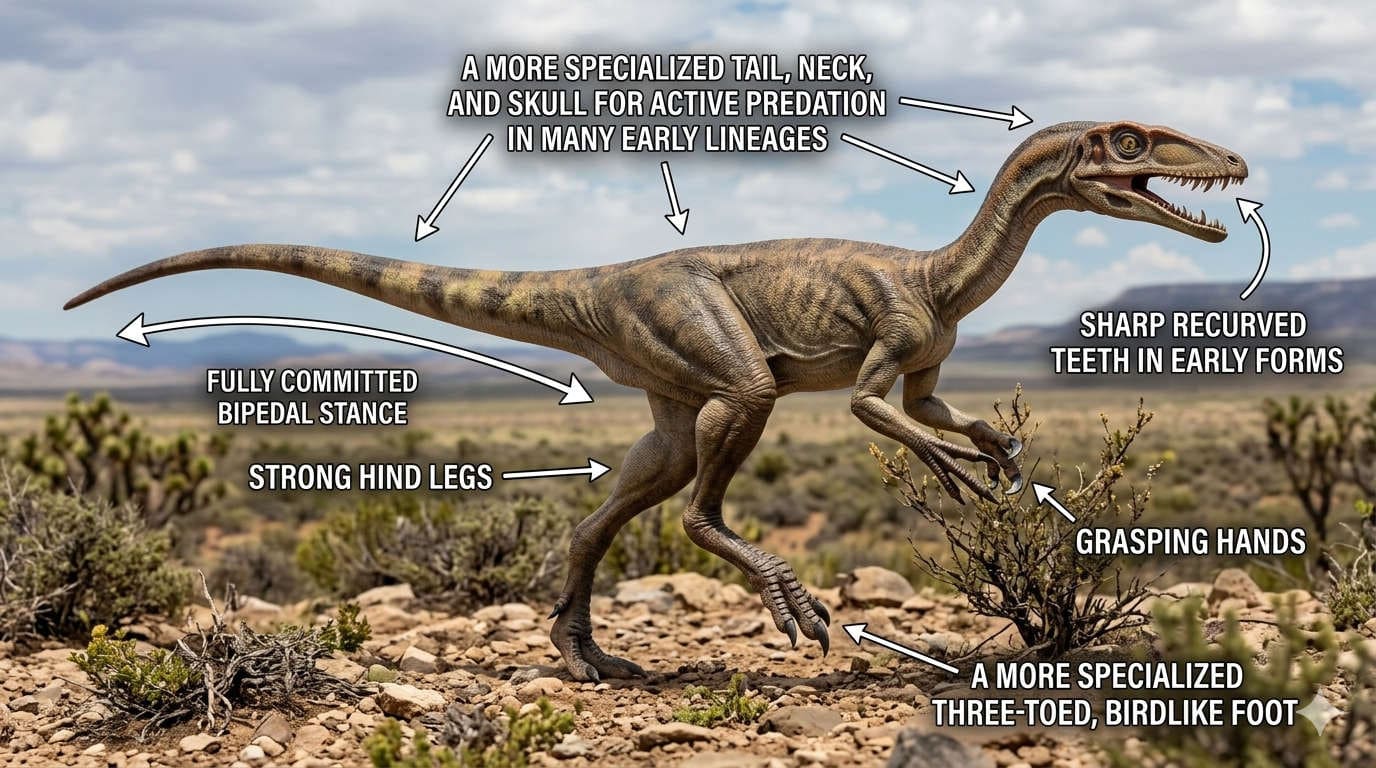
Theropods were the agile, sharp-toothed dinosaur branch that refined the classic predator body plan. They stood fully upright on two legs and balanced with long tails.
Theropod Line Diverges Within Dinosaria (from Saurischia) Read More »