Explore Science-first Philosophy

Evolution

Proto-Play

In the shadowed forests of the Late Carboniferous, long before mammals, birds, or even dinosaurs, a few small, lizard-like amniotes began to do something remarkable — they started to move not just for need, but for pleasure. Between the still instincts of amphibians and the lively games of future mammals, something new flickered: proto-play. These […]

Proto-Play Read More »

Higher Play Evolves in Social Mammals

In more advanced forms, play becomes a complex tool for social bonding, emotional learning, and cognitive development. Carnivores like wolves and cats engage in cooperative games that refine group hunting skills, while elephants are known for their intricate, playful interactions that build emotional connections. Among primates, play takes on its most elaborate forms, fostering problem-solving,

Higher Play Evolves in Social Mammals Read More »

Early Play Evolves in Mammals

Play in its most basic form likely began as simple, physical interactions aimed at honing survival skills. Modern animals like squirrels, kangaroos, and hedgehogs still exhibit these foundational behaviors, engaging in chasing, pouncing, and wrestling. These actions help young animals develop coordination and reflexes while providing a safe way to practice life-essential tasks. Surprisingly, even

Early Play Evolves in Mammals Read More »

XX/XY Sex System Emerges: A Tale of Mammalian Evolution

Around 240 million years ago, during the late Triassic period, a crucial evolutionary development unfolded within the lineage that would give rise to mammals. It is believed that the XX/XY sex-determination system emerged in a common ancestor of mammals, possibly within the genus Therapsida, a group of synapsids that exhibited both reptilian and mammalian traits.

XX/XY Sex System Emerges: A Tale of Mammalian Evolution Read More »

Bird-line Archosaurs: Asilisaurus kongwe (within Ornithodira)

In a testament to our understanding of evolution, archosaurs emerged around 255 million years ago, eventually giving rise to dinosaurs about 230 million years ago. Bridging this gap, the dinosauromorphs – a transitional group between archosaurs and dinosaurs – evolved approximately 245 million years ago. One notable early dinosauromorph is Asilisaurus kongwe, found in present-day

Bird-line Archosaurs: Asilisaurus kongwe (within Ornithodira) Read More »

Bird-line Archosaur: Nyasasaurus parringtoni

One of the last bird-line archosaurs before true dinosaurs is the Nyasasaurus parringtoni, which lived during the Middle Triassic period, around 243 million years ago. Discovered in Tanzania, Nyasasaurus represents a key transitional form, showcasing features that are both dinosaurian and pre-dinosaurian, highlighting the evolutionary path leading to more well-known dinosaurs of the Late Triassic

Bird-line Archosaur: Nyasasaurus parringtoni Read More »

Marasuchus lilloensis

Before dinosauromorphs like Asilisaurus, the evolutionary lineage would include earlier archosaurs. One such early archosaur is Marasuchus lilloensis, which lived around 240 million years ago. Marasuchus exhibits several primitive features that are on the evolutionary path towards dinosaurs. Kingdom: Animalia > Phylum: Chordata > Class: Reptilia > Order: Dinosauriformes 30 to 40 cm (12 to

Marasuchus lilloensis Read More »

Opposable Thumb Emerges

Around 60 million years ago, the early ancestors of primates began to develop a crucial adaptation: the opposable thumb. This evolutionary milestone marked the beginning of increased dexterity and the ability to grasp objects more effectively. Living in the dense canopies of prehistoric forests, these early primates used their newly opposable thumbs to navigate their

Opposable Thumb Emerges Read More »

Ape Thumb Evolves

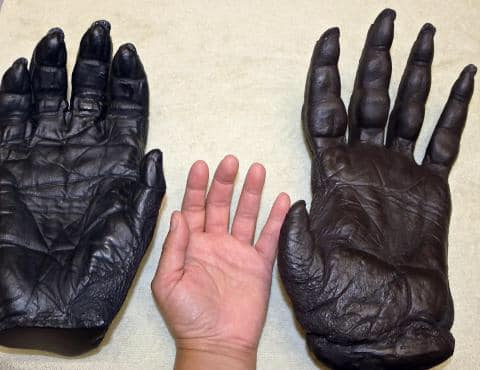
Likely between 25 and 30 million years ago, the evolution of the apes brought about further refinement of the opposable thumb. This period saw the divergence of the lineages that would lead to modern “lesser” apes like gibbons as well as later “great” apes, including orangutans, gorillas, and chimpanzees. The ape thumb evolved to become

Ape Thumb Evolves Read More »

Scroll to Top