
Phil • Cr. Think • Science • Hist • …
TST PRACTICE

By Philosopher Michael Alan Prestwood

FAQ

What keeps an electron from collapsing into the nucleus?

☐ Read
☑ Read
You’ve read this 0 times.
You’ve listened to this 0 times.
Wed 28 Oct 2026
Published 2 weeks ago.
Updated 2 weeks ago.
Related FAQs
OVM Viewpoints
How does the quantum measurement problem relate to metaphysics?
Trivia: Did Einstein or Galileo discover the Relativity Principle?
Is the Rip-Bang theory a good theory?
Why do intelligent people defend bad ideas?
Thinking: How does social media fuel the “grass is always greener” problem?
Share :
Email
Print

What keeps an electron from collapsing into the nucleus?

The direct answer is this:

Electrons have a ground state. Collapsing into the nucleus would require more energy, not less. 

To understand, think about gravity and how rocks fall until they hit the ground. To dig into the ground requires more energy. An electron at ground state is akin to a rock resting on the ground — the electron’s lowest permitted energy state. Atoms have a floor not all that different from the ground you and I stand on; both are akin to two repelling magnets.

To be a bit more precise, electrons have potential energy, and they can lose or gain energy but their lowest permitted energy state is its ground state. That much we know. Heck, we don’t yet know if they are more like a rock, wave, or a vibrating string! But they have no lower energy state than their ground state.

That means electrons can reach that “low” an energy state, and no “lower.” Squeezing an electron into a smaller region raises its kinetic energy, so eventually getting closer would require more total energy, not less.

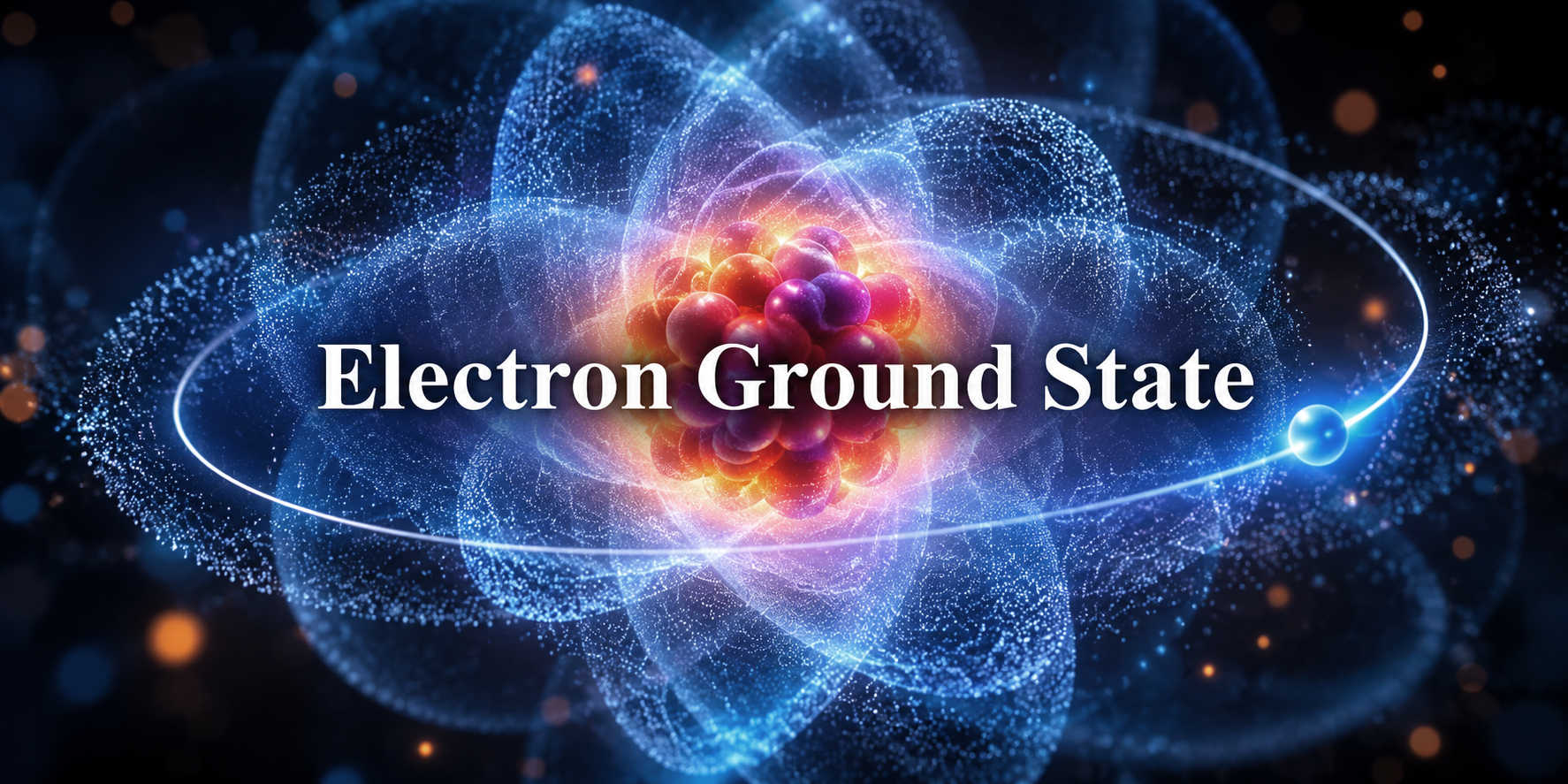
When an electron gains enough energy, it jumps to a higher energy state. Think “farther” away from the nucleus, generally speaking. That’s what Bohr was trying to explain with his familiar flat model of the atom. He later regretted it when science revealed a more complicated picture. Today, science gives us a more accurate cloudy picture: the electron probability cloud.

Why does nature give electrons a ground state in the first place? That’s a deeper, still-open question.
— map / TST —

TST Tracker
✓ Reading recorded.
Thinking well sometimes means recognizing that nature doesn't always work the way our everyday experience suggests. Rocks fall until something stops them, but electrons follow quantum rules. Their ground state is an energy floor, not a physical barrier. Understanding the difference helps us avoid forcing familiar explanations onto unfamiliar parts of reality.
Michael Alan Prestwood
Natural Philosopher & Author
Prestwood explores science-first philosophy, with particular attention to the convergence of disciplines. Drawing on his TST Philosophy, his work emphasizes rational inquiry grounded in empirical observation while engaging questions at the edges of established knowledge. With TouchstoneTruth positioned as a living touchstone, this work aims to contribute reliable, evolving analysis in an emerging AI era where the credibility of information is increasingly contested.
The Prestwood Column
Menu
November 2026
Column Research….
1. Timeline Story
Fear-Based Ethics
2. Linked Quote
“A person is a person through other persons; you can’t be human in isolation; you are human only in relationships.”
3. Science FAQ »
Why do complex systems fail when proportionality is removed?
4. Philosophy FAQ »
How does TST Ethics handle the trolley problem?
5. Critical Thinking FAQ »
Why do people confuse rule-following with moral reasoning?
6. History FAQ!
How are original Daoism, Mohism, Confucianism, and Legalism related?
Bonus Deep-Dive Article
TST Moral Calibration: Legal, Moral, and Fair

Comments

Join the Conversation! Currently logged out.
NEW BOOK! NOW AVAILABLE!!

30 Philosophers: A New Look at Timeless Ideas

by Michael Alan Prestwood
The story of the history of our best ideas!
Scroll to Top