Explore Natural Philosophy

Phil • Cr. Think • Science • Hist •

TST-SPECIFIC TERM

Group Ethics

Tue 14 Jul 2026
Published 14 hours ago.
Updated 6 hours ago.
Related Terms
Daoist Natural Alignment
Karma
Harm Principle
Confucian Role Ethics
Dichotomy of Control
Authentic Self
Share :
Email
Print

Group Ethics

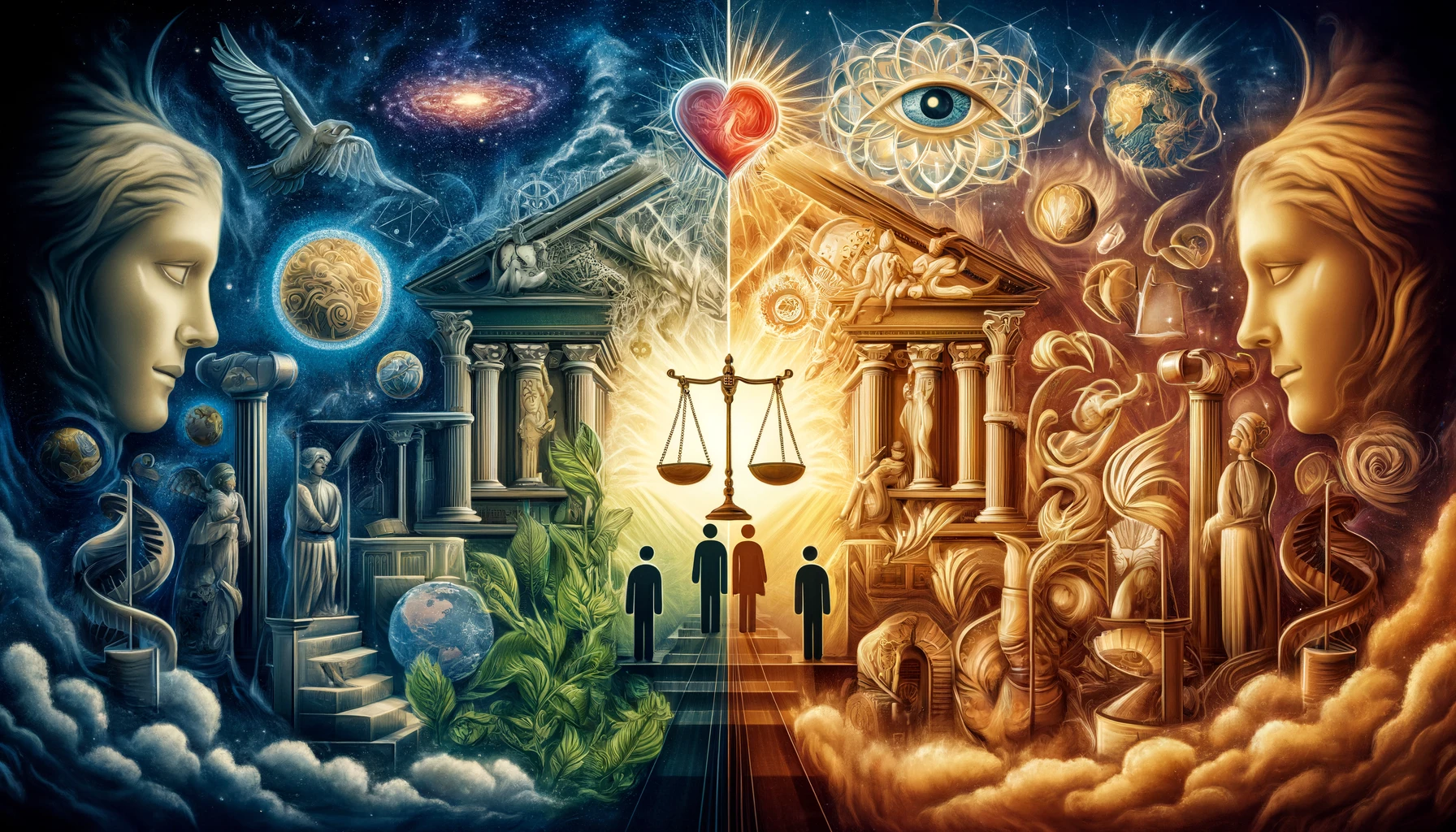
Group ethics is the shared guidance a group provides to the people acting within it.

Traditionally, group ethics includes the laws, rules, duties, rights, customs, policies, and standards that help families, communities, professions, institutions, and governments function. This guidance gives people a common framework for deciding what is permitted, required, fair, or harmful. It creates order, but it is never infallible. Groups can be mistaken, unjust, inconsistent, or slow to change.

Within TST Ethics, flourish for all is the goal and is all you need to remember for most decisions. When needed, Group Ethics is the guidance step of the TST Ethical Roadmap:

Group ethics guides. Personal morality chooses. Act with good intent. Weigh the result. Adjust.

Group ethics supplies the given guidance surrounding a decision, but it does not make the final choice. The moral agent must still decide what to do. When a group acts, its responsible decision-makers become the moral agents acting on its behalf. They inherit existing laws, policies, traditions, and standards, but they also remain responsible for questioning and improving them.

TST uses a moral engine to help groups create, test, and revise shared guidance. A proposed rule is tested for consistency, reciprocity, consequences, fairness, and real-world results. Decision-makers ask whether it can be applied fairly, whether they would accept it if roles were reversed, what harms and benefits it produces, and whether power and burdens are balanced. After the rule is used, they examine what reality taught them and recalibrate when needed.

Group ethics is therefore both inherited guidance and guidance under construction. It guides moral agents, but moral agents also build it. Flourishing for all remains the north star, and no law, institution, or tradition is beyond revision when its real-world effects undermine truth, fairness, rights, or lasting well-being.

— map / TST —

Legal Positivism separates law from personal morality and group ethics. It puts law in the hands of the authorities to do whatever they think is best. It is a pragmatic interpretation of legality focusing on the good results for and as desired by the authorities.
Michael Alan Prestwood
Author & Natural Philosopher
Prestwood writes on science-first philosophy, with particular attention to the convergence of disciplines. Drawing on his TST Framework, his work emphasizes rational inquiry grounded in empirical observation while engaging questions at the edges of established knowledge. With TouchstoneTruth positioned as a living touchstone, this work aims to contribute reliable, evolving analysis in an emerging AI era where the credibility of information is increasingly contested.
The Prestwood Column
Menu
July 2026
»COLUMN ARCHIVE
--COLUMN--
Column Research….
1. Timeline Story
The famous Lewis “Truth in Fiction” Paper
2. Linked Quote
“Truth is stranger than fiction…[which] is obliged to stick to possibilities;”
3. Science FAQ »
Why does fiction feel real?
4. Philosophy FAQ »
Can authors create fiction beyond our universe?
5. Critical Thinking FAQ »
How do we know what is true in a fictional world?
6. History FAQ!
What is the history of philosophy of fiction?
Bonus Deep-Dive Article
TST Philosophy of Fiction: Imaginative Realism

Comments

Join the Conversation! Currently logged out.
NEW BOOK! NOW AVAILABLE!!

30 Philosophers: A New Look at Timeless Ideas

by Michael Alan Prestwood
The story of the history of our best ideas!
Scroll to Top