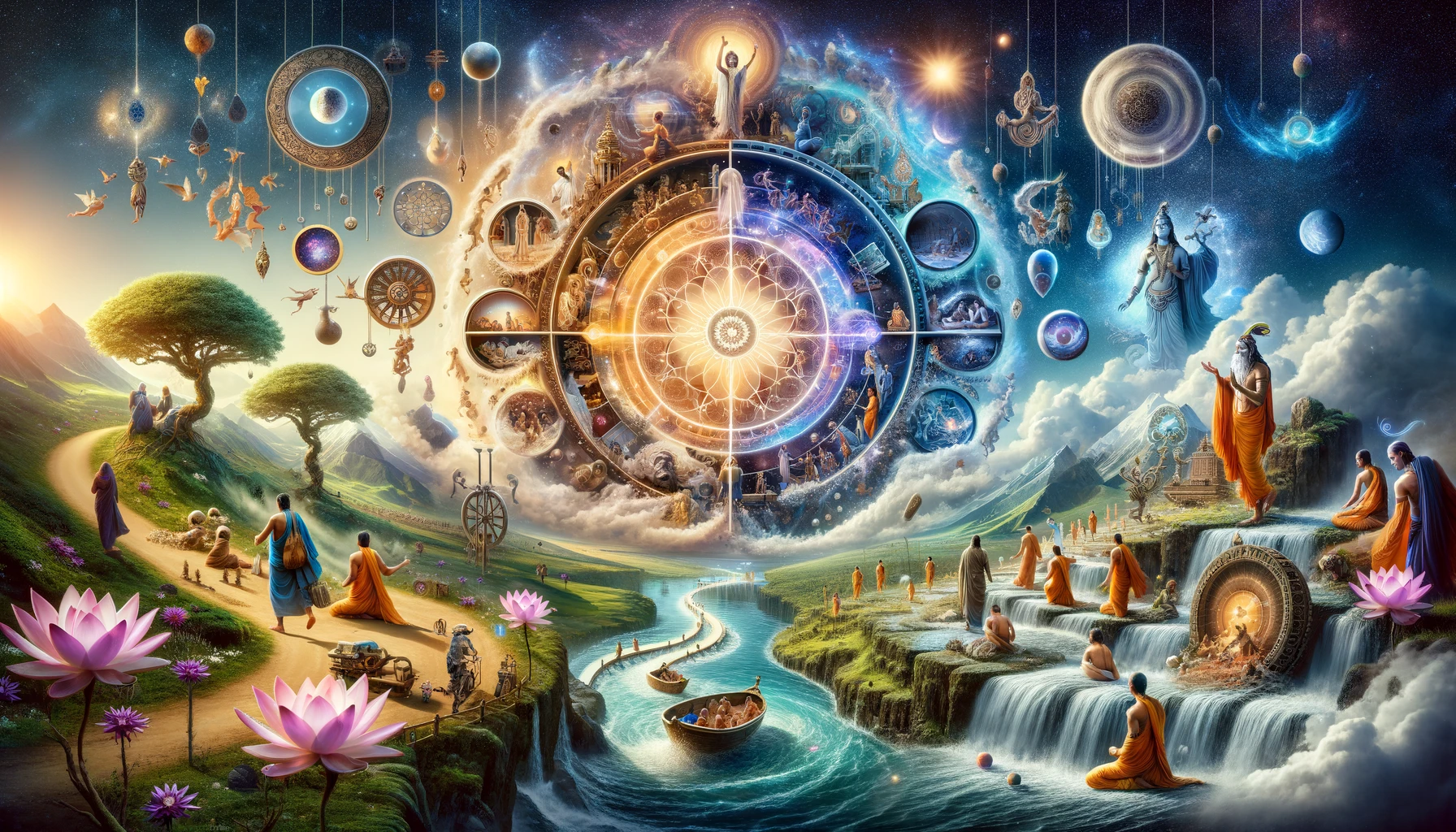
In TST Philosophy, Karma belongs within Ethics and Take Control as a common floor for understanding cause and effect in moral life. The basic idea is simple: actions ripple. What you do does not stop at the edge of your body. Your choices enter relationships, families, institutions, ecosystems, memories, habits, and futures. Karma helps you notice that your actions become part of the world others must live in.
Karma is a traditional term with deep roots in Hindu thought, and it also appears in other Eastern traditions. Hinduism itself is not one narrow system. It is a vast family of philosophies, practices, stories, schools, and spiritual paths. Some traditions understand karma religiously, involving moral causality, rebirth, liberation, and cosmic order. TST does not need to reject those views or require them. It can honor them while still using karma as common ground.
TST does not support the naked use of fear-based ethics. It is not enough to say, “Do this or you will be punished,” or “Avoid that or bad karma will get you.” Fear can motivate behavior, but fear alone does not build moral understanding. The solution is simple: give the reason underneath it. Explain the harm. Explain the ripple. Explain why the act matters. If karma teaches that actions have consequences, TST asks us to understand those consequences, not merely fear them.
On common ground, karma means cause and effect. A kind act can ripple through trust. A cruel word can ripple through memory. A habit can shape a future. A careless choice can damage a relationship or environment. This is not mystical bookkeeping; it is the practical truth that actions have consequences, and consequences often travel farther than we can see.
In TST Holistic Eudaimonia, karma also helps celebrate the ripples into the void. You may not control where every ripple goes, but your life still sends something forward. Your choices can become memory, repair, courage, kindness, wisdom, harm, healing, or momentum. Karma reminds you that what you do matters because it joins the stream of reality.