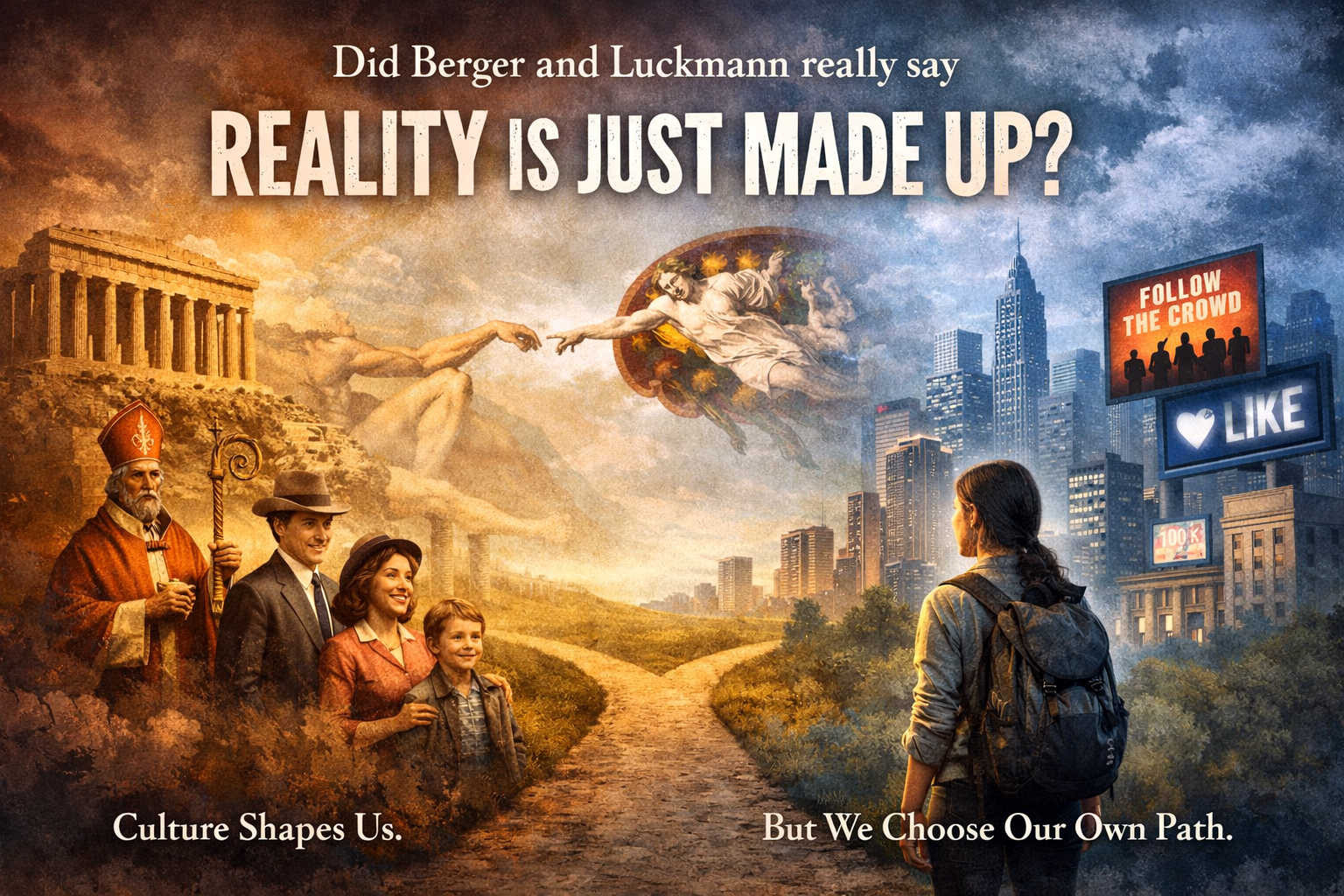
A social construct is a shared human-made idea that organizes life.
Chapter 10 of 30 Philosophers defines it this way:
“A Social Construct is a shared non-natural belief; created and maintained by groups; and they shape reality.”
They are the rules created and maintained by people. A social construct is not a natural object like a mountain, tree, or star, but it can still shape reality in powerful ways. Things like money, ownership, and law all depend on shared understanding. If enough people accept and maintain the construct, it becomes part of how life is organized.
In TST, Social Constructs are one of the Five Thought Tools of the TST Framework, the Think Well path of TST Philosophy. The goal is not to dismiss them, but to see them clearly. TST focuses on 10 core social constructs: language, names, base-10, zero, time, calendars, ownership, money, musical notation, and IQ. The better you understand these constructed systems, the better you can use them in your thinking.
Metaphysically, social constructs belong on the Ideas side of the split. They are rational ideas: indirect organizing structures built from human thought. They organize empirical reality. Money is the perfect example. The paper, coin, or digital record exists in the material world, but the value comes from a shared rational framework. Social constructs show how ideas can be non-material yet still real enough to move people, shape societies, and guide behavior.