


Why do we struggle to recognize the limits of our own thinking?
Good thinking requires recognizing where explanation stops -- where evidence stops.

Why do people confuse rule-following with moral reasoning?
Rules can guide behavior, but moral reasoning requires judgment—and judgment cannot be outsourced to authority.

Why do complex systems fail when proportionality is removed?
Complex systems remain stable only when responses scale appropriately to the problem they are addressing.

Did talking our way through life drive a million years of brain growth?
Human brain size increased rapidly over the last million years, and growing communication demands may have been a major evolutionary driver.
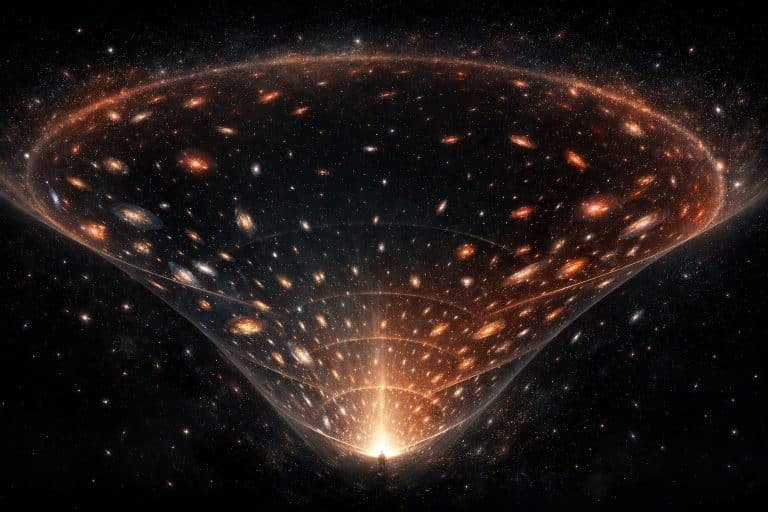
Could the CMB be proof of an inifinite universe?
The Cosmic Microwave Background isn’t the edge of space in an infinite universe—it’s the oldest light we can see, marking a boundary in time, not ...

Why is Planck time important?
Planck time marks the boundary where our best current physical theories stop describing reality reliably.
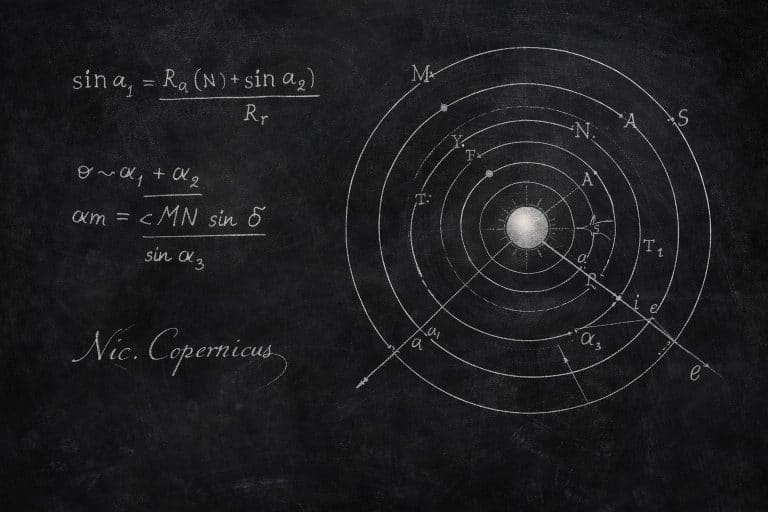
Did Copernicus prove that Earth moves around the Sun?
Nicolaus Copernicus did not prove heliocentrism—he built a model that explained the sky better than any alternative available at the time.

Why do intelligent people defend bad ideas?
Intelligence doesn’t protect us from false beliefs—worldview attachment does the real work.

Did Copernicus remove humanity from the center of the universe?
Nicolaus Copernicus didn’t remove humanity from the center of the universe—he removed the assumption that centrality equals importance.

Was Copernicus famous during his life?
Nicolaus Copernicus became world-changingly famous after his death—but lived most of his life in relative obscurity.

What’s the difference between intentional change and wishful thinking?
Mistaking intention for causation is a core thinking error that keeps habits, self-stories, and outcomes locked in place.

What does neuroscience say about “identity?”
Science says you are physically changing all the time and the story you tell about yourself is less a fixed thing and more a maintained ...
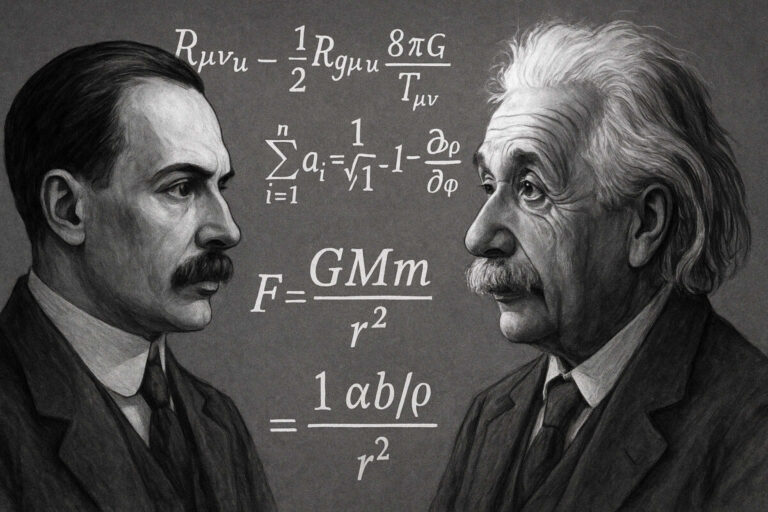
Was Einstein’s Theory of Relativity ever irrational?
Even Einstein’s theory of relativity began as an irrational idea: untested, uncertain, and waiting for reality to answer back.
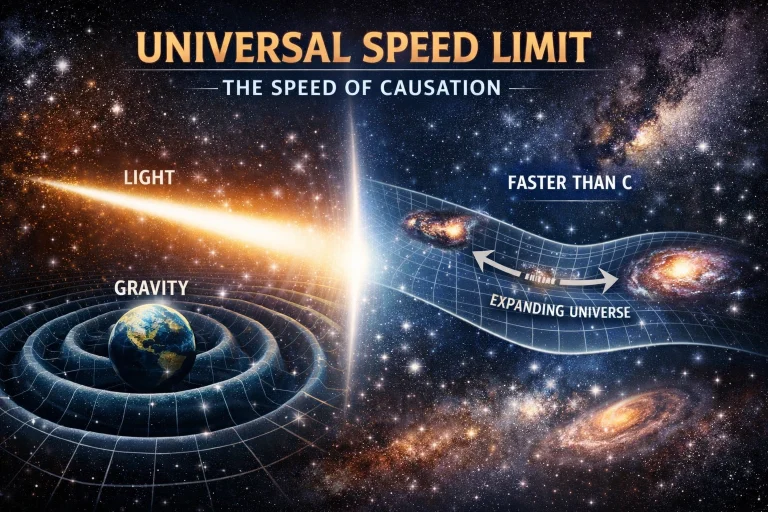
Is “the speed of light” really the best name for the universe’s maximum speed?
The “universal speed limit” isn’t about light: it’s the limit for causation within our universe, even as space itself expands faster.

What is the “Parable of the Ship?”
The Williams parable is about government. A response to the colonies in New England inacted the same restrictions they escaped.

Was Roger Williams a Separatist?
Roger Williams was a colonial separatist. He advocated for separating from the Church of England.

What is a realistic timeframe for humanity to terraform Mars?
Terraforming Mars is a multi-century process that will require new ways to use AI, robots, and genetically-altered life.
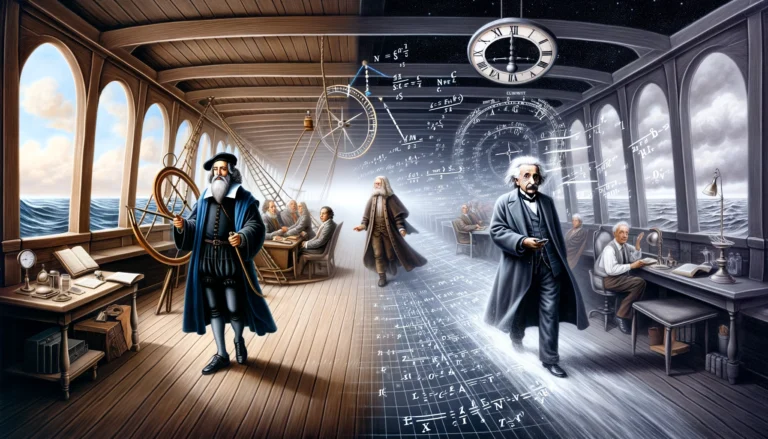
Trivia: Did Einstein or Galileo discover the Relativity Principle?
In shaping modern cosmology, Galileo articulated the relativity principle in 1632, Newton made gravity universal in 1687, and Einstein revealed gravity as the curvature of ...

Why we only remember the good parts of vacations and forget the bad?
Rosy Retrospection, a cognitive bias that filters memory through emotion, preserving highlights. Minds quietly edit experience, shaping memory.

Who is the father of numerology?
In the ancient world, numbers were not just tools but truths. For thinkers like Pythagoras, mathematics, nature, and meaning formed a single worldview.