
Explore Science-first Philosophy

STORY

Ginkgo biloba — A Living Fossil in My Backyard

By Michael Alan Prestwood

Thu 19 Feb 2026
Published 2 months ago.
Updated 3 weeks ago.
Plant Evolution
Related Stories
The K-Pg Extinction
First True Trees: Spore Reproduction
Archaea Diverge
Modern Trees: Modern Leaves
Fungal Underground Alliance
LECA: Likely Sexual Reproduction
Share :

Ginkgo biloba — A Living Fossil in My Backyard

~270 million years ago (± 20 million years)
Increased light capture area

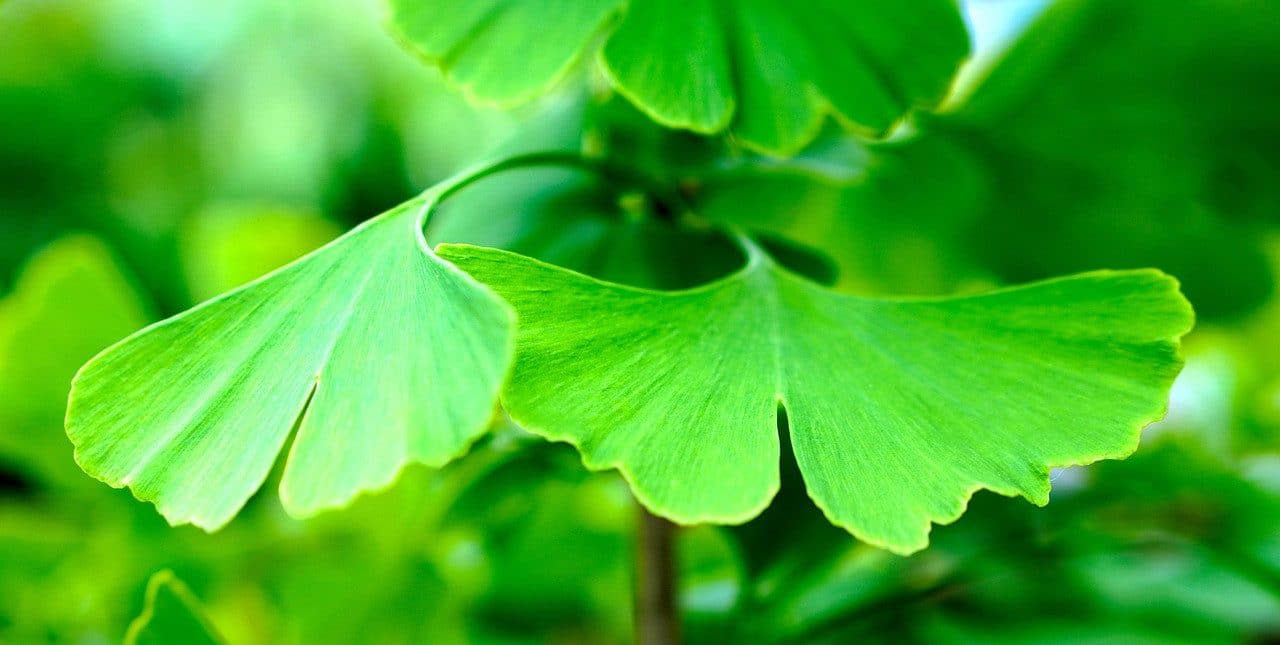
Thirty years ago, I planted a Ginkgo biloba tree simply because I liked that it was called a “living fossil.” That phrase carries weight. It suggests endurance. Survival. A design so successful it barely changed while the world transformed around it.

The fossil record shows that ginkgo-like trees were present at least 270 million years ago, during the Permian Period. They flourished across the Northern Hemisphere alongside dinosaurs and other ancient plant groups. Today, however, only one species survives: Ginkgo biloba.

“Living fossil” is an informal term. Scientifically, ginkgo is better described as a relict lineage — the last surviving member of a once far more diverse group. It is also considered a morphologically conservative lineage, meaning its overall body form has changed relatively little over long spans of evolutionary time.

But that doesn’t mean it stopped evolving. It adapted. It survived ice ages. It endured mass extinctions. It even survived the atomic bombing of Hiroshima — several ginkgo trees were among the first plants to regrow afterward.

When I look at the fan-shaped leaves each fall, turning brilliant gold before they drop almost all at once, I’m not looking at a frozen relic of the past. I’m looking at a survivor — a lineage that endured while countless others vanished.

The phrase “living fossil” is poetic.

The science calls it a relict lineage.

Either way, it’s a tree with deep time in its veins.

— map / TST —

Michael Alan Prestwood
Author & Natural Philosopher
Prestwood writes on science-first philosophy, with particular attention to the convergence of disciplines. Drawing on his TST Framework, his work emphasizes rational inquiry grounded in empirical observation while engaging questions at the edges of established knowledge. With TouchstoneTruth positioned as a living touchstone, this work aims to contribute reliable, evolving analysis in an emerging AI era where the credibility of information is increasingly contested.
Email
Print
This Week @ TST
April 1, 2026
»Column Archive
WWB Research….
1. Story of the Week
The Dawn of Empirical Spirituality
2. Quote of the Week
“It is wrong always, everywhere, and for anyone, to believe anything upon insufficient evidence.”
3. Science FAQ »
Is science tainted by bias?
4. Philosophy FAQ »
How do knowledge frameworks help transform information into wisdom?
5. Critical Thinking FAQ »
Are personal spiritual experiences believable?
6. History FAQ!
Did the Buddha believe in Mount Meru and the six realms of existence?
Bonus Deep-Dive Article
TST Theory of Justification: What to Believe
Scroll to Top