

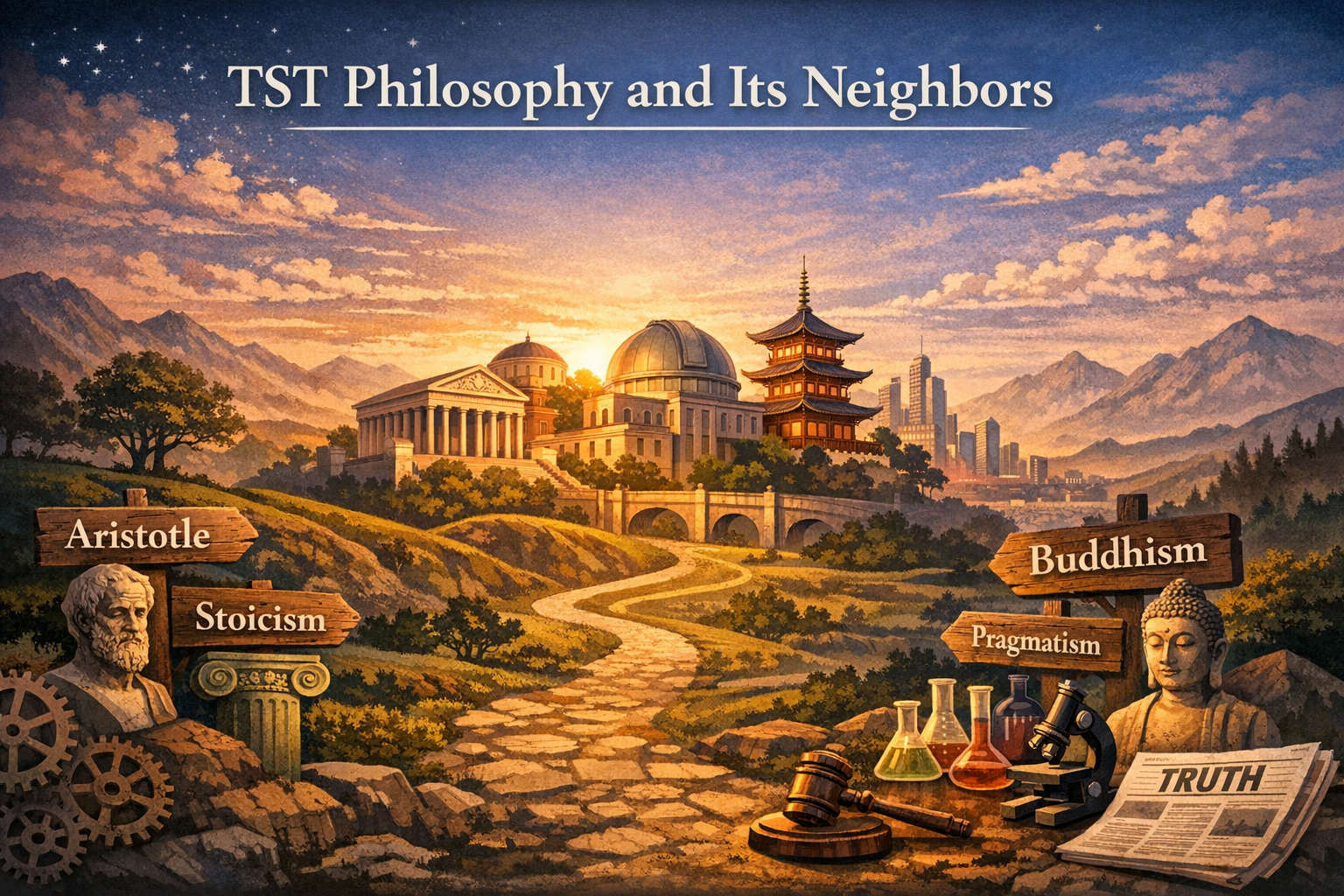
If you ask me on a random Tuesday what my philosophy is, I might say:
“I identify as an Epicurean Stoic embracing Secular Spirituality.” –30 Philosophers
That answer isn’t a slogan. It’s a breadcrumb trail. Epicureanism taught me moderation — that pleasure isn’t indulgence but intelligent cultivation. Not every desire deserves pursuit. Long-term stability beats short-term thrill. Stoicism taught me resilience — that reality doesn’t bend to my preferences. You align yourself with what is, or you suffer the friction. Character matters. Self-discipline stabilizes life. Buddhism — especially its secular forms — taught me clarity about impermanence and illusion. Life includes suffering. Attachment amplifies it. Awareness reduces unnecessary distortion.
Those weren’t passing influences. They were structural.
Then history layered on something else. The skeptics reminded me that certainty is fragile. The empiricists insisted on testing claims against experience. The scientific revolution institutionalized humility — method over authority. By the time you get to modern philosophy of science — especially Popper — confidence becomes calibrated, not declared.
TST didn’t replace those traditions. It integrated them.
It asked:
What if pleasure and virtue are not competing goals — but components of something larger?
What if suffering, pleasure, and virtue are all variables inside a broader aim? That broader aim is flourishing. So historically, TST is not a rebellion. It’s a synthesis. Ancient ethics gave it a goal. Skepticism gave it humility. Science gave it method. Modern epistemology gave it calibration. And architecture gave it structure.

