

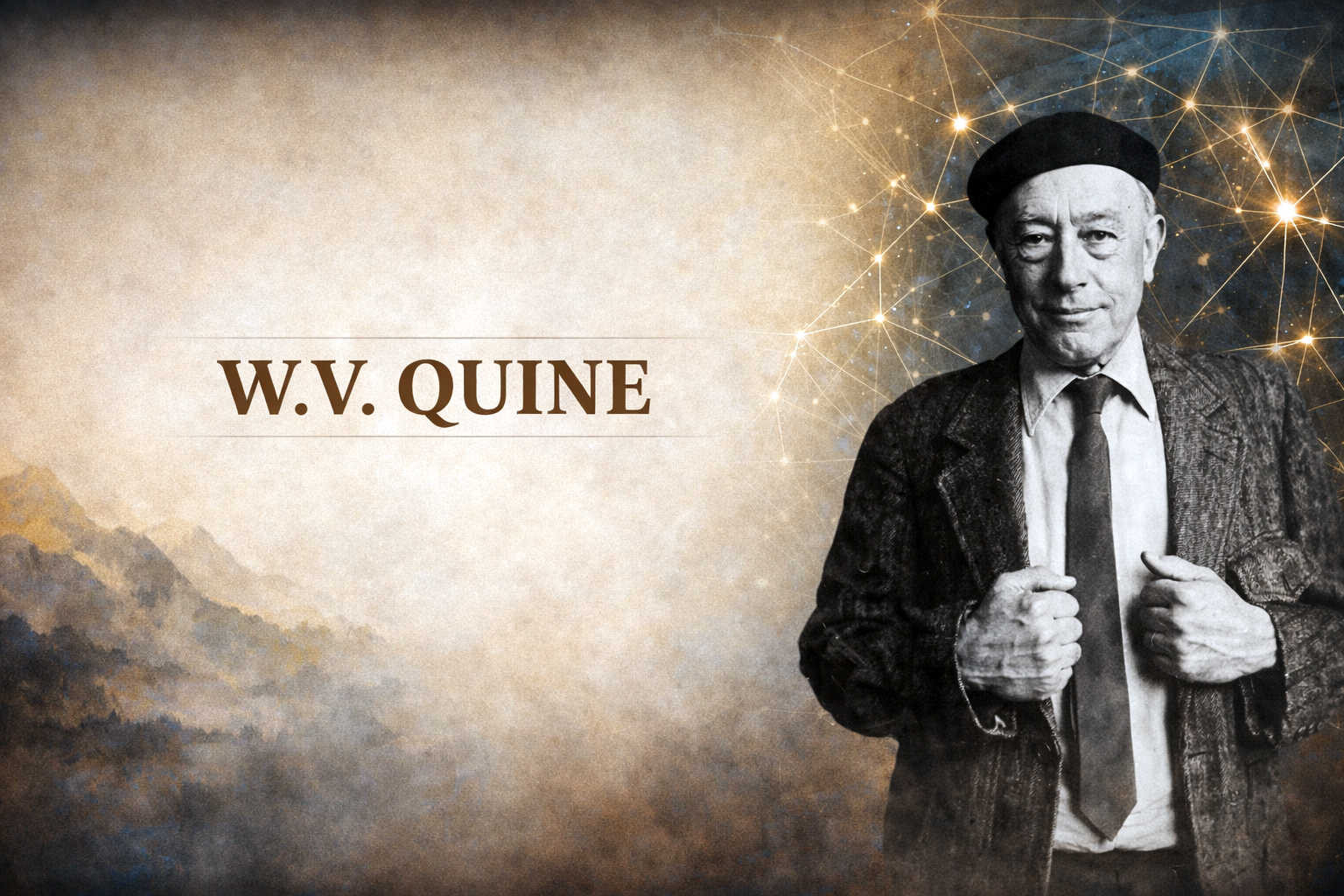
People do not revise beliefs one at a time in a vacuum. They protect central beliefs, sacrifice peripheral ones, and reinterpret new evidence through a larger web. In 1951, Quine put it this way:
“Our statements about the external world face the tribunal of sense experience not individually, but only as a corporate body.”
Quine’s point here is that beliefs usually hang together. A single claim about reality rarely walks into experience alone. It arrives with background assumptions, supporting ideas, and habits of thought already in place. That is why this quote connects so naturally to worldview. From Quine’s point of view, what we believe forms more like a web than a stack of separate bricks. Experience presses on the whole structure, and then we adjust different parts of it as needed.
Worldview is the deeper interpretive structure through which beliefs are sorted, integrated, defended, or revised. Where Quine gives us a web of belief, we can push further into the lived human side of that structure by framing worldview around personal language, philosophy, and religion. From within a larger framework, we decide what feels believable in the first place.
W. V. Quine became one of the major figures in twentieth-century analytic philosophy. He is especially known for his 1951 essay “Two Dogmas of Empiricism,” where this quote appears and where he challenged the sharp divide between truths supposedly true by meaning alone and truths grounded in experience.
In the broader academic world, Quine matters because he helped reshape how philosophers think about meaning, evidence, and theory. His critique of reductionism and his more holistic picture of belief became part of the backbone of later debates in epistemology, philosophy of science, and analytic philosophy more broadly.

