

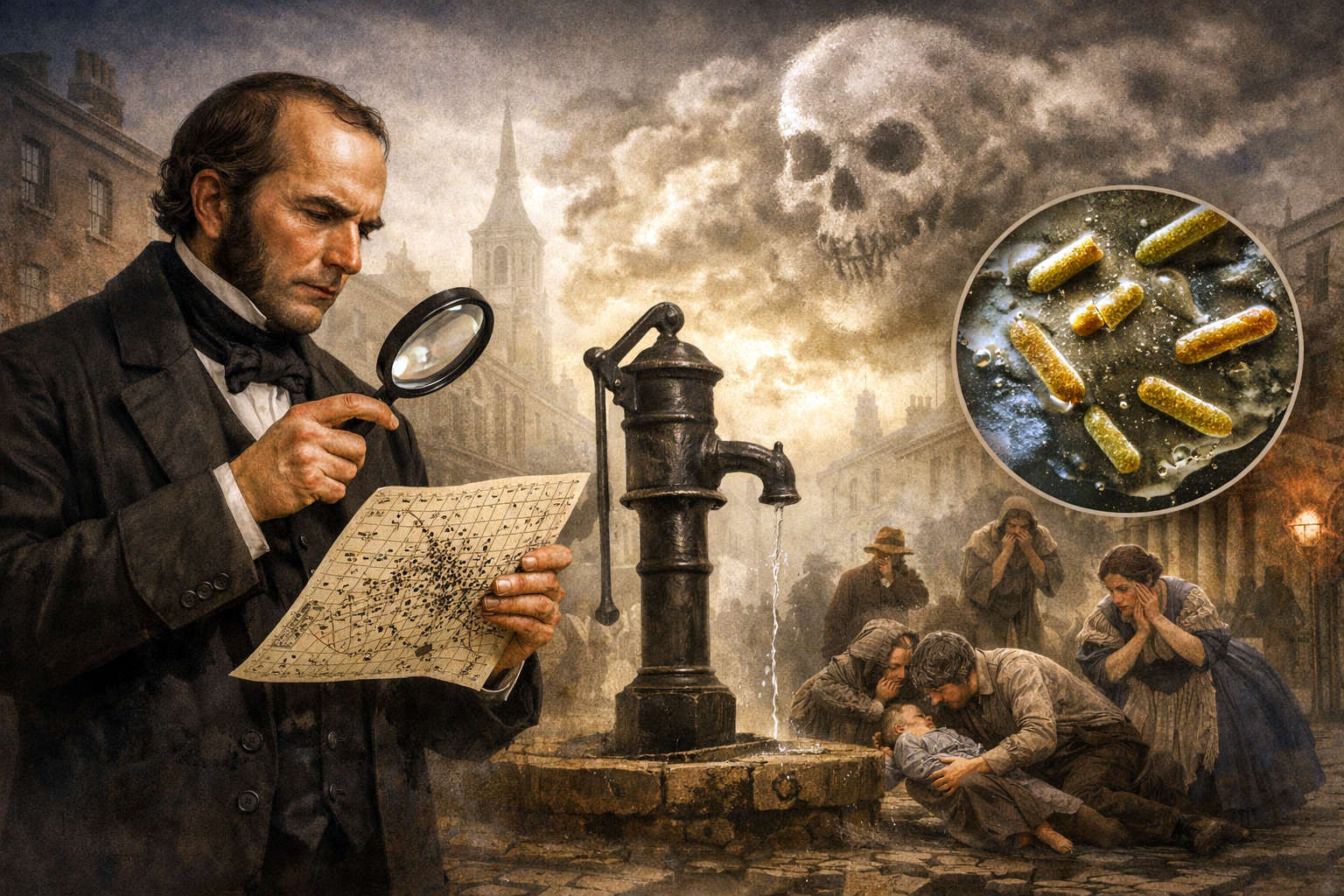
In September 1854, London was gripped by a deadly cholera outbreak. People were terrified, and for good reason. Cholera killed fast. At the time, the common belief was that the disease spread through “bad air,” or miasma. That idea was not irrational from nowhere. People noticed foul smells around sickness and death, then drew a pattern from it. That was induction — but weak induction. A real pattern was there, but the wrong cause had been attached to it.
John Snow did something different. He followed the cases. He mapped where people were getting sick and noticed that the outbreak clustered around the Broad Street pump. That was personal research in the best sense: observation, comparison, pattern-seeking, and disciplined doubt. He did not simply reject public belief because he wanted to be clever. He tested it against reality.
Then the reasoning sharpened. If bad air was the cause, the cases should spread according to air exposure. But if contaminated water was the cause, the cases should cluster around a shared water source. That is where better induction and deductive reasoning started working together. Snow’s evidence pointed to the pump, and the water explanation explained the pattern better than the air explanation.
This is why the story matters for confidence. Public belief can be wrong. Good authorities can be late. Personal research can help correct the record. But the answer is not rebellion for its own sake. The answer is better contact with reality. Snow earned confidence because his idea was better supported by the evidence.
The lesson is simple: bad patterns can feed public fear, even mass belief, but disciplined reasoning can correct it. Confidence should shift when better evidence earns it. John Snow did not just challenge a bad idea. He showed how belief should change: slowly, carefully, and in proportion to support.

