
Explore Science-first Philosophy

FAQ

What is the difference between secular Buddhism and other branches of Buddhism?

Sun 7 Jun 2026
Published 4 hours ago.
Updated 5 days ago.
Related FAQs
Did the Buddha believe in Mount Meru and the six realms of existence?
Was King Shuruppak the father of Noah?
Did Plato Believe in a Soul and Heaven?
Did Aristotle believe in a soul?
How does the idea of Identity in Christ fit within TST?
Debating History: Should We Say “Dark Ages” or “Middle Ages?”
Share :
Email
Print

What is the difference between secular Buddhism and other branches of Buddhism?

Modern Buddhist branches usually include some version of karma, rebirth, realms of existence, enlightenment, monastic authority, sacred texts, and a larger cosmological framework. The details vary widely between Theravada, Mahayana, Vajrayana, Pure Land, Zen, and other schools, but they generally treat Buddhism as a religious-spiritual tradition.

The original Buddhism from long ago lacked the religious elements that evolved since. Today, secular Buddhism is the closest to the original Buddha’s intent.

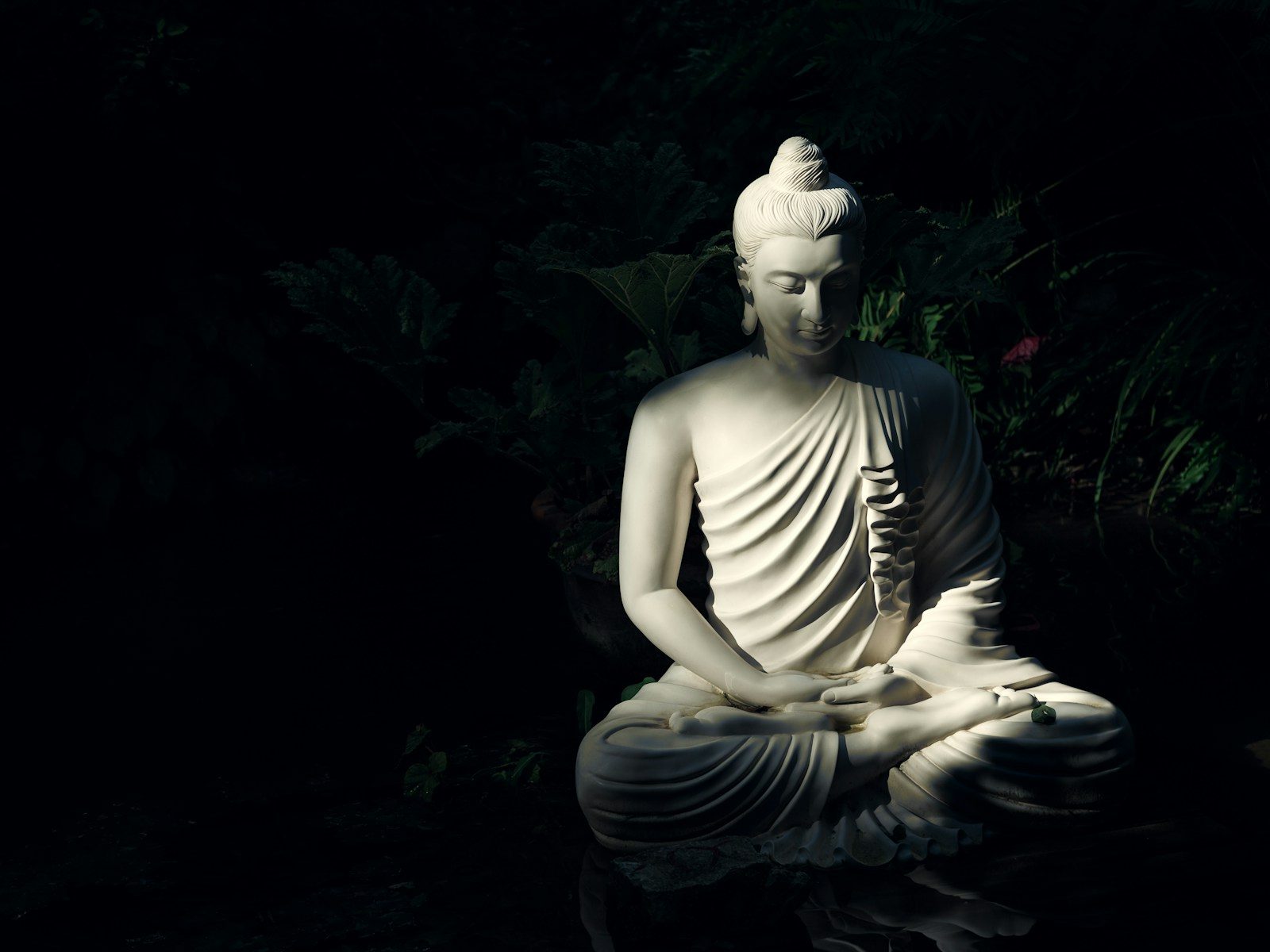
Secular Buddhism treats Buddhism more as a practical path: mindfulness, compassion, impermanence, non-attachment, suffering, ethical living, and psychological liberation in this life. It is usually skeptical of rebirth, literal karma across lifetimes, heavens, hells, devas, and supernatural claims. The Secular Buddhist Network describes secular Buddhists as skeptical of, or rejecting, supernatural entities or processes such as rebirth; Bhikkhu Bodhi describes the contrast as traditional Buddhism looking mainly to canonical texts, while secular Buddhism looks to modern science and secular values.
— map / TST —

white Buddha statue on body of water
Traditional Buddhism is nontheistic spirituality. Secular Buddhism is closer to agnis Buddhism filtered through empirical and rational pragmatism.
Michael Alan Prestwood
Author & Natural Philosopher
Prestwood writes on science-first philosophy, with particular attention to the convergence of disciplines. Drawing on his TST Framework, his work emphasizes rational inquiry grounded in empirical observation while engaging questions at the edges of established knowledge. With TouchstoneTruth positioned as a living touchstone, this work aims to contribute reliable, evolving analysis in an emerging AI era where the credibility of information is increasingly contested.
This month @ TST
Column Menu
June 2026
»COLUMN ARCHIVE
Column Research….
1. Timeline Story
Secular Spirituality Settles
2. Linked Quote
“Extraordinary claims require extraordinary evidence.”
3. Science FAQ »
What is the difference between a spiritual and empirical belief?
4. Philosophy FAQ »
What is secular spirituality?
5. Critical Thinking FAQ »
How does spirituality relate to public belief?
6. History FAQ!
Is secular spirituality supported in history and science?
Bonus Deep-Dive Article
The Material-Spiritual Framework: A Philosophy of Spirituality

Comments

Join the Conversation! Currently logged out.
NEW BOOK! NOW AVAILABLE!!

30 Philosophers: A New Look at Timeless Ideas

by Michael Alan Prestwood
The story of the history of our best ideas!
Scroll to Top