To live well through secular spirituality, explore the intangible while staying accountable to reality. Let your experiences deepen purpose, strengthen character, and build connections—but calibrate your beliefs: embrace what aligns with observation, question what does not, and hold the unknown with humility.
< 1 minute read
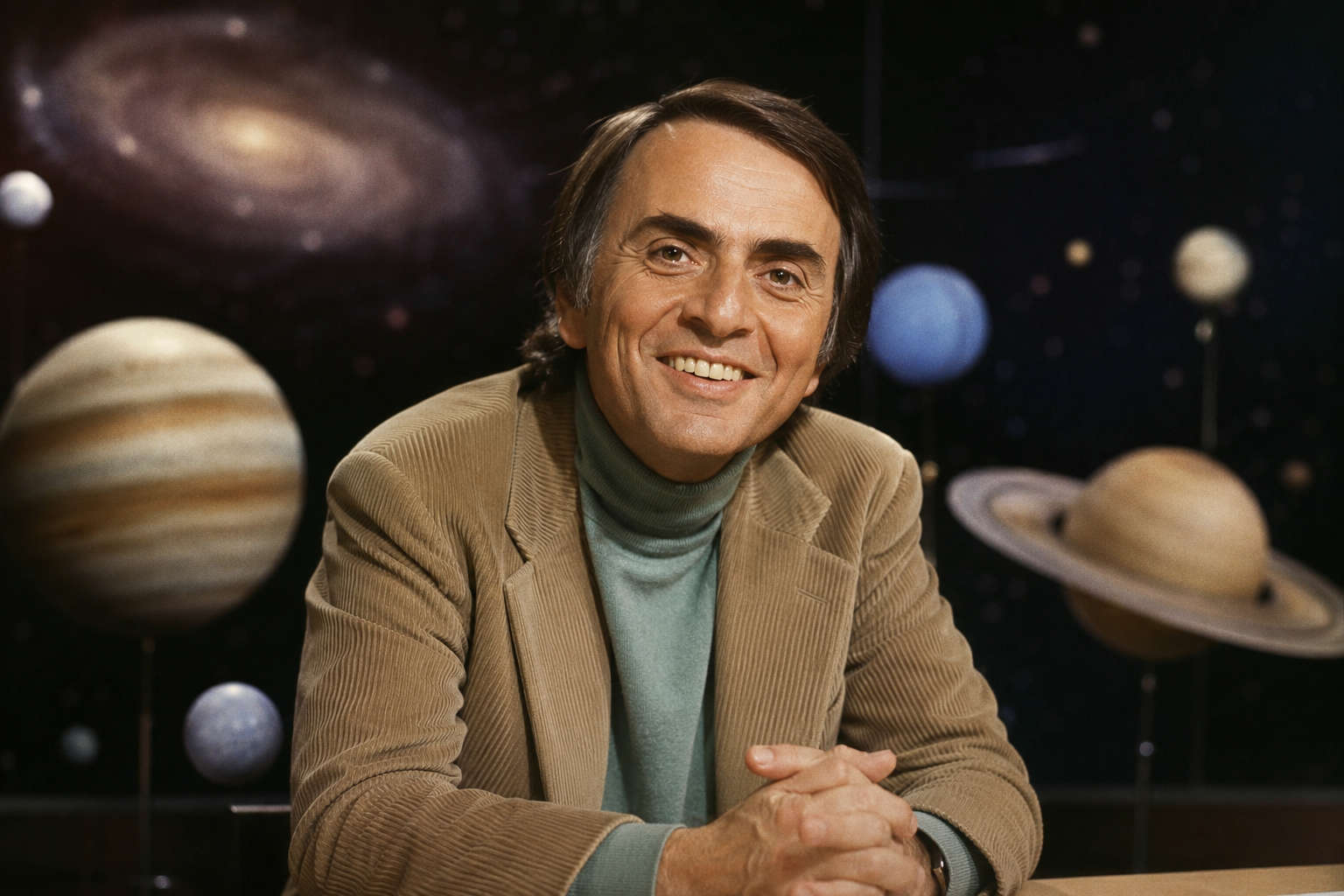
Carl Sagan’s famous line was popularized in Broca’s Brain in 1979. It reached a wider audience through Cosmos in 1980. That’s when I first heard it. I was 15 years old when Cosmos aired which was a seminal moment in my life.
The deeper idea is older. In 1748, David Hume used a similar principle:
“A wise man, therefore, proportions his belief to the evidence.”
Sagan gave it its modern scientific voice. In context, the quote is not anti-wonder. It is anti-carelessness. It says the more a claim challenges what we already know about reality, the more evidence it needs before we raise our confidence in it.
For Sagan, and me, science did not kill spirituality; it deepened and sorted it. Stars, evolution, atoms, life, death, and cosmic scale were sources of humility and reverence. But his awe stayed disciplined. If someone says meditation brings peace, modest evidence may be enough because the claim fits ordinary human experience. If someone says meditation opens a portal to a hidden realm, the evidence burden rises. This is calibration: reality first, awe second, certainty only when earned.
The Why Truth Requires Reality article explains why truth is alignment with reality, and belief is confidence in that alignment. Calibration is the process of adjusting confidence to the kind and quality of support behind a claim. Empirical claims answer to observation and testing. Rational claims answer to logic and coherence. Speculative claims may remain meaningful, but they should be held with humility. Disproven claims should be released as truth. This is how spirituality stays honest: not by rejecting wonder, but by ranking confidence properly when wonder reaches into the material world.
Source: Broca’s Brain: Reflections on the Romance of Science.
Hume, David. An Enquiry Concerning Human Understanding. 1748. Section X, Part I, “Of Miracles”: argues that confidence should vary with the strength and reliability of evidence, stating, “A wise man, therefore, proportions his belief to the evidence.” Hume provides the philosophical foundation for graded belief and a heightened evidential burden when testimony conflicts with well-established experience.
Sagan, Carl. Broca’s Brain: Reflections on the Romance of Science. Random House, 1979: popularizes the modern formulation “Extraordinary claims require extraordinary evidence” while insisting that extraordinary possibilities should still be pursued. The principle joins openness to wonder with a proportional burden of proof rather than using skepticism to end inquiry.
Sagan, Carl, Ann Druyan, and Steven Soter, writers. “Encyclopaedia Galactica.” Cosmos: A Personal Voyage, episode 12. PBS, 1980: brings the principle to a mass audience through an examination of extraterrestrial-visit claims. Sagan distinguishes what sounds plausible or desirable from what is supported by evidence that has been rigorously and skeptically examined.
Prestwood, Michael Alan. 30 Philosophers. 2024. Chapter 27, “Hume and Skeptical Empiricism”: develops the evidence-first lineage through Hume’s skeptical empiricism, the Problem of Induction, and the distinction between rational expectation and certainty. Within the broader TST framework, this becomes calibration: confidence should rise or fall with empirical support, rational coherence, and the ability of an idea to survive reality’s pushback.
Empirical spirituality merges wonder with evidence. Feel awe under the stars, cultivate gratitude, practice compassion, and notice your transformation—while keeping one foot on reality. Real human experiences, measured and tested, reveal the sacred in the observable world .
Michael Alan Prestwood Natural Philosopher & Author
Prestwood explores science-first philosophy, with particular attention to the convergence of disciplines. Drawing on his TST Philosophy, his work emphasizes rational inquiry grounded in empirical observation while engaging questions at the edges of established knowledge. With TouchstoneTruth positioned as a living touchstone, this work aims to contribute reliable, evolving analysis in an emerging AI era where the credibility of information is increasingly contested.