

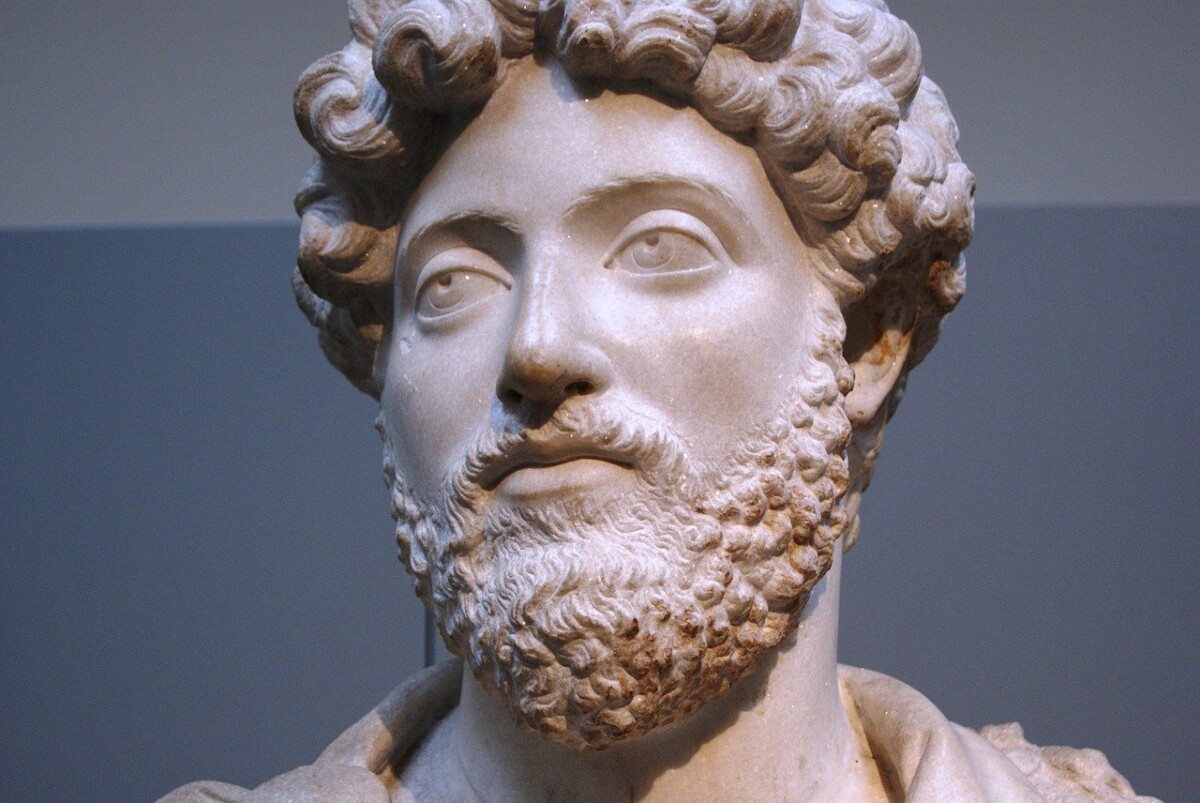
30 Philosophers, Chapter 13: Marcus Aurelius and Stoicism.
Stoicism began centuries before Marcus Aurelius. Zeno placed virtue at its center, especially the four cardinal virtues of wisdom, courage, justice, and temperance. Later Stoics refined the tradition. Chrysippus emphasized virtuous intent and accepting results outside our control, while Epictetus developed the Dichotomy of Control and the Three Disciplines of desire, action, and assent. By the time Marcus was born in 121 CE, Stoicism had developed into a rich philosophy of virtue, self-command, and living well within reality.
Marcus Aurelius inherited that tradition under extraordinary circumstances. Raised within Rome’s ruling class, he eventually became emperor of a vast empire. Yet he continually reminded himself that power did not make him fundamentally different from everyone else. He tried to live as Plato’s philosopher-king: using reason and virtue to guide his decisions while remaining conscious of how those decisions affected others. His famous reminder captures the practical spirit of his philosophy:
“Waste no more time arguing about what a good man should be. Be one.”
Marcus did not merely write about Stoicism; he tried to practice it while governing. His private reflections, preserved in Meditations, reveal a man repeatedly working on his judgments, responsibilities, relationships, and character. In my book, I frame his Stoicism through the Stoic Virtue Framework: one goal of virtue, the Dichotomy of Control, the Three Disciplines, and the four cardinal virtues. Marcus stands near the end of a long Stoic tradition, but he gave that tradition one of its most enduring examples: focus on what is yours to govern, accept what is not, and try to act with virtue anyway.

