
Explore Science-first Philosophy

STORY

Oogamy: Early Gamete Specialization Before Animals

By Michael Alan Prestwood

Sun 31 Mar 2024
Published 2 years ago.
Updated 3 weeks ago.
Related Stories
Emergence of the Chimpanzee Family
Hesperornithiformes Birds Emerge (Now Extinct)
Palaeognathae Birds Emerge
The Last Stegosaurus: Wuerhosaurus
True Circulatory Systems: Blood Veins
Snowball Earth: When Ice Reached the Equator
Share :
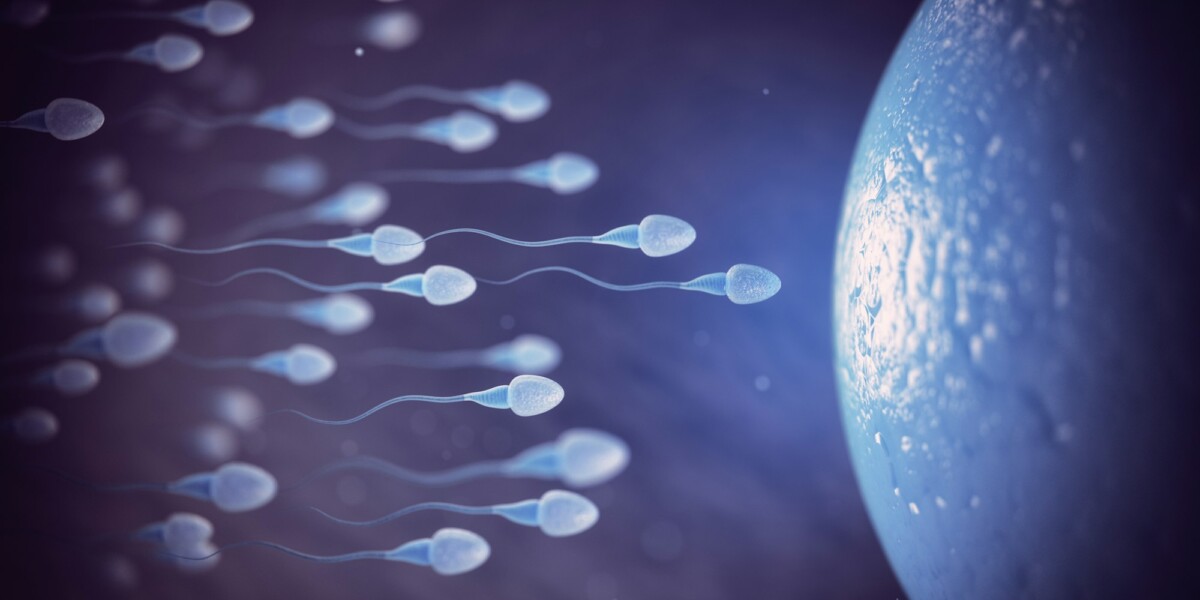
Sperm and egg cell on microscope. Scientific background.
Sexual reproduction predates animals, and differentiated sperm–egg systems evolved in single-celled eukaryotic lineages long before animals emerged.

Oogamy: Early Gamete Specialization Before Animals

~1.1 Billion Years Ago (inferred, +/- 100 million)
Small motile gamete and larger nutrient-rich gamete

In evolutionary order, reproduction systems came first; bodies came later.

Around 1.1 billion years ago, some single-celled eukaryotes evolved gamete specialization. Instead of two similar cells fusing, one became small and motile (sperm-like) while the other became larger and nutrient-rich (egg-like). These were not separate organisms but reproductive forms of single-celled life. Hundreds of millions of years later, in certain lineages, cells began remaining attached after division. Multicellular bodies emerged — and they inherited this ancient gamete system.

Sexual reproduction (the mixing of DNA from two parents) emerged early in eukaryotic evolution, long before animals. This required core eukaryotic innovations: a nucleus containing chromosomes, and meiosis — a specialized cell division that halves chromosome number and reshuffles genetic material. These innovations likely date back to the last eukaryotic common ancestor (LECA), over 1.5 billion years ago.

Later, in several lineages, gametes became specialized. A smaller, typically motile cell delivered DNA, while a larger cell retained resources. This form of sexual reproduction — oogamy — likely evolved independently multiple times. Similar sperm–egg differentiation appears in plants and some protists, suggesting strong evolutionary pressure toward size asymmetry in gametes.

— map / TST —

Michael Alan Prestwood
Author & Natural Philosopher
Prestwood writes on science-first philosophy, with particular attention to the convergence of disciplines. Drawing on his TST Framework, his work emphasizes rational inquiry grounded in empirical observation while engaging questions at the edges of established knowledge. With TouchstoneTruth positioned as a living touchstone, this work aims to contribute reliable, evolving analysis in an emerging AI era where the credibility of information is increasingly contested.
Email
Print
This month @ TST
Column Menu
May 2026
»COLUMN ARCHIVE
--COLUMN--
Column Research….
1. Timeline Story
Book: The Idea of History
2. Linked Quote
“The historian without his facts is rootless…the facts without their historian are…meaningless.”
3. Science FAQ »
Is science tainted by bias?
4. Philosophy FAQ »
Debating History: Should We Say “Dark Ages” or “Middle Ages?”
5. Critical Thinking FAQ »
What is the preservation bias?
6. History FAQ!
Did Einstein’s driver really give one of his early talks?
Bonus Deep-Dive Article
TST Philosophy of History

Comments

Join the Conversation! Currently logged out.

Leave a Reply

NEW BOOK! NOW AVAILABLE!!

30 Philosophers: A New Look at Timeless Ideas

by Michael Alan Prestwood
The story of the history of our best ideas!
Scroll to Top