
Explore Science-first Philosophy

FAQ

What is the difference between socialism and communism?

Sun 14 Apr 2024
Published 2 years ago.
Updated 4 months ago.
Related FAQs
What is the cherry picking logical fallacy?
Did Puritanism shape the American right?
Thinking: How does social media fuel the “grass is always greener” problem?
What is the history behind quantum mechanics?
Should you engage Trump supporters?
Should Democrats support the coal industry?
Share :
Email
Print

What is the difference between socialism and communism?

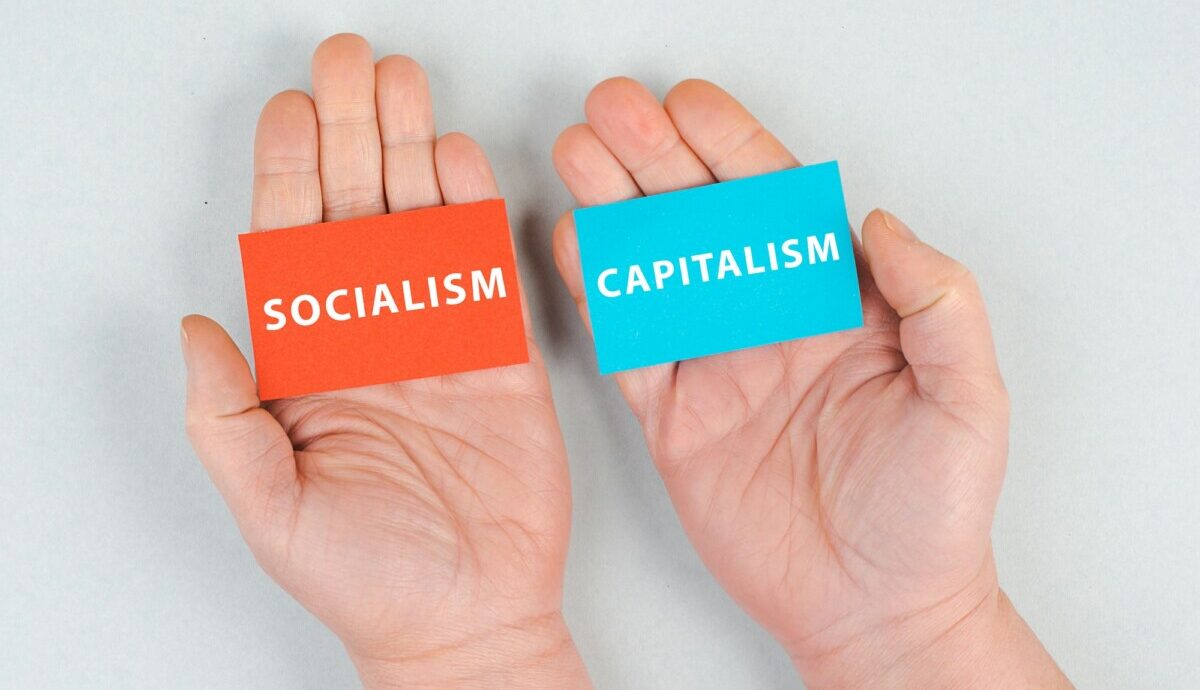
Socialism and communism are both ideologies that aim to reduce economic inequality, but they differ significantly in their approaches and implementations.

Communism advocates for a classless society where all property and means of production are owned communally, with the aim of eliminating private ownership entirely. This system seeks to distribute wealth and power equally among all individuals, envisioning a society without state structures as traditionally understood. An historical example includes the Soviet Union, where the government attempted to centralize control over all production and resources.

Socialism, meanwhile, supports the idea that the means of production should be owned and controlled by the state or the community collectively, but it does not necessarily eliminate private property or market mechanisms. Instead, socialism can be integrated into a capitalist economy through government programs designed to redistribute wealth and provide social services, such as healthcare and education. Examples in the United States include Medicare, Social Security, and public emergency services.

Both systems aim to address disparities, but socialism maintains elements of private ownership and democratic governance, whereas communism pushes for a complete dismantling of capitalist structures and private property. To explore this “Our Time” debate, take the 6-minute deep dive: Socialism is NOT Communism.
— map / TST —

Michael Alan Prestwood
Author & Natural Philosopher
Prestwood writes on science-first philosophy, with particular attention to the convergence of disciplines. Drawing on his TST Framework, his work emphasizes rational inquiry grounded in empirical observation while engaging questions at the edges of established knowledge. With TouchstoneTruth positioned as a living touchstone, this work aims to contribute reliable, evolving analysis in an emerging AI era where the credibility of information is increasingly contested.
This Week @ TST
April 15, 2026
»Column Archive
WWB Research….
1. Story of the Week
John Snow and the Broad Street Pump
2. Quote of the Week
“A wise man proportions his belief to the evidence.”
3. Science FAQ »
Were dinosaurs Jurassic movie smart?
4. Philosophy FAQ »
How does the idea of Identity in Christ fit within TST?
5. Critical Thinking FAQ »
What is the difference between Public Truth and Public Belief?
6. History FAQ!
Did Einstein’s driver really give one of his early talks?
Bonus Deep-Dive Article
TST Epistemic Calibration: Credence and Degrees of Belief

Comments

Join the Conversation! Currently logged out.
NEW BOOK! NOW AVAILABLE!!

30 Philosophers: A New Look at Timeless Ideas

by Michael Alan Prestwood
The story of the history of our best ideas!
Scroll to Top