
Phil • Cr. Think • Science • Hist • …
TST PRACTICE

By Philosopher Michael Alan Prestwood

FAQ

Can authors create fiction beyond our universe?

☐ Read
☑ Read
You’ve read this 0 times.
You’ve listened to this 0 times.
Sun 30 Jun 2024
Published 2 years ago.
Updated 3 months ago.
Related FAQs
Does infinity exist?
Do the empirical and rational categories apply to vocabulary words?
What is the Updated History of Earth?
How are original Daoism, Mohism, Confucianism, and Legalism related?
What is secular spirituality?
Has belief in determinism influenced science?
Share :
Email
Print

Can authors create fiction beyond our universe?

Authors don’t create fiction from nothing; they combine existing ideas in new ways. When J.K. Rowling created Harry Potter, she drew from universal themes like magic, heroism, and good versus evil—concepts that have existed for centuries. These elements were reassembled into a unique narrative that feels both new and familiar. This process illustrates the concept of latent ideas, showing how fiction is crafted by reconfiguring timeless concepts into novel forms.

Exploring the boundaries of creativity not only stretches the limits of imagination but also deepens our wisdom about human potential and the nature of reality.

In “30 Philosophers,” it’s put it this way:

“All fiction exists within the material world and is therefore limited to and by it. Our imaginations are vast and originate from the possible. Irrational ideas are works of fiction and come from blending real things. Put simply, irrational ideas are made up of two or more ideas that break down to rational and/or empirical ideas. Through conceptual blending, we fuse ideas together, but not from a void, because we are explorers, not deities.”

From David Hume to Margaret Boden. In 1748, Hume’s take was that imagination recombines the materials of experience. Much later in 1998, Boden’s take was that modern creativity theory explains several ways genuinely novel ideas can emerge from existing conceptual materials and structures. My own work in 30 Philosophers in 2024, places that process inside a broader metaphysical claim—new configurations can be real and original, but minds do not create materials or possibilities from absolute nothing.
— map / TST —

TST Tracker
✓ Reading recorded.
Deep-Dive Article: TST Epistemic Classifications: The Idea of Ideas

Annotated References:

  • Hume, David. An Enquiry Concerning Human Understanding. 1748. Section II, “Of the Origin of Ideas”: imagination combines, rearranges, enlarges, or reduces materials supplied by sensation and experience.
  • Boden, Margaret A. “Creativity and Artificial Intelligence.” Artificial Intelligence 103, nos. 1–2 (1998): 347–356. DOI: 10.1016/S0004-3702(98)00055-1: creativity produces novelty through combination, exploration, and transformation of existing conceptual spaces.
  • Prestwood, Michael Alan. 30 Philosophers. 2024. Chapter 18, “The Illusion of Creation: Fiction”: fictional novelty lies in new configurations of reality-derived empirical and rational ideas, not creation from absolute nothing.
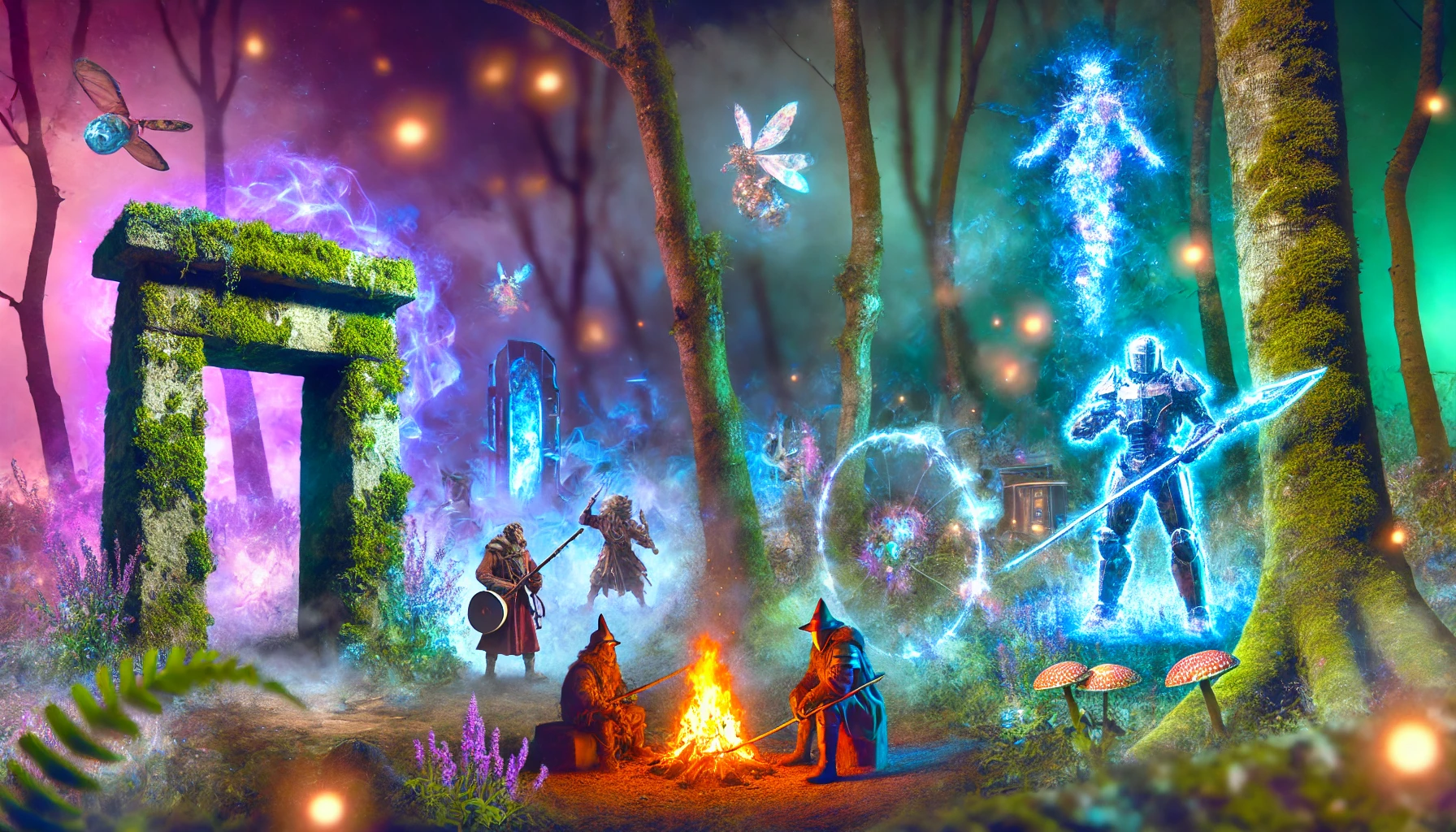
Conceptual blending is human creativity. That's how we create fiction. Fiction is crafted from existing ideas. Imaginary things like a glowing forest, an ancient portal, and a floating castle are created when authors recombine the existing.
Michael Alan Prestwood
Author & Natural Philosopher
Prestwood writes on science-first philosophy, with particular attention to the convergence of disciplines. Drawing on his TST Framework, his work emphasizes rational inquiry grounded in empirical observation while engaging questions at the edges of established knowledge. With TouchstoneTruth positioned as a living touchstone, this work aims to contribute reliable, evolving analysis in an emerging AI era where the credibility of information is increasingly contested.
The Prestwood Column
Menu
October 2026
Column Research….
1. Timeline Story
The Great Quaker Debates!
2. Linked Quote
“All men are prone to differ. It is no new thing in all former ages, in all parts. Each party is most right in his own eyes.”
3. Science FAQ »
Do facts actually change minds?
4. Philosophy FAQ »
When does persuasion become manipulation?
5. Critical Thinking FAQ »
How can you tell when a debate has stopped being productive?
6. History FAQ!
What is the history of debate?
Bonus Deep-Dive Article
Roger Williams Biography and Dedication to the Freedom of Conscience

Comments

Join the Conversation! Currently logged out.
NEW BOOK! NOW AVAILABLE!!

30 Philosophers: A New Look at Timeless Ideas

by Michael Alan Prestwood
The story of the history of our best ideas!
Scroll to Top