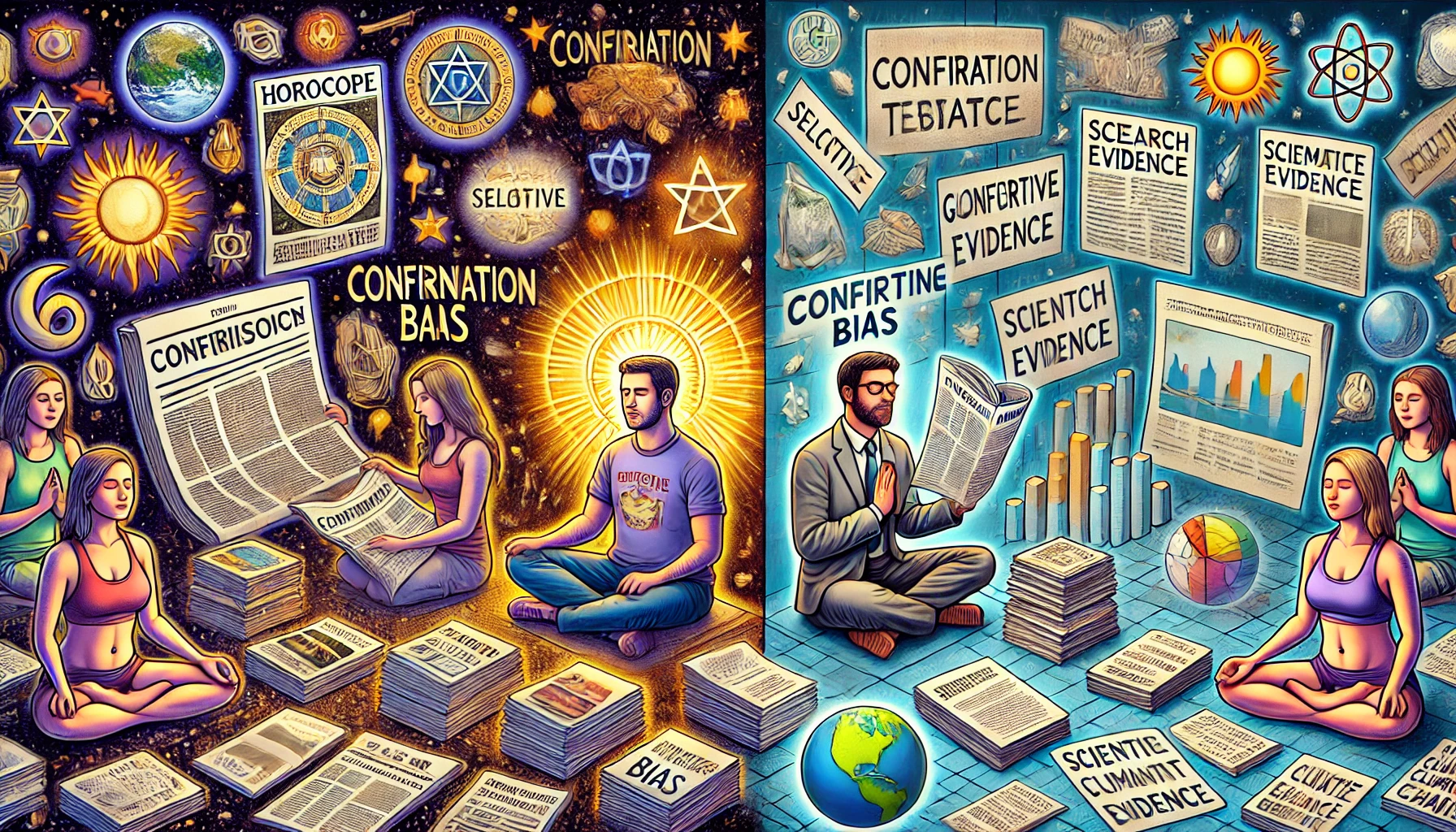
People believe wrong things because much of our information intake is less about seeking truth and more about being reassured. It’s about validating that we are on the right path. That’s confirmation bias at work. It is our “natural” tendency to favor information that supports what we already believe. Yes, natural. It evolved in all animals. Hit a dog, once shame on you, hit a dog twice, shame on the….no, still shame on you. But, abuse a dog, you are confirming its worst fears about you. That’s confirmation bias at work in the animal kingdom.
And yes, we all do it. It’s mainly a problem when we ignore, downplay, or dismiss new information simply because it does not fit what we already think. That bias leads us away from truth and deeper into our own identity.
Take astrology. Believers in horoscopes confirm accurate predictions and link them with truth. They dismiss inaccurate ones altogether. That is confirmation bias at work at the human level. Disproving astrological predictions is the easy part, it’s disproven with every well-run blind study. But overcoming belief in bad ideas like this is hard.
While it is difficult to eliminate confirmation bias completely, you can manage it. The key is to pay close attention to new evidence, especially when it challenges old. It’s hard because challenging identity is hard. But that discomfort is where growth begins.
As a final example, consider climate change. Someone convinced it is a hoax will only take in information that aligns with their identity as a climate change denier. As crazy as that sounds, and it does fall into the crazy category for me, they literally believe non-experts over experts.
To push back against confirmation bias, we have to engage with opposing evidence honestly and stay open to changing our minds.