
Phil • Cr. Think • Science • Hist •
TST PRACTICE

The Philosophy Website

QUOTE

“The greatest weapon against stress is our ability to choose one thought over another.”
☐ Read
☑ Read
You’ve read this 0 times.
You’ve listened to this 0 times.
Related Quotes
“We are all tattooed in our cradles with the beliefs of our tribe.”
“The first person who thought of saying ‘This is mine’ was the real founder of civil society.”
“For the soul is dyed the color of its thoughts.”
“The unexamined life is not worth living.”
“Of all possessions…the greatest is friendship.”
Enjoy the journey, with truth and honor, causing no harm.
Share :
Email
Print

Mike's Takeaway:

Stress is sometimes what happens to us. But too frequently, it’s about what our minds think is happening, and that’s a problem. The problem is that too frequently you are far more hurt by your thoughts of what happened, and not by what actually happened. For example, most of us too frequently overreact when someone points out a flaw in something we did. The criticism may contain one useful fact, but our minds can turn it into a judgment about our entire worth. We replay it, imagine worse outcomes, and focus on everything that might go wrong. You cannot always choose the first thought that enters your mind, but most of the time, you can choose which thought gets your attention next. That is the useful idea behind this quote.

William James wrote extensively about attention. In The Principles of Psychology in 1890, he described attention as selecting one thing from several. In other words, your mind cannot focus equally on everything at once. Think about how craze it would be if every sound all day long got equal attention. That would drive you crazy! The same goes for your internal thoughts. You get to choose.

Stress, angst. That anxiety is a cue to you that you need to slow down and look more carefully at what you are doing. Not every anxiety is an ethical problem, but when the tension comes from a difficult choice or uncertainty, pause. Listen to the guidance around you. Clarify what is actually your responsibility. Think through your intent, likely results, and who may be affected. Anxiety is your mind telling you that the easy answer is not enough.

You may not control every thought that appears, but you can get better at deciding which ones deserve your time.
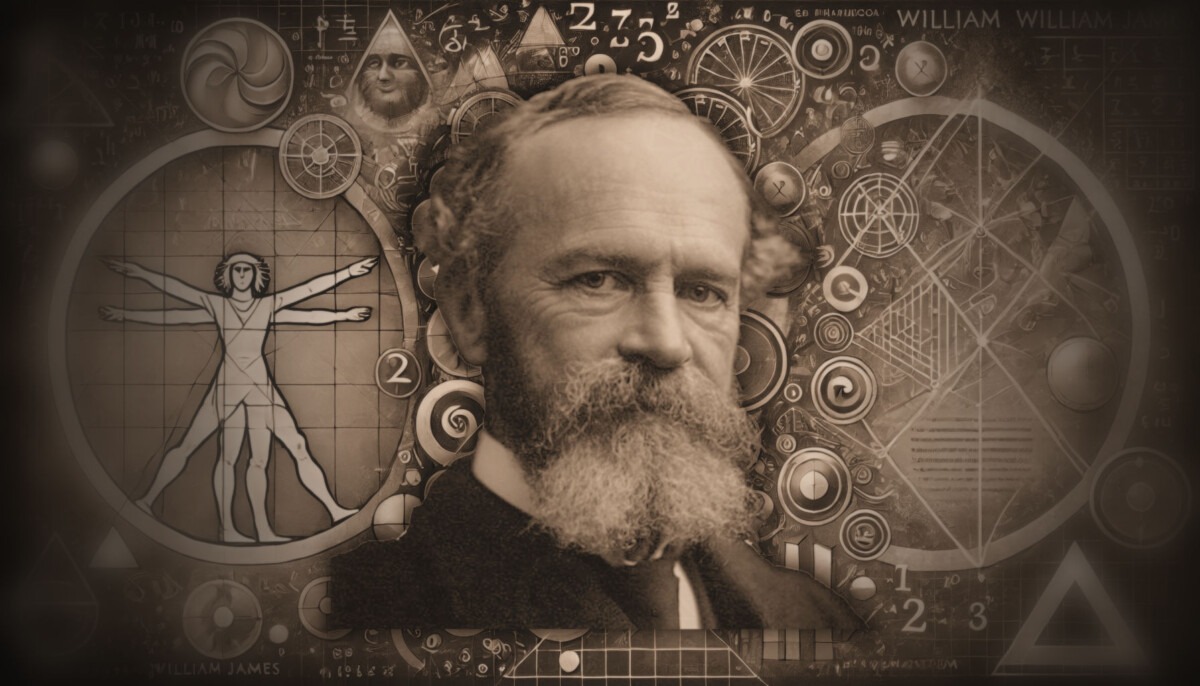
Analysis By Michael Alan Prestwood
08 Aug 2026
Published 1 month ago.
Updated 1 month ago.
TST Tracker
✓ Reading recorded.

Annotated References:

  • James, W. (1902). Varieties of Religious Exp.: A Study in Human Nature. London: Longmans, Green, & Co. I used this citation in 30 Philosophers, but I need to reverify it as I think that was a mistake.
William James (1842–1910), American philosopher and psychologist, father of Pragmatism, bridging philosophy and psychology with practical thought.
Michael Alan Prestwood
Author & Natural Philosopher
Prestwood writes on science-first philosophy, with particular attention to the convergence of disciplines. Drawing on his TST Framework, his work emphasizes rational inquiry grounded in empirical observation while engaging questions at the edges of established knowledge. With TouchstoneTruth positioned as a living touchstone, this work aims to contribute reliable, evolving analysis in an emerging AI era where the credibility of information is increasingly contested.
The Prestwood Column
Menu
September 2026
Column Research….
1. Timeline Story
Hume’s Is–Ought Problem
2. Linked Quote
“I meet with no proposition that is not connected with an ought, or an ought not.”
3. Science FAQ »
Can science prove flourishing should be our goal?
4. Philosophy FAQ »
What is the difference between a normative aim and a normative directive?
5. Critical Thinking FAQ »
Is flourishing for all just utilitarianism?
6. History FAQ!
What is the history of the idea of flourishing in philosophy?
Bonus Deep-Dive Article
TST Normative Ethics: Flourishing as a Philosophical Goal

Comments

Join the Conversation! Currently logged out.

Leave a Reply

NEW BOOK! NOW AVAILABLE!!

30 Philosophers: A New Look at Timeless Ideas

by Michael Alan Prestwood
The story of the history of our best ideas!
Scroll to Top