
Weekly Insights for Thinkers

Science  Philosophy  Critical Thinking  History  Politics RW  AI  Physics  •  Evolution  Astronomy 30 Phil Book More…
Science  Phil  Cr. Think  Hist 
Share :

Mike's Takeaway:

Quote context: Epicurean ideas on unnessary desires and how those desires color negatively even the postive things.
Source: Epicurus is attributed with saying this, but I cannot find the specific historical quote.

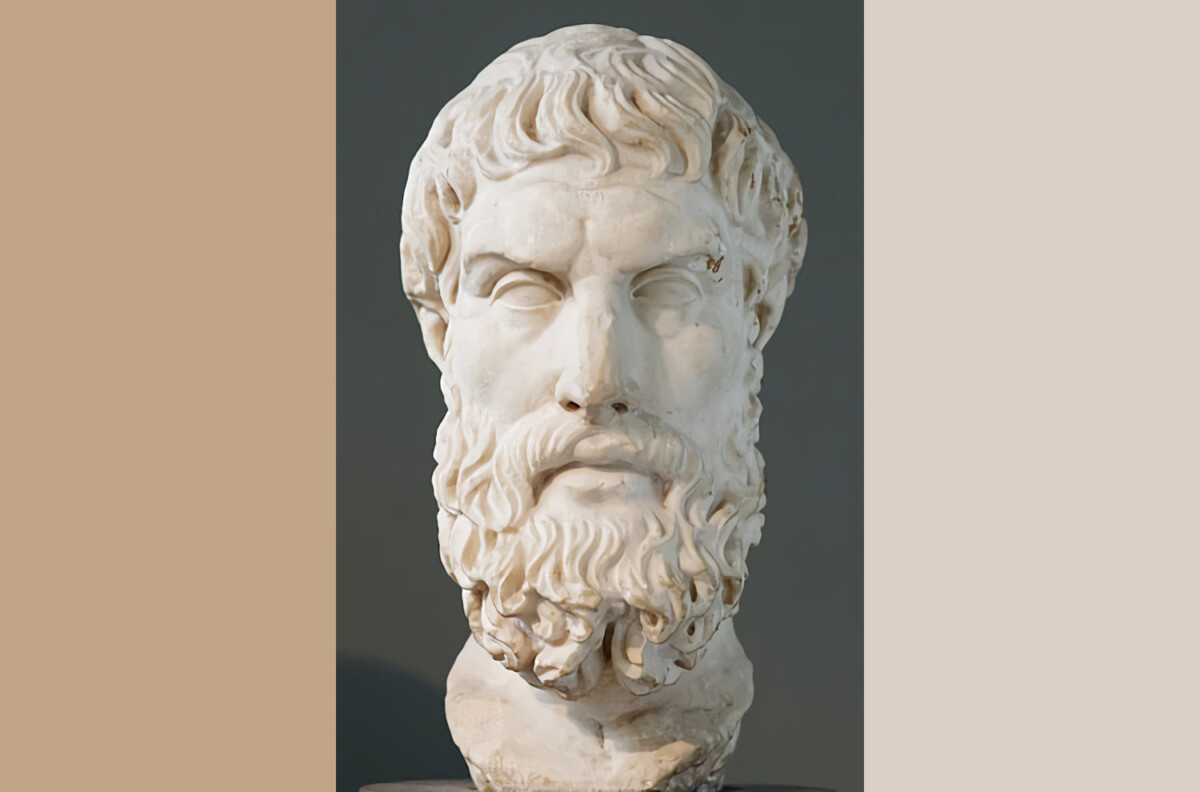
Epicurean philosophy draws a careful distinction between what we want and what we need. Hunger, shelter, companionship—these are foundational. Beyond them lie desires that feel natural, even pleasant, but are not required for a good life. Trouble begins when those unnecessary desires quietly become expectations.

Epicurus understood something subtle about the human mind: dissatisfaction scales with desire. The more we demand from life, the less life can satisfy us. When enough no longer feels like enough, abundance loses its power to bring peace.

As I write in Chapter 11 of 30 Philosophers:

“Unnecessary desires are natural but unnecessary, experiences like luxury food or extravagance can bring pleasure but are not necessary for a happy life. While these desires can be indulged in moderation, they should not be the main focus of one’s pursuit. Epicureanism says nothing is enough for the man to whom enough is too little.

Since these desires are not necessary for our well-being, the pursuit of katastematic pleasures is more important. Epicureanism advises us to indulge in these natural but unnecessary desires in moderation and focus more on achieving a state of tranquility. Be pragmatic when it comes to things like expensive food or extra clothing. Simply put, indulge in them if you can and wish; otherwise, just be happy with what you have.”

This is not a rejection of pleasure. It is a rejection of dependence. Epicurus—and later the Stoics—understood that pleasure pursued as a requirement becomes a source of anxiety. Luxury enjoyed freely can be pleasant; luxury expected becomes a trap.

The quote cuts straight to the heart of this insight. The problem is not that life gives us too little. The problem is when our definition of “enough” keeps moving. In that state, even abundance feels like deprivation.

True contentment, then, is not achieved by accumulating more, but by anchoring desire. When we learn to recognize sufficiency, tranquility becomes available immediately—not someday, not after the next acquisition, but now.

That is the quiet power of this idea. Happiness does not wait for excess. It begins the moment enough is allowed to be enough.
Analysis By Michael Alan Prestwood
01 Jan 2026
Published 1 month ago.
Updated 3 weeks ago.
Michael Alan Prestwood
Author & Natural Philosopher
Prestwood writes on science-first philosophy, with particular attention to the convergence of disciplines. Drawing on his TST Framework, his work emphasizes rational inquiry grounded in empirical observation while engaging questions at the edges of established knowledge. With TouchstoneTruth positioned as a living touchstone, this work aims to contribute reliable, evolving analysis in an emerging AI era where the credibility of information is increasingly contested.
TST Weekly Column
January 21, 2026
This Week:
»Edition Archive
The column…
Copernicus, Societal Blindness, and Worldview
WWB Research….
1. Story of the Week
Nicolas Copernicus
2. Quote of the Week
“The movement of the planets agrees best with actual observations.”
3. Science FAQ »
Did Copernicus prove that Earth moves around the Sun?
4. Philosophy FAQ »
Did Copernicus remove humanity from the center of the universe?
5. Critical Thinking FAQ »
Why do intelligent people defend bad ideas?
6. History FAQ!
Was Copernicus famous during his life?
Bonus Deep-Dive Article
The Universe Before the Telescope

Comments

Join the Conversation! Currently logged out.

Leave a Reply

Recent Quotes
2. Quote of the Week
“The movement of the planets agrees best with actual observations.”
2. Quote of the Week
Could you affirm your life so fully that you would will its eternal repetition?
2. Quote of the Week
“Everything is in flux.”
2. Quote of the Week
“I have a worldview. So do you.”
2. Quote of the Week
“Nothing is enough for the man to whom enough is too little.”
Scroll to Top