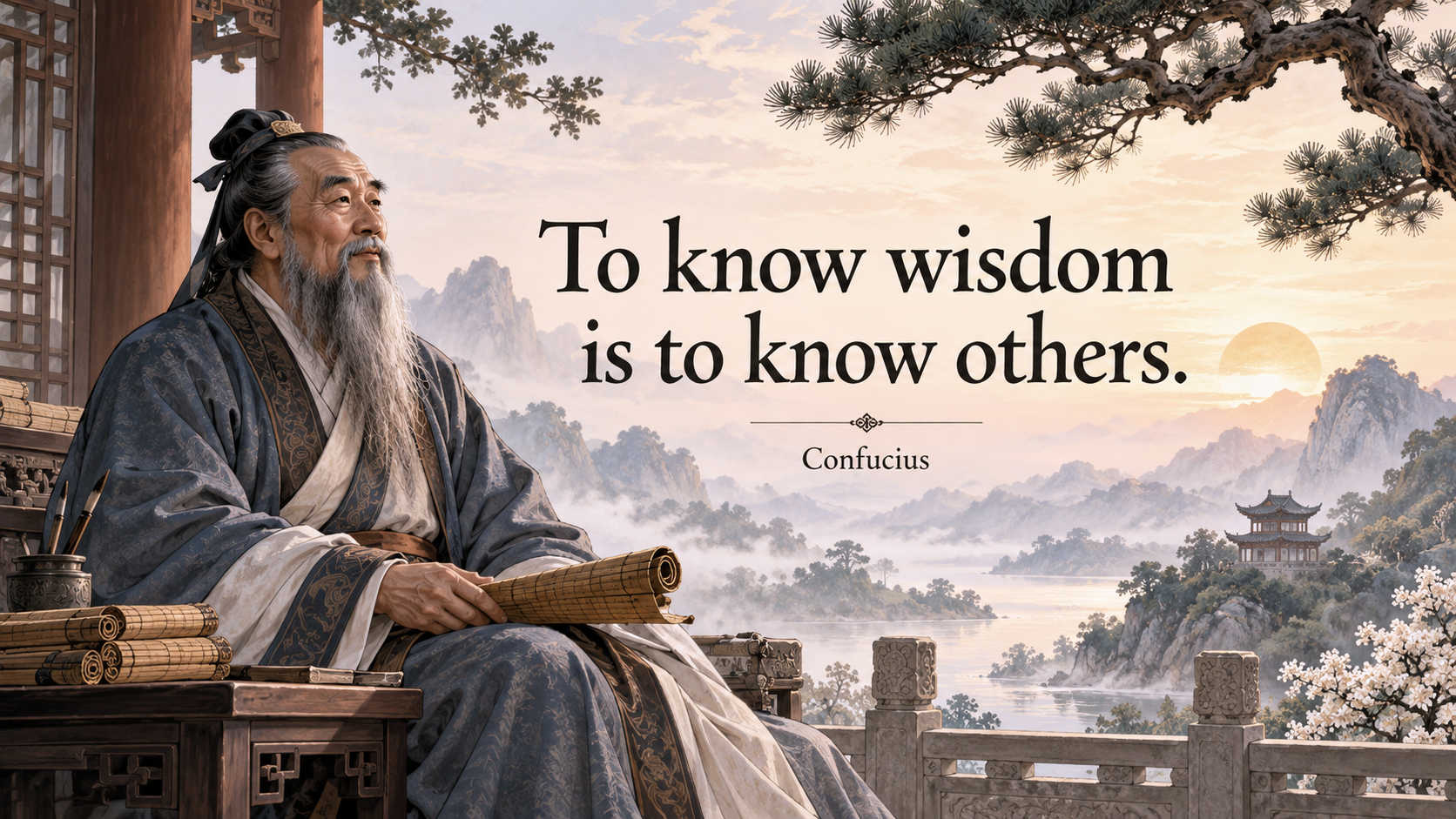
For Confucius, wisdom is deeply connected to understanding people. It means recognizing character, understanding motivations, and making good judgments about others. Wisdom is not simply accumulating knowledge. It is learning how people think and behave, recognizing those with good character, and using that understanding to build better relationships and a harmonious society.
The quote is a loose translation of a teaching from Analects 12.22, where a disciple named Fan Chi asks Confucius about humaneness and wisdom. Confucius answers:
“Love others.”
When asked about wisdom, he responds:
“Know others.”
When Fan Chi struggles to understand, Confucius explains that placing upright people in positions of authority can influence others toward better behavior.
In Analects 2.10, Confucius expands on the importance of understanding people:
“See what a man does. Mark his motives. Examine in what things he rests.”
His point is that understanding others requires looking beyond appearances. We must observe what people do, why they do it, and what brings them satisfaction. Knowing others is not just knowing their words. It is understanding their character.
Confucius addressed wisdom and related ideas throughout the Analects. In 2.17, akin to Socrates later in the West, Confucius teaches that wisdom includes knowing the limits of your knowledge: recognizing what you know and admitting what you don’t. In 6.22, he connects wisdom to doing what is right for people while maintaining a respectful distance from spirits. Together, these teachings present wisdom as a practical virtue rooted in understanding, good judgment, moral character, and how we treat others.